What Do Aphids Look Like on Bougainvillea?
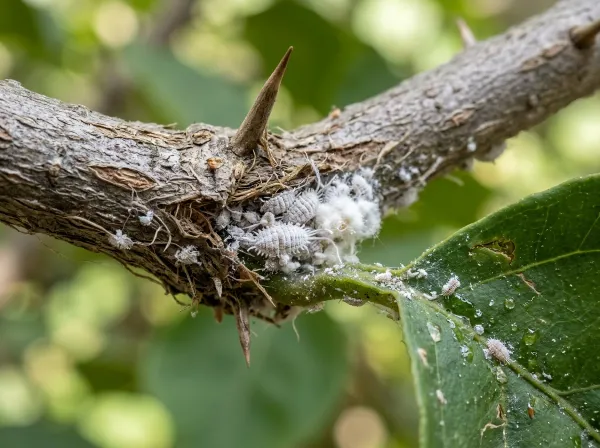
Aphids (family Aphididae) are tiny, soft-bodied, pear-shaped sap feeders measuring 1.5 to 3 mm long. On bougainvillea, they appear in green, pale yellow, black, or dark brown colonies packed densely along soft spring growth tips, flower buds, and the undersides of young leaves.
Unlike thrips or spider mites, aphids possess a pair of distinct rear tube-like structures called cornicles visible under a 10x hand lens and shed pale white cast skins as they molt. As they pierce phloem vessels to feed, they excrete sugary sticky honeydew onto lower leaves and bracts.
Why Aphids Target Soft Bougainvillea Flushes
- High-Nitrogen Excess: Heavy nitrogen feeding pushes rapid, watery shoot extension with thin cell walls that attract winged female aphids seeking nutrient-dense sap.
- Protected Microclimates: Indoors, on sheltered porches, or in windless courtyards, beneficial predators such as ladybird beetles and lacewing larvae cannot easily check population explosions.
- Ant Symbiosis: Garden ants harvest aphid honeydew and actively defend colonies against parasitic wasps and predators.
Damage Symptoms & Virus Risk
- Twisted & Cupped New Leaves: Sap extraction on expanding meristems causes distorted, downward-curling terminal foliage.
- Sticky Residue & Sooty Mold: Glossy honeydew coats upper leaf surfaces below feeding sites, quickly colonizing with black velvety sooty mold fungi that shade photosynthesis.
- Virus Transmission: Sap-sucking insects including aphids and thrips can vector ornamental viruses such as Cucumber Mosaic Virus (CMV) between stressed garden plants.
Step-by-Step Integrated Control
- Knock Colonies Off With Water: Direct a sharp, forceful stream of cool water from a hose nozzle at shoot tips and leaf undersides early in the morning to dislodge soft-bodied aphids without harming pollinators.
- Break Ant Access: Exclude ants from potted stems and basal trunks using sticky horticultural barriers wrapped on tape—not directly on bare bark—or treat ground trails around containers so natural predators can return.
- Wash With Diluted Insecticidal Soap or Neem Emulsion: For persistent clusters, thoroughly coat leaf undersides and shoot tips using registered insecticidal soap or properly emulsified cold-pressed neem oil (use our Neem Oil Calculator for exact dilution). Spray only at dawn or dusk, never in bright midday sun or above 30°C to avoid scorching delicate bracts.
- Reduce Nitrogen & Prune Heavily Damaged Tips: Switch from high-nitrogen vegetative feeds to lean bloom nutrition and prune away severely distorted or heavily sooty shoot tips cleanly.
✓ HORTICULTURALLY REVIEWEDReviewed by S Maitra • Written by IB Editorial Team
Editorial policy →