Mealybugs
Identify, treat, and prevent mealybugs on bougainvillea using alcohol, neem oil, and systemic controls for heavy infestations.
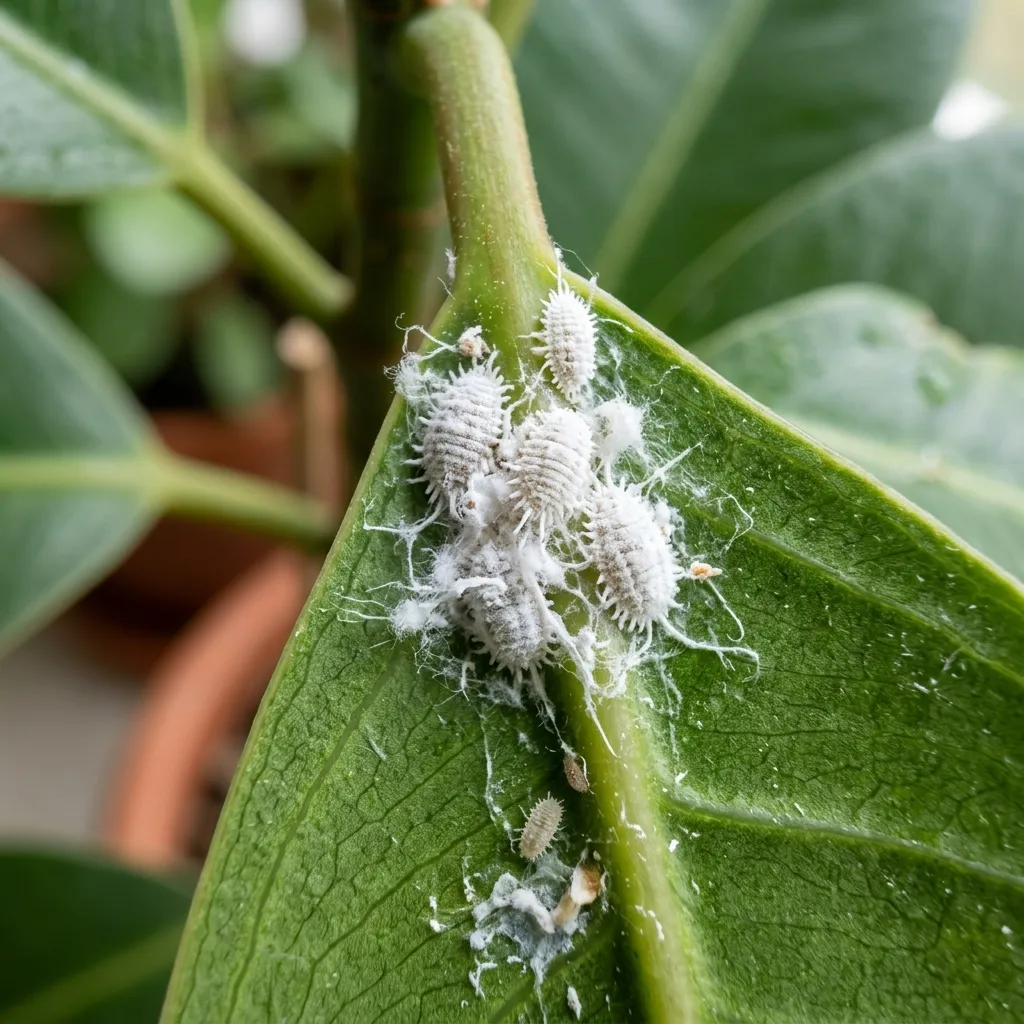
What are Mealybugs on Bougainvillea?
If you've ever noticed small, fluffy white cottony spots tucked into the leaf axils or along the stems of your bougainvillea, you've met mealybugs. At first glance, they might look like a fungal growth or bits of cotton wool. But touch one, and it squishes—a sure sign you're dealing with a sap-sucking insect pest. Mealybugs are among the most common and frustrating pests for bougainvillea growers, especially on indoor plants or those in sheltered, humid locations. Left unchecked, they can weaken your plant dramatically and even kill it over time.
Mealybugs are soft-bodied, oval-shaped insects covered in a white, waxy, powdery secretion that protects them from moisture loss and some pesticides. They feed by inserting their piercing-sucking mouthparts into plant tissue and drawing out sap. In doing so, they rob the plant of energy and excrete a sticky, sugary waste called honeydew. Honeydew coats leaves and stems, encouraging the growth of black sooty mold, which blocks light and further reduces photosynthesis.
Why does this matter specifically for bougainvillea? Bougainvillea have many nooks and crannies—leaf axils, bract bases, rough bark—that provide perfect hiding spots for mealybugs. Once established, they can be hard to eradicate because their waxy coating repels many water-based sprays. And because bougainvillea are often grown in warm, sheltered spots (greenhouses, patios, indoors), conditions that favor mealybug reproduction are common.
For beginners, mealybugs are often mistaken for harmless fuzz or mold. For advanced growers, they're a persistent nuisance that requires a multi-pronged attack: physical removal, targeted sprays, and sometimes systemic insecticides. The good news is that with vigilance and the right strategy, you can eliminate mealybugs and keep your bougainvillea healthy.
Why Mealybugs Matter for Bougainvillea
Mealybugs aren't just unsightly—they actively harm your plant and reduce its blooming potential.
Flowering impact: Mealybugs drain the plant's energy reserves. A heavy infestation forces the plant to drop bracts and stop producing new ones. Existing bracts become sticky and may develop sooty mold, making them unattractive. Even after you kill the bugs, it can take weeks for the plant to recover enough to bloom again. In severe cases, the plant may skip an entire blooming season.
Root health impact: Some mealybug species (root mealybugs) live in the soil and feed on roots. But even the above-ground species stress the plant, making it more susceptible to root rot from opportunistic fungi. The honeydew they excrete can drip into the soil, attracting ants that may farm the mealybugs and also disturb the root zone.
Plant vigor and growth rate: Mealybugs weaken the plant by removing sap. Growth slows, new leaves are smaller, stems become thin, and the plant takes on a general lackluster appearance. Heavy infestations cause leaf yellowing, curling, and premature drop. The plant becomes stunted.
Long-term health: Chronic, untreated mealybug infestations can kill a bougainvillea over a year or two. The combination of sap loss, sooty mold, and stress-related diseases is too much. Even if the plant survives, it may never regain its full vigor.
Container vs. landscape cultivation: Mealybugs are more common on container plants, especially those kept indoors or in greenhouses where natural predators are absent. They can also be a problem in sheltered landscape spots (e.g., against a warm wall, under eaves). In open landscapes with natural predators (ladybugs, lacewings, parasitic wasps), mealybugs are usually kept in check.
Quick Facts: Mealybugs on Bougainvillea
| Factor | Details |
|---|---|
| Pest Type | Sap-sucking insect (Hemiptera: Pseudococcidae) |
| Appearance | Small (1/8 to 1/4 inch), oval, covered in white waxy fluff; females are wingless; males are tiny, gnat-like. |
| Where They Hide | Leaf axils, under leaves, inside bracts, stem crevices, bark cracks, soil surface (root mealybugs). |
| Damage Signs | White cottony masses, sticky honeydew, sooty black mold, yellowing leaves, stunted growth, ant activity. |
| Lifecycle Speed | 30-60 days from egg to adult (faster in warm conditions). Females lay up to 600 eggs in cottony sacs. |
| Most Vulnerable Stages | Indoor plants, greenhouse plants, plants in sheltered locations, plants stressed by low light or overwatering. |
| Natural Predators | Ladybugs, lacewings, parasitic wasps (Leptomastix, Anagyrus). |
| Effective Treatments | Rubbing alcohol (spot treatment), insecticidal soap, neem oil, horticultural oil, systemic imidacloprid (for severe cases). |
Identification and Symptoms
Mealybugs are distinctive once you know what to look for. Here's how to spot them early.
Early signs: Small, white, cottony tufts in the angles where leaves meet stems (leaf axils) or along the midribs on the undersides of leaves. You might also see a clear, sticky residue (honeydew) on leaves or the surface below the plant. At this stage, there are only a few bugs. They're easy to miss but easy to treat.
Intermediate symptoms: White fluff becomes more widespread, covering stem joints and hiding inside curled leaves. Leaves may yellow, curl, or drop. Sticky honeydew covers larger areas, and you may notice black, powdery sooty mold growing on it. Ants may be crawling on the plant (they farm mealybugs for honeydew). The plant's growth slows, and blooms diminish.
Advanced symptoms: Dense cottony masses on multiple stems, sometimes coating entire branch tips. Leaves are heavily yellowed, stunted, or dropping. Sooty mold covers leaves, reducing photosynthesis. The plant looks sickly, with weak new growth. If you unpot the plant (in case of root mealybugs), you'll see white cottony masses on the roots as well.
Common misdiagnoses: Mealybugs are sometimes mistaken for powdery mildew (a white, powdery fungus on leaf surfaces). The difference: powdery mildew is flat, not fluffy, and rubs off as a fine dust, not waxy globs. Also, mealybugs are clearly insects (they move, though slowly). Another misdiagnosis: honeydew and sooty mold are sometimes thought to be a separate disease, but they're secondary to the pest.
Visual clues for accurate assessment: Use a magnifying glass. Mealybugs have oval bodies with tiny legs and antennae. Their waxy coating has a distinctive cottony texture. If you dab a suspected spot with a cotton swab dipped in alcohol, it will turn brown and die instantly. Also, look for the presence of ants—they're often a clue.
Causes and Contributing Factors
Understanding why mealybugs appear helps you prevent reinfestation.
Environmental factors: Mealybugs thrive in warm (70-85°F), sheltered environments with moderate humidity. Indoor spaces, greenhouses, and covered patios are ideal. They dislike cold and direct rain. Overwintering plants indoors often develop mealybugs because natural predators are absent and conditions are stable.
Plant stress: A healthy, vigorous bougainvillea in full sun is somewhat resistant to mealybugs. Stressed plants (low light, overwatering, nutrient imbalances) are more susceptible. Excess nitrogen fertilizer produces soft, tender growth that mealybugs love. Improve cultural conditions first.
Ant farming: Ants are mealybugs' allies. They protect mealybugs from predators and carry them to new plants. If you have an ant problem, you'll likely have mealybugs. Controlling ants is a key part of management.
Introduction from new plants: Mealybugs often hitchhike on new plants from nurseries, garden centers, or trades with friends. Always quarantine new plants for 2-3 weeks and inspect them thoroughly.
Containers and overcrowding: Container plants placed close together allow mealybugs to crawl from one pot to another. Sheltered, crowded corners with poor air circulation create ideal microclimates.
How to Manage and Eliminate Mealybugs
Follow this integrated, step-by-step approach. Don't rely on a single method—combine physical, chemical, and cultural controls.
- Isolate the infested plant immediately. Move it away from other plants to prevent spread. Check neighboring plants for early signs.
- Physically remove visible mealybugs and egg sacs. Use a cotton swab dipped in 70% isopropyl alcohol. Dab each cottony mass—the alcohol dissolves the waxy coating and kills the bugs on contact. For large infestations, use a spray bottle with 70% alcohol (test on a small leaf area first for sensitivity; bougainvillea generally tolerate it). Wipe down stems and leaf axils with alcohol-soaked cloth or paper towel. Do this every 3-5 days for 2-3 weeks to catch newly hatched crawlers.
- Prune heavily infested branches. If a branch is completely covered, cut it off and dispose of it in a sealed bag (not compost). This reduces the population significantly.
- Wash the plant with insecticidal soap or neem oil. After manual removal, spray the entire plant (tops and bottoms of leaves, stems, crevices) with insecticidal soap or a neem oil solution (2 tablespoons neem oil + 1 teaspoon mild dish soap per gallon of water). These suffocate and disrupt mealybugs. Repeat every 5-7 days for 3-4 weeks. Do not spray in direct sun or above 85°F.
- Treat the soil if root mealybugs are suspected. If the plant is declining despite above-ground treatment, unpot and inspect roots. White cottony masses on roots indicate root mealybugs. Remove all old soil, prune affected roots, and repot in fresh, well-draining mix. Apply a systemic insecticide (imidacloprid) as a soil drench according to label instructions. This is one of the few times I recommend systemic for home growers.
- Control ants. Use ant baits or barriers (sticky tape around pot rims, diatomaceous earth) to keep ants away from the plant. Without ants, natural predators have a chance.
- Introduce natural predators for long-term control (especially in greenhouses). Ladybugs and lacewings eat mealybugs. More effective are parasitic wasps like Leptomastix dactylopii or Cryptolaemus montrouzieri (mealybug destroyer beetle). These are available from biological control suppliers. Release them in the evening after removing heavy infestations manually.
- Improve cultural conditions to prevent recurrence. Increase light (mealybugs hate full sun). Reduce nitrogen fertilizer; switch to low-N, high-PK bloom formula. Improve air circulation with a fan or by spacing plants. Avoid overwatering and overcrowding.
- Maintain vigilance. Inspect your bougainvillea weekly, especially in leaf axils and under bracts. Catching a few mealybugs early is much easier than dealing with a full-blown infestation.
Common Mistakes with Mealybugs
- Only using alcohol or soap once. Mealybugs have multiple life stages. Eggs can hatch after you've killed the adults. You need repeated treatments every 5-7 days for 3-4 weeks.
- Not treating the soil or pot. Crawlers and eggs can hide in the potting mix or under the pot rim. Drench the soil with insecticidal soap or neem oil mixture. Clean the pot surface.
- Ignoring ants. Ants will protect mealybugs and even move them to new plants. Control ants simultaneously.
- Using chemical sprays that kill natural predators but not mealybugs. Broad-spectrum insecticides can make the problem worse by wiping out beneficial insects. Use targeted treatments like alcohol, soap, neem, or horticultural oil.
- Waiting too long to treat. Small infestations are easy. Large ones can require pruning and systemic chemicals. Check your plant weekly.
- Overwatering during treatment. Many treatments stress the plant. Water only when needed. Wet soil also encourages root mealybugs.
- Not quarantining new plants. Always inspect and isolate new bougainvillea for 2-3 weeks. One infested cutting can infect your entire collection.
Expert Tips from Experienced Growers
Here's what seasoned bougainvillea growers know about mealybug control.
Tropical climate considerations (Florida, Hawaii, SE Asia): Mealybugs are present year-round. Natural predators are more active, but so are ants. Focus on ant control and encourage beneficial insects by avoiding broad-spectrum sprays. In high humidity, alcohol sprays are less effective because the alcohol dilutes quickly; use neem oil or insecticidal soap instead. Root mealybugs are a bigger problem in sandy soils.
High desert (Arizona, New Mexico): Mealybugs are less common outdoors because of low humidity, but they thrive indoors in winter. When you bring plants inside, expect mealybugs. Use systemic granules (imidacloprid) in the soil before overwintering as a preventive. Outdoors, natural predators often keep them in check.
Indoor and greenhouse growing: The most effective long-term strategy for indoor plants is a combination of alcohol spot treatment, neem oil sprays, and releasing Cryptolaemus beetles. For a small collection, a monthly spray of neem oil as a preventive works well. Also, keep a small fan running to improve air circulation—mealybugs dislike moving air.
Container growing observations: Elevate pots on pot feet or saucers without standing water. This reduces ant access. Wipe down the rims of pots and the surface of the soil with alcohol. Some growers place a sticky barrier (Tanglefoot) around the pot rim to stop ants and crawling mealybugs.
Nursery production secrets: Commercial growers use preventive soil drenches of systemic insecticides (imidacloprid) every 6-8 weeks during the growing season. They also release biological control agents in greenhouses. For home growers, I don't recommend routine systemic use, but it's an option for severe or recurring infestations.
Collector-level technique: For rare, valuable cultivars, use a two-pronged approach: 1) Remove all visible mealybugs with a small paintbrush dipped in alcohol (gentle on leaves). 2) Apply a fine layer of diatomaceous earth to the soil surface and lower stems to kill crawlers. 3) Use yellow sticky traps to monitor for male mealybugs (they fly). This minimizes chemical exposure on sensitive plants.
Troubleshooting Guide
| Problem | Likely Cause | Solution |
|---|---|---|
| White cottony masses on stems and leaf axils; plant sticky | Above-ground mealybugs | Dab with alcohol; spray insecticidal soap or neem oil weekly for 4 weeks. Check for ants and treat. |
| Plant wilting, yellowing, no visible pests on leaves | Root mealybugs (in soil) | Unpot, inspect roots. If white cottony masses on roots, discard old soil, trim affected roots, repot. Apply imidacloprid soil drench. |
| Black, powdery coating on leaves and bracts | Sooty mold growing on honeydew | Treat mealybugs first. Wipe off sooty mold with damp cloth. Improve light and air circulation. |
| Ants crawling on plant | Ants farming mealybugs for honeydew | Use ant baits or barriers. Follow ant trails to nest. Eliminate ants simultaneously with mealybug treatment. |
| Mealybugs return after treatment | Eggs hatched; treatment didn't last long enough | Repeat treatments every 5-7 days for 4-6 weeks. Ensure you're also treating the soil and pot surfaces. |
| Leaves burn after spraying alcohol or neem | Sprayed in direct sun or high heat; concentration too strong | Spray in evening or early morning. Dilute alcohol to 50% if needed. Rinse with water if burn occurs. |
| Mealybugs only on new growth | They prefer tender, soft tissue | Prune off heavily infested new tips. Reduce nitrogen fertilizer. Increase light to harden growth. |
| Ladybugs or lacewings not controlling mealybugs | Predators can't reach hidden bugs; ants interfering; infestation too large | Manually remove heavy infestations first. Control ants. Use Cryptolaemus beetles (mealybug destroyers) instead of ladybugs. |
Frequently Asked Questions
Are mealybugs harmful to humans?
No. Mealybugs do not bite, sting, or transmit diseases to humans. They are a nuisance primarily because they damage plants and produce sticky honeydew. Some people may have mild skin irritation from contact, but it's rare. Wash hands after handling infested plants.
Will neem oil kill mealybugs on bougainvillea?
Yes, neem oil is effective, especially when combined with manual removal. Neem oil smothers adults and disrupts the life cycle. However, it works slowly. Use it as a spray every 5-7 days for several weeks. For heavy infestations, use alcohol or insecticidal soap first, then neem for follow-up. Neem also helps prevent sooty mold.
Can I use systemic insecticides on bougainvillea?
Yes, but use them as a last resort. Systemic imidacloprid (e.g., Bonide Systemic Houseplant Granules) is effective against mealybugs, including root mealybugs. Apply as a soil drench or granules. However, systemics can harm pollinators if used on outdoor plants during bloom. For indoor plants, they're safer. Always follow label instructions. Avoid systemics if you have pets that chew on plants.
How do I prevent mealybugs on my indoor bougainvillea?
Prevention: Inspect new plants. Keep plants in bright light and good air circulation (use a fan). Water appropriately (don't overwater). Reduce nitrogen fertilizer. Wipe leaves occasionally. Apply neem oil monthly as a preventive. Control ants. Quarantine any plant that has been outdoors. These steps make mealybugs much less likely.
Why do mealybugs keep coming back?
Most likely, you're not treating long enough or not targeting hidden eggs. Mealybug egg sacs are protected by cottony fluff. They can hatch 2-3 weeks after you've killed the adults. Also, they might be coming from nearby infested plants, or ants are moving them. Continue treatments for 4-6 weeks, treat all nearby plants, and control ants.
Can I use rubbing alcohol on bougainvillea bracts?
Yes, but with care. Alcohol can dry out bracts and cause them to wilt or discolor, especially on sensitive cultivars. Test on a small area first. For bracts, use a cotton swab to dab individual mealybugs rather than spraying. Rubbing alcohol is safer on leaves and stems. Avoid spraying open flowers or bracts in direct sun.
What's the difference between mealybugs and scale insects?
Mealybugs are covered in white, cottony fluff and are soft. Scale insects are hard, shell-like bumps that don't move as adults. Mealybugs excrete honeydew; some scales do too. Treatment is similar: alcohol, horticultural oil, or systemic. Scale is often harder to remove because the shell protects them. Both can affect bougainvillea.
Do mealybugs live in the soil?
Some species, called root mealybugs, live in the soil and feed on roots. Above-ground mealybugs may also drop into the soil to pupate or lay eggs. Always treat the soil surface and consider a soil drench with neem or a systemic for severe infestations. If you see white cottony masses on roots when repotting, you have root mealybugs.
Related Bougainvillea Topics
- Scale Insects on Bougainvillea: Hard Shells vs. Mealybugs
- Aphids vs. Mealybugs: Identification and Control
- Using Neem Oil on Bougainvillea for Pests and Fungi
- Sooty Mold: Cleaning Honeydew Residue
- Ants and Bougainvillea: Why Ants Protect Mealybugs
- Biological Control: Ladybugs, Lacewings, and Cryptolaemus
- Systemic Insecticides: When and How to Use
- Managing Pests on Indoor Bougainvillea
Summary
Mealybugs are a common and persistent pest of bougainvillea, especially on indoor and greenhouse plants. They appear as white, cottony masses in leaf axils, under leaves, and along stems, feeding on sap and excreting sticky honeydew that leads to sooty mold. A heavy infestation weakens the plant, stops blooming, and can eventually kill it.
Effective control requires a multi-pronged approach: isolate the plant, manually remove visible bugs with alcohol-dipped swabs, prune heavily infested branches, and spray with insecticidal soap or neem oil every 5-7 days for 4-6 weeks. Control ants simultaneously. For severe or root infestations, use a systemic insecticide (imidacloprid) as a soil drench. Improve cultural conditions: increase light, reduce nitrogen fertilizer, and improve air circulation to prevent recurrence.
My final advice: inspect your bougainvillea weekly, especially if grown indoors. Catching a few mealybugs early is trivial—a dab of alcohol and you're done. Letting them multiply for months leads to a major headache. With vigilance and consistent treatment, you can keep your bougainvillea mealybug-free and blooming its best.
Related Plants
Plant Guide
21 Jewel Pink Variegated
This 21 Jewel Pink Variegated bougainvillea is valued for its pink with cream or white variegation bracts and its floriferous climber with reliable warm-season colour. In warm tropical and subtropical gardens, it performs as a resilient ornamental climber that rewards full sun, sharp drainage, and a restrained feeding regime with long flushes of colour.
Plant Guide
Dania white
This Dania white bougainvillea is valued for its white to creamy white bracts and its clean-coloured climber that looks brightest in strong light. In warm tropical and subtropical gardens, it performs as a resilient ornamental climber that rewards full sun, sharp drainage, and a restrained feeding regime with long flushes of colour.
Plant Guide
Eva Variegated
This Eva Variegated bougainvillea is valued for its mixed pink, cream, orange, or white tones bracts and its best grown in bright sun to preserve leaf variegation and vivid bracts. In warm tropical and subtropical gardens, it performs as a resilient ornamental climber that rewards full sun, sharp drainage, and a restrained feeding regime with long flushes of colour.
Plant Guide
Glabra White
This Glabra White bougainvillea is valued for its white to creamy white bracts and its clean-coloured climber that looks brightest in strong light. In warm tropical and subtropical gardens, it performs as a resilient ornamental climber that rewards full sun, sharp drainage, and a restrained feeding regime with long flushes of colour.
Plant Guide
Golden Summer Tricolour
This Golden Summer Tricolour bougainvillea is valued for its mixed pink, cream, orange, or white tones bracts and its best grown in bright sun to preserve leaf variegation and vivid bracts. In warm tropical and subtropical gardens, it performs as a resilient ornamental climber that rewards full sun, sharp drainage, and a restrained feeding regime with long flushes of colour.
Plant Guide
Hawaiian White
This Hawaiian White bougainvillea is valued for its white to creamy white bracts and its clean-coloured climber that looks brightest in strong light. In warm tropical and subtropical gardens, it performs as a resilient ornamental climber that rewards full sun, sharp drainage, and a restrained feeding regime with long flushes of colour.
Related Articles
Guide
How to Water Bougainvillea Without Killing the Bloom Cycle (Global Guide)
Master bougainvillea watering worldwide: use the dry-down method to prevent root rot, trigger heavy blooming, and adjust for pots, ground, and all climates.
Guide
Best Fertilizer for Bougainvillea: Feed for Bracts, Not Leaves (Global Guide)
Global guide to bougainvillea fertilizer: organic vs synthetic, low-nitrogen NPK ratios, feeding schedules for pots and ground, and how to trigger heavy blooms without excess leaf growth.
Guide
How to Make Bougainvillea Bloom: The Sun-Stress-Prune Method (Global Guide)
Global guide to trigger heavy bougainvillea blooms using the sun-stress-prune method: full sun, controlled dry spells, strategic pruning, and low-nitrogen fertilizer.
Guide
Why Every Gardener Should Have the Arjuna Bougainvillea (Complete Variety Guide)
The Arjuna Bougainvillea is a near-year-round bloomer prized for its vivid multi-color flowers, disease resistance, and beginner-friendly nature. Here's why it earns a spot in every garden, plus a full care guide.
Guide
Best Fertilizer for Bougainvillea in 2026 – NPK Ratios That Actually Work
A no-nonsense 2026 guide to bougainvillea fertilization: the NPK ratios that actually produce bracts (not just leaves), what Indian-market products to use, what to avoid, and a season-by-season feeding calendar tested in West Bengal.
Guide
Bougainvillea Bonsai: Complete Beginner's Guide to Growing, Styling, and Caring
Bougainvillea makes a spectacular bonsai — fast-growing, drought-tolerant, and capable of producing vivid bracts even in a tiny pot. This guide covers species selection, soil, root pruning, wire training, and seasonal care for Indian conditions.
Related Calculators & Tools
Calculator
Bougainvillea Neem Oil & Pest Calculator
Calculate precise neem oil dilutions to eradicate Bougainvillea Loopers and aphids.
Calculator
Bougainvillea Potting Mix Calculator
Calculate the exact volumes of perlite, compost, and soil for a fast-draining Bougainvillea mix.
Calculator
Bougainvillea Grow Bag Size Calculator
Calculate the ideal fabric grow bag volume for massive Bougainvillea growth.
Calculator
Bougainvillea Garden Mulch Calculator
Calculate exact mulch volumes while learning how to apply it safely around Bougainvilleas.
Calculator
Bougainvillea Soil pH Calculator
Calculate amendments to reach the ideal 5.5 - 6.5 pH for Bougainvillea nutrient uptake.
Calculator
Bougainvillea Watering Schedule Calculator
Calculate exactly when to water your Bougainvillea using the proven Dry-to-Bloom method.