Bougainvillea Care: Sunlight, Watering & Pruning Guide
Complete global guide to basic bougainvillea care: sunlight (6–8 hours), dry-down watering, pruning for blooms, low-nitrogen fertilizer, and troubleshooting common problems.
Quick Answer
Bougainvillea thrives with 6–8 hours of direct sun, deep but infrequent watering (let soil dry between), fast-draining soil, low-nitrogen fertilizer, and pruning after each bloom cycle to encourage new growth and bracts.
Overview
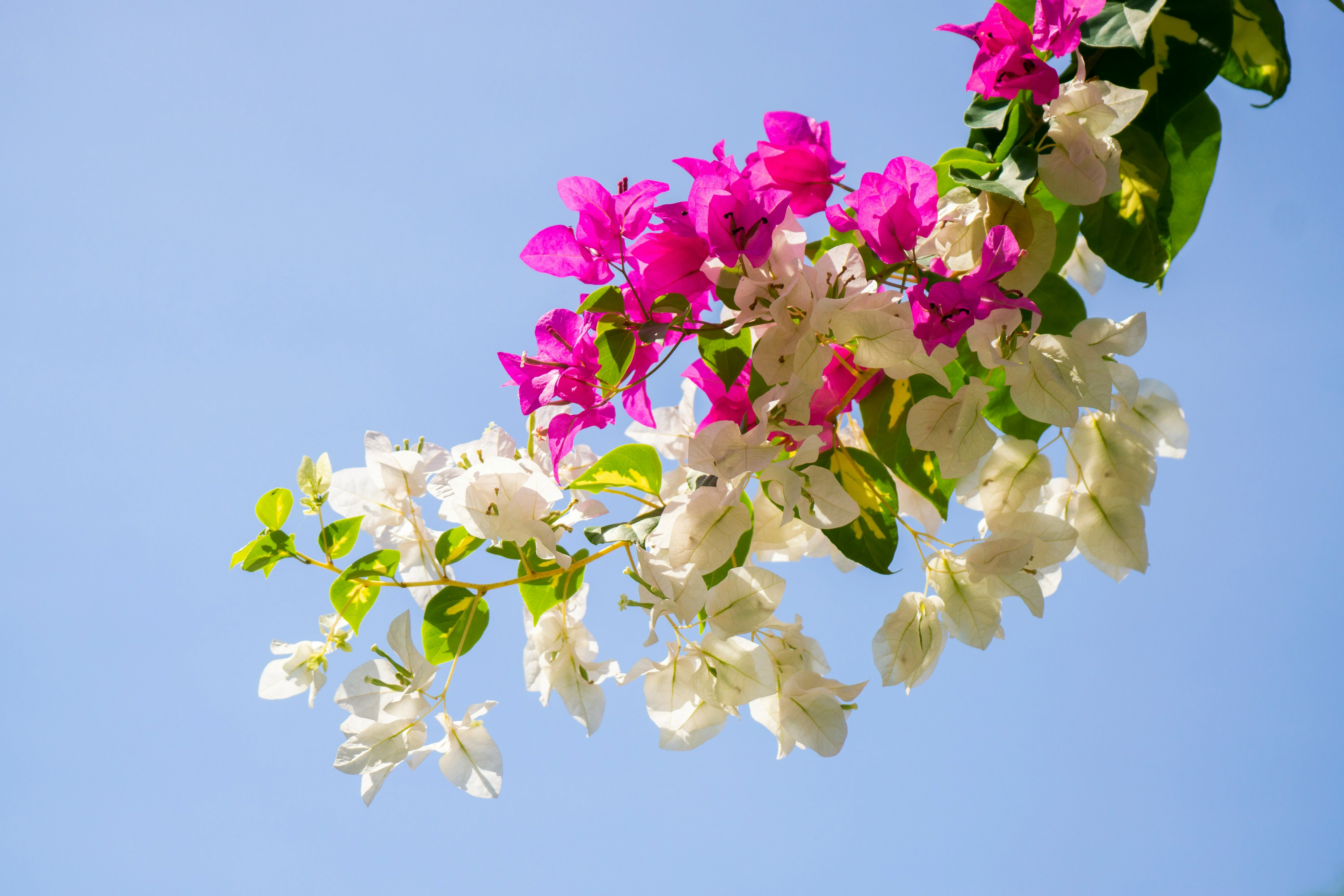
Bougainvillea is one of the most vibrant flowering ornamentals grown in tropical, subtropical, and even temperate climates (in containers). Known for brilliant colorful bracts that surround tiny white flowers, it is widely used in landscaping, fences, balconies, pergolas, bonsai, and container gardening worldwide.
Native to South America, bougainvillea thrives under intense sunlight, warm temperatures, and slightly dry conditions. The colorful portions are modified leaves called bracts — the true flowers are the small white structures in the center. Once established, bougainvillea is highly drought-tolerant and can produce massive flower displays multiple times per year under proper care.
Master the basics of sun, water, and pruning, and bougainvillea will reward you with explosive color almost year-round in warm climates.
Sunlight Requirements (Most Critical)
Bougainvillea requires minimum 6–8 hours of direct sunlight daily for maximum flowering. Insufficient sun results in weak, leggy growth, few bracts, and little to no blooming. In very hot desert climates, light afternoon shade (after 6+ hours of morning sun) prevents leaf scorch while still promoting flowers.
Signs of too little light: Long, thin stems (etiolation), widely spaced leaves, dark green foliage without bracts, and overall sparse growth. Move the plant to a brighter location immediately.
Watering: The Dry-Down Method
Bougainvillea prefers deep but infrequent watering. Water thoroughly until it drains from the bottom, then allow the top 2–3 inches of soil to become completely dry before watering again. Constantly wet soil causes root rot, yellow leaves, fungal diseases, and failure to bloom.
| Climate / Season | Watering Frequency | Notes |
|---|---|---|
| Hot & dry (summer, arid regions) | Every 3–5 days | Check soil; small pots may need more often |
| Warm & humid (tropics, rainy season) | Every 10–14 days | Protect from constant rain; improve drainage |
| Mild (spring/autumn) | Every 7–10 days | Ideal dry-down stress for blooming |
| Cool / winter (temperate zones) | Every 2–4 weeks | Water sparingly; prevent root rot during dormancy |
Tip: Never water on a fixed schedule. Use finger test or lift pot to feel weight. Slight morning leaf droop is a natural thirst signal — severe wilting means you waited too long.
Soil & Drainage
Use extremely well-draining soil. Heavy, compacted soil traps moisture and causes root rot. Ideal mix: 60% high-quality potting soil + 40% perlite or coarse sand. For in-ground planting, avoid low spots where water pools; raise beds or amend with horticultural grit.
Preferred pH: Slightly acidic to neutral (5.5–7.0). Bougainvillea tolerates mildly alkaline soils but may show iron deficiency (yellow new leaves with green veins) if pH is too high.
Pruning for Blooms & Shape
Bougainvillea blooms on new growth. Prune after each major flowering cycle (not during blooming). Remove dead or weak wood, thin crowded branches, and cut back long shoots by 1/3 to encourage branching and more flower sites. Heavy pruning (shaping, size reduction) is best done in late winter or early spring before the main growing season.
Quick pruning guide:
- After blooms fade: Light tip pruning (remove 2–3 inches of stem tips).
- To shape or size control: Cut back by up to 1/3 after flowering.
- For hedges or standards: Prune more frequently (every 4–6 weeks during active growth).
- Remove spent bracts to keep plant tidy and encourage rebloom.
Fertilizer: Feed for Bracts, Not Leaves
Use a low-nitrogen, high-phosphorus and potassium fertilizer (e.g., NPK 5-30-5, 2-10-10, or 0-10-10). Excess nitrogen (first number above 10) produces lush green leaves and few bracts. Feed every 4–6 weeks during the active growing season (spring through early autumn). Pause feeding during cool winters or wet rainy seasons.
Organic options: Bone meal (high phosphorus), wood ash (potassium, use sparingly), composted manure, or seaweed extract. Always water before and after feeding to prevent root burn.
Propagation Basics
Bougainvillea is easily propagated from semi-hardwood cuttings during warm, humid weather (late spring to early summer). Take 15–20 cm cuttings, remove lower leaves, dip in rooting hormone, plant in coarse sand/perlite mix, keep humid, and place in bright indirect light. Roots form in 4–8 weeks. Water propagation has lower success (30–60%) and weak roots; soil/perlite methods are more reliable.
Seasonal Care Guide (Global)
| Season | Watering | Fertilizing | Pruning | Special Care |
|---|---|---|---|---|
| Spring (growth starts) | Increase gradually | Begin low-N fertilizer | Light shaping if needed | Repot if root-bound |
| Summer (peak growth/bloom) | Dry-down between soaks | Every 4 weeks | After each bloom flush | Watch for spider mites in dry heat |
| Autumn (slowing down) | Reduce frequency | Reduce to every 6–8 weeks | Light tip pruning only | Prepare for winter in cold zones |
| Winter (dormancy or rest) | Sparingly (2–4 weeks) | None | Avoid hard pruning | Protect from frost; bring pots indoors below 5°C (40°F) |
Troubleshooting Common Problems
| Problem | Likely Cause | Solution |
|---|---|---|
| Yellow leaves, wet soil | Overwatering / root rot | Stop watering, improve drainage, repot if needed |
| Yellow leaves, dry soil | Underwatering | Deep soak, water more frequently, add mulch |
| No flowers, lush green growth | Too much nitrogen, too little sun | Switch to low-N fertilizer, increase sun to 6+ hours |
| Leaf drop | Environmental stress (over/under water, light shock, cold) | Stabilize conditions; check root moisture first |
| White powdery on leaves | Powdery mildew (high humidity, poor airflow) | Improve circulation; spray diluted milk or sulfur |
| Brown spots on leaves | Leaf spot fungus (wet foliage) | Water at base, remove affected leaves, apply neem oil |
| Sticky leaves or sooty mold | Aphids or scale insects | Spray with insecticidal soap or neem oil |
Container Growing Tips
Bougainvillea grows exceptionally well in pots and often flowers more heavily when slightly root-bound. Use a pot with multiple drainage holes, at least 35–50 cm (14–20 inches) in diameter for medium varieties. Repot every 2–3 years in fresh mix. Dwarf varieties (e.g., 'Helen Johnson') thrive in 25–35 cm pots. Protect terracotta pots from freezing temperatures (they can crack).
Overwintering in Cold Climates
Bougainvillea is frost-tender and cannot survive temperatures below 0°C (32°F). In temperate zones (USDA zones 8 and below):
- Move container plants indoors before first frost. Place in a bright, cool room (5–15°C / 40–60°F).
- Reduce watering to once every 3–4 weeks — just enough to keep roots from drying completely.
- Do not fertilize. Leaves may drop — this is normal dormancy.
- In spring, after night temperatures exceed 10°C (50°F), gradually reintroduce to outdoor sun over 10–14 days.
Bougainvillea is remarkably forgiving of neglect but unforgiving of overwatering. When in doubt, water less — dry roots can recover, rotted roots cannot.
Recommended next actions
Next Best Actions
Move from reading to action with related calculators, plant profiles, and quiz-based recommendations.
Calculator
Bougainvillea Potting Mix Calculator
Calculate the exact volumes of perlite, compost, and soil for a fast-draining Bougainvillea mix.
Calculator
Bougainvillea Soil pH Calculator
Calculate amendments to reach the ideal 5.5 - 6.5 pH for Bougainvillea nutrient uptake.
Calculator
Bougainvillea Watering Schedule Calculator
Calculate exactly when to water your Bougainvillea using the proven Dry-to-Bloom method.
Plant Guide
'Adarna' (Shikendari)
Bougainvillea 'Adarna' (Shikendari) is a rare collector's cultivar prized for its spectacular multicoloured bracts that shift between yellow, orange, and deep pink-magenta. A prolific bloomer for hot, full-sun gardens, fences, and large containers across tropical India.
Plant Guide
'Elizabeth Angus' (Purple Bougainvillea)
Bougainvillea 'Elizabeth Angus' is a popular and vigorous cultivar prized for its spectacular deep purple bracts and glossy, dark green foliage. A prolific bloomer for hot, full-sun gardens, fences, and containers across tropical and subtropical climates.
Plant Guide
Begum Sikander
Bougainvillea 'Begum Sikander' is a striking magenta-purple cultivar known for its lush tropical foliage and vibrant bracts. A regal ornamental climber that rewards full sun, sharp drainage, and lean feeding with spectacular colour displays in tropical and subtropical gardens.