How to Make Bougainvillea Bloom: Sun-Stress-Prune Method
Global guide to trigger heavy bougainvillea blooms using the sun-stress-prune method: full sun, controlled dry spells, strategic pruning, and low-nitrogen fertilizer.
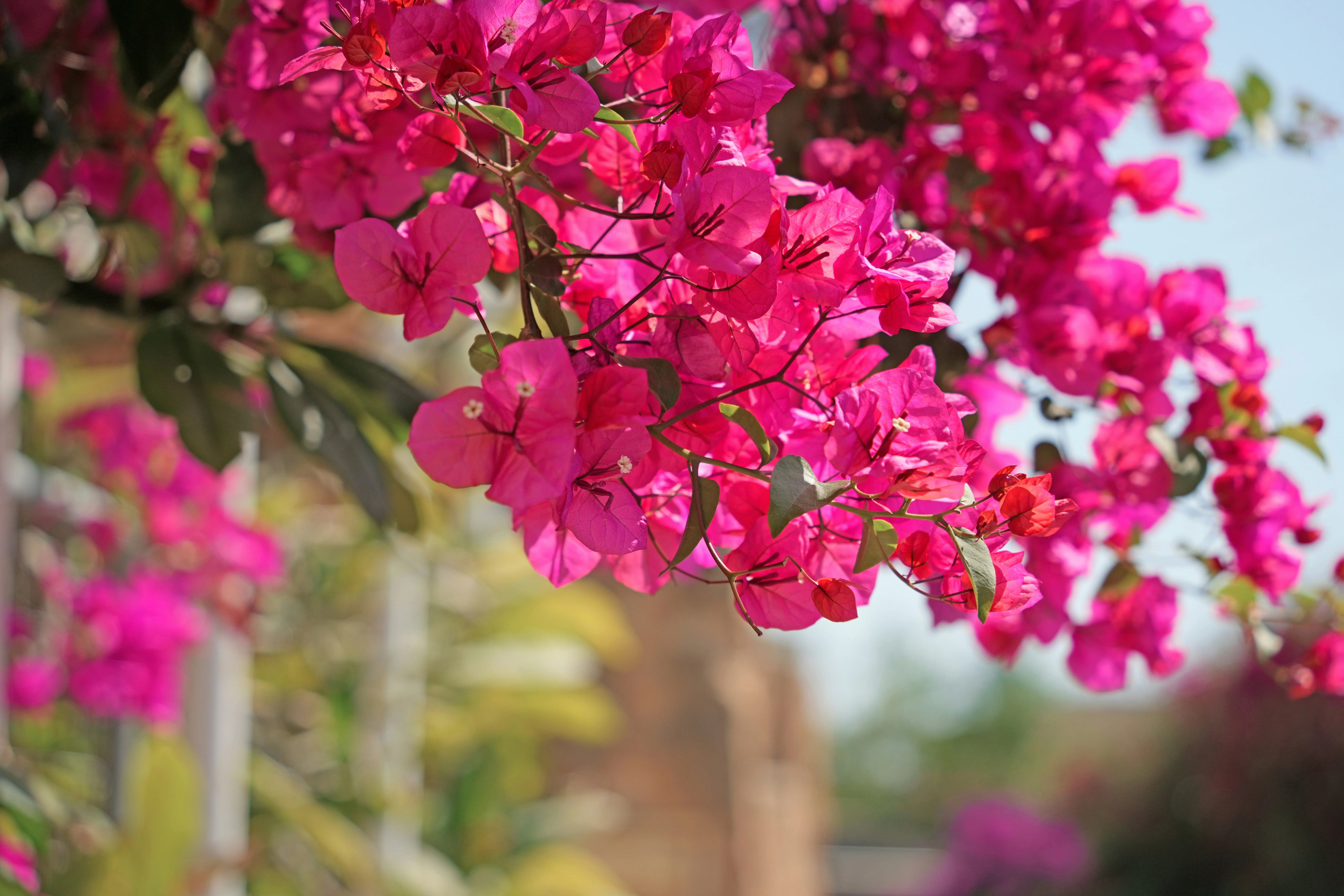
Quick Answer
To make bougainvillea bloom, apply the Sun-Stress-Prune method: (1) Provide 6–8 hours of direct sun daily, (2) Induce mild drought stress by watering only when the top 3 inches of soil are dry, (3) Prune lightly after each bloom cycle, (4) Use low‑nitrogen fertilizer (e.g., 5-30-5), and (5) Avoid overwatering and high‑nitrogen feeds.
Bloom response follows maturity. New shoots must harden under good light before the plant commits to bracts, so patience is part of the protocol.
Use the sun-stress-prune sequence: maintain high light, avoid constant moisture, then prune lightly after a flush to trigger controlled regrowth.
Frequent hard pruning or high nitrogen at the wrong time can reset the plant into soft vegetative mode. Recover by reducing inputs and stabilizing sunlight and dry-down discipline.
Color appears when timing and restraint align.
The Sun-Stress-Prune Method: Step by Step
- Sun (Foundation): Place bougainvillea in the brightest location possible — minimum 6–8 hours of direct sun daily. Without this, no method will produce heavy blooms. In extremely hot deserts, morning sun + afternoon shade works but reduces flower count slightly.
- Stress (Mild Drought): Reduce watering frequency. Allow the top 3 inches of soil to become completely dry before watering again. Aim for slight leaf droop in the morning (not severe wilting). This mild water stress signals the plant to shift from leaf growth to reproductive (bract) mode. Continue for 3–4 weeks.
- Prune (Strategic): After a bloom cycle fades, prune lightly — remove spent bracts and cut back stem tips by 2–4 inches (5–10 cm). This removes apical dominance and encourages branching, creating more sites for future bracts. Do not hard prune (removing more than 1/3 of the plant) unless you are reshaping; hard pruning delays blooms for 2–3 months.
- Feed (Low Nitrogen): Apply a low‑nitrogen, high‑phosphorus fertilizer (e.g., NPK 5-30-5 or 0-10-10) every 4–6 weeks during the growing season. Avoid high‑nitrogen (first number >10) which promotes leaves over bracts.
- Repeat: Cycle stress → bloom → prune → feed → repeat. In warm climates, you can get 3–5 bloom cycles per year.
Bloom Triggers Compared
| Method | Effectiveness | Time to Bloom | Risk Level | Notes |
|---|---|---|---|---|
| Sun exposure (6–8 hours) | Essential (100%) | 4–6 weeks (if previously shaded) | None | Without enough sun, no other method works reliably. |
| Mild drought stress | Very high (80–90%) | 3–5 weeks | Low (if monitored) | Most reliable trigger for mature plants. Do not severely wilt. |
| Light pruning after bloom | High (70–80%) | 4–8 weeks (new growth matures) | Low | Removes spent bracts and stimulates branching. |
| Low‑nitrogen fertilizer | Moderate–High (60–80%) | 6–10 weeks | Low | Supports bloom but cannot replace sun or stress. |
| Root restriction (pot‑bound) | Moderate (50–70%) | 4–8 weeks | Low | Bougainvillea blooms more when slightly root‑bound. |
| Hard pruning (severe cutback) | Low for immediate bloom | 3–6 months | Moderate (weak recovery) | Use only for reshaping, not for bloom induction. |
Why Bougainvillea Won't Bloom – Troubleshooting Table
| Primary Cause | Signs | Solution | Expected Recovery Time |
|---|---|---|---|
| Insufficient sunlight (< 5 hours) | Leggy growth, dark green leaves, sparse branches | Move to brightest location (south/west facing). Prune back leggy stems. | 6–8 weeks after relocation |
| Overwatering (constant wet soil) | Yellow leaves, soft stems, no bracts | Stop watering; improve drainage; repot if needed. Allow soil to dry thoroughly. | 4–6 weeks after correcting moisture |
| Too much nitrogen fertilizer | Lush, dark green growth, no flowers | Flush soil with water; switch to low‑N fertilizer (e.g., 0-10-10 or 5-30-5). | 2–3 months (after next growth cycle) |
| Plant too young / immature | Healthy but small, no bracts | Wait. Most bougainvilleas bloom at 1–3 years old. Provide optimal care. | 1–2 years |
| Pruned too heavily recently | New vegetative regrowth, no bracts | Stop pruning; let branches mature for 2–3 months; then apply stress. | 8–12 weeks |
| Cold temperatures (< 10°C / 50°F) | Slow growth, leaf drop, no blooms | Move to warmer location (above 15°C/59°F). Protect from frost. | Spring after temperatures rise |
| Root rot (advanced) | Wilting with wet soil, black roots, foul odor | Unpot, remove rotten roots, repot in sterile dry mix. Do not water for 1 week. | 6–12 weeks (if plant survives) |
Seasonal Blooming Calendar (Global)
| Climate Zone | Peak Bloom Seasons | Bloom Triggers to Apply | Notes |
|---|---|---|---|
| Tropical (e.g., SE Asia, Brazil, Florida) | Dry season (winter/spring) and again in autumn | Reduce water during wet season; increase sun; prune after each flush | Year‑round potential; rain reduces blooms |
| Subtropical (e.g., Mediterranean, SoCal, Australia coast) | Spring (April–June) and autumn (September–November) | Sun‑stress in late winter; prune after spring flush for autumn rebloom | Avoid summer heat stress; winter dormancy possible |
| Arid / Desert (e.g., Arizona, Middle East) | Spring and autumn (avoid summer heat) | Morning sun + afternoon shade; stress in late winter; protect from extreme heat | Summer blooms may be smaller; water more often in extreme heat but allow dry‑down |
| Temperate (e.g., UK, Northern Europe, Canada – containers) | Summer (June–August) only | Move outdoors after frost; full sun; stress in early summer; bring indoors early autumn | Blooming window short; best in pots |
Advanced Tips for Maximum Blooms
- Root restriction: Keep bougainvillea slightly pot‑bound. Repot only every 2–3 years. A crowded root zone often triggers more bracts.
- Withhold water strategically: In the 2–3 weeks before you want blooms, water only when the plant shows slight morning droop. Then water deeply and repeat the cycle.
- Phosphorus boost: Bone meal (3-15-0) worked into soil 4 weeks before expected bloom season can intensify bract production.
- Remove old bracts promptly: Spent bracts left on the plant can inhibit new buds. Gently pull or snip them off.
- Do not prune from mid‑autumn to late winter in temperate zones – new growth will be killed by cold.
- Combine methods: Sun + stress + pruning + low‑N fertilizer together produce the most dramatic results.
Common Misconceptions
- “Fertilizer alone will make it bloom.” → False. Without adequate sun and dry stress, fertilizer only grows leaves.
- “Hard pruning forces blooms.” → Mostly false. Hard pruning delays blooms by months. Light pruning is better for flower induction.
- “More water = more flowers.” → Opposite. Constant moisture suppresses blooming.
- “Bougainvillea only blooms once a year.” → In tropical and subtropical climates, with proper care, it can bloom 3–5 times annually.
The Sun-Stress-Prune method mimics bougainvillea's native habitat: bright sun, alternating dry and wet periods, and new growth after rain. Recreate these conditions, and your plant will respond with explosive color.
Recommended next actions
Next Best Actions
Move from reading to action with related calculators, plant profiles, and quiz-based recommendations.
Calculator
Bougainvillea Watering Schedule Calculator
Calculate exactly when to water your Bougainvillea using the proven Dry-to-Bloom method.
Plant Guide
'Barbara Karst'
Bougainvillea 'Barbara Karst' is a vigorous, popular cultivar prized for its brilliant magenta-red bracts and prolific, nearly year-round blooming habit. One of the hardiest bougainvilleas, it thrives in hot, full-sun gardens, on fences and trellises, and in large containers across tropical and subtropical climates.
Plant Guide
'Elizabeth Angus' (Purple Bougainvillea)
Bougainvillea 'Elizabeth Angus' is a popular and vigorous cultivar prized for its spectacular deep purple bracts and glossy, dark green foliage. A prolific bloomer for hot, full-sun gardens, fences, and containers across tropical and subtropical climates.
Plant Guide
21 Jewel Yellow
This 21 Jewel Yellow bougainvillea is valued for its golden yellow to creamy yellow bracts and its sun-loving climber that shows best colour in bright, hot exposure. In warm tropical and subtropical gardens, it performs as a resilient ornamental climber that rewards full sun, sharp drainage, and a restrained feeding regime with long flushes of colour.
Calculator
Bougainvillea NPK Fertilizer Calculator
Analyze your fertilizer NPK ratio to ensure it promotes Bougainvillea blooms rather than just green leaves.
Calculator
Bougainvillea Potting Mix Calculator
Calculate the exact volumes of perlite, compost, and soil for a fast-draining Bougainvillea mix.