How to Water Bougainvillea: Dry-Down & Seasonal Guide
Master bougainvillea watering worldwide: use the dry-down method to prevent root rot, trigger heavy blooming, and adjust for pots, ground, and all climates.
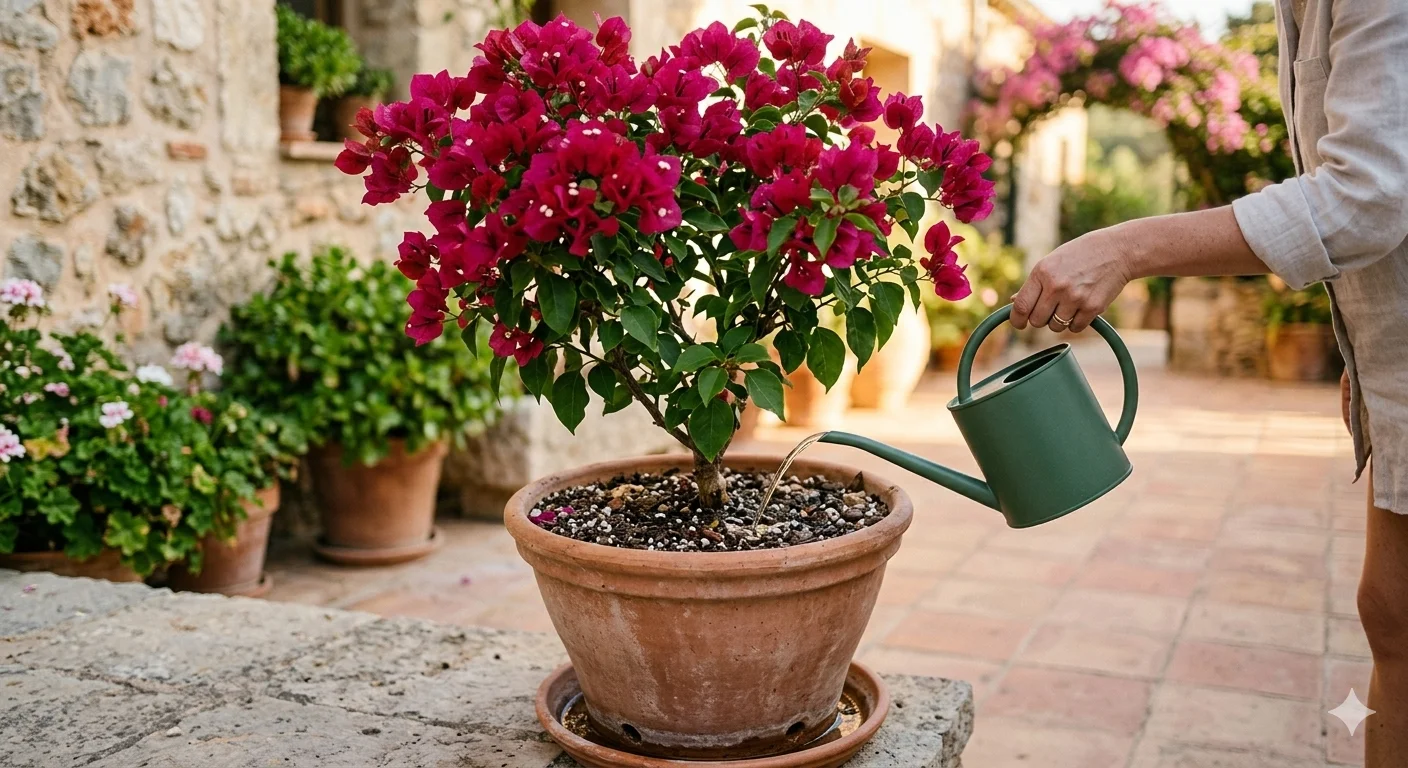
Quick Answer
Water deeply only when the top 2–3 inches of soil are completely dry. Then allow the pot to nearly dry out before the next watering. This dry-down cycle mimics bougainvillea's native habitat and triggers blooming while preventing root rot.
Start by observing the container or soil, not the calendar. In warm weather, a pot can dry quickly; in cloudy or humid periods, the same pot may remain wet for days. Water only when the root zone has begun to breathe again.
Use full sun as the foundation. Keep the medium coarse enough that water leaves the root zone easily. Prune lightly after flowering to create new tips, then allow those tips to mature before expecting the next flush of bracts.
The fastest way to lose flowers is to combine shade, rich nitrogen fertilizer, and wet soil. The plant survives, but the display becomes soft, green, and reluctant. Correct one variable at a time so the plant can respond steadily.
For bougainvillea, luxury care means precision, not excess.
Watering by Season & Climate (Global Table)
| Climate / Season | Watering Frequency | Special Considerations | Bloom Impact |
|---|---|---|---|
| Hot & Dry (Summer, Arid regions) | Every 3–5 days (deep soak) | Mulch heavily; water early morning; increase pot size to buffer heat | Good blooms if dry periods between waterings |
| Warm & Humid (Tropical, Rainy season) | Every 10–14 days or less | Protect from constant rain; ensure excellent drainage; stop watering during prolonged wet spells | Poor blooms if constantly wet; reduce water to trigger blooms |
| Mild / Spring & Autumn (Mediterranean, Subtropical) | Every 7–10 days | Water when top 2–3 inches dry; ideal for dry-down stress that promotes blooming | Peak blooming season with proper dry cycles |
| Cool / Winter (Temperate, Frost-prone) | Every 2–4 weeks (sparingly) | Only water if soil is almost completely dry; protect from frost; reduce frequency drastically | No blooms (dormancy); overwatering causes root rot |
The Dry-Down Method: Step by Step
- Check soil moisture – Insert finger 2–3 inches deep (or use a moisture meter). If it feels dry at that depth, it's time to water.
- Water deeply – Apply water slowly until it runs freely from drainage holes (for pots) or saturates the root zone (for ground). This encourages deep root growth.
- Allow complete drying – Do not water again until the top 2–3 inches are dry. In hot weather this may take 3–5 days; in cool weather, 10–14 days.
- Observe leaf cues – Slight leaf droop in the morning is a natural sign of thirst. Severe wilting with crispy edges means you waited too long.
- Adjust for microclimate – Terraces, windy spots, dark pots, and small containers dry faster. Clay pots dry faster than plastic.
How Watering Affects Blooming
Bougainvillea blooms best when mildly stressed by dry conditions. Constant moisture produces lush green leaves and few bracts. To trigger flowering:
- Reduce watering frequency by 30–50% for 3–4 weeks.
- Allow the plant to reach the point of slight leaf wilt before watering.
- Then resume normal dry-down cycles. New growth will often produce bracts.
Caution: Do not withhold water to the point of severe wilting or leaf drop. The goal is mild, controlled stress.
Troubleshooting Watering Problems
| Problem | Signs | Cause | Solution |
|---|---|---|---|
| Yellow leaves, wet soil | Lower leaves yellow and drop; soil stays soggy for days | Overwatering / poor drainage | Stop watering; repot with coarse mix; ensure drainage holes; reduce frequency |
| Crispy brown edges, dry soil | Leaves dry, curl, drop; soil pulls away from pot edges | Underwatering | Deep soak; then water more frequently; add mulch; consider larger pot |
| Wilting but soil moist | Plant looks thirsty even though soil is wet | Root rot or suffocation | Check roots; remove rotten parts; repot into dry, airy mix; stop watering |
| No blooms, lush green growth | Vigorous leaves, very few bracts | Too much water + nitrogen | Reduce watering frequency; switch to low-nitrogen fertilizer; increase sun |
| Leaf drop after watering | Leaves fall within hours of watering | Extreme temperature contrast (cold water on hot roots) | Use water at ambient temperature; water early morning or evening |
Watering for Pots vs Ground
- Containers: Dry out faster. Use coarse, fast-draining mix (60% potting soil + 40% perlite/sand). Check moisture every 2–3 days in hot weather. Ensure pots have multiple drainage holes.
- In-ground: Retain moisture longer. Water deeply but less often. After establishment (first year), mature plants in warm climates may need water only every 2–3 weeks if there is seasonal rain. Avoid planting in low spots where water pools.
Best Practices Summary
- Always water the base, not the leaves – wet foliage invites fungal diseases.
- Water early morning so excess moisture evaporates during the day.
- Reduce watering by 50% during cool, cloudy, or humid weather.
- Never let pots sit in saucers full of standing water.
- Increase pot size if you cannot keep up with watering demand (small pots in hot climates may need daily watering – consider upgrading).
- Use a moisture meter or finger test – calendars lie, plants tell the truth.
The single most common mistake is watering on a fixed schedule. Bougainvillea rewards those who water by feel, not by date.
Recommended next actions
Next Best Actions
Move from reading to action with related calculators, plant profiles, and quiz-based recommendations.
Calculator
Bougainvillea Watering Schedule Calculator
Calculate exactly when to water your Bougainvillea using the proven Dry-to-Bloom method.
Plant Guide
'Barbara Karst'
Bougainvillea 'Barbara Karst' is a vigorous, popular cultivar prized for its brilliant magenta-red bracts and prolific, nearly year-round blooming habit. One of the hardiest bougainvilleas, it thrives in hot, full-sun gardens, on fences and trellises, and in large containers across tropical and subtropical climates.
Plant Guide
'California Gold'
Bougainvillea 'California Gold' is a vigorous and popular cultivar prized for its stunning, warm golden-yellow bracts that sometimes shift to a bronze-orange as they age. A prolific bloomer for hot, full-sun gardens, fences, trellises, and containers across tropical and subtropical climates.
Plant Guide
'Elizabeth Angus' (Purple Bougainvillea)
Bougainvillea 'Elizabeth Angus' is a popular and vigorous cultivar prized for its spectacular deep purple bracts and glossy, dark green foliage. A prolific bloomer for hot, full-sun gardens, fences, and containers across tropical and subtropical climates.
Calculator
Bougainvillea Potting Mix Calculator
Calculate the exact volumes of perlite, compost, and soil for a fast-draining Bougainvillea mix.
Calculator
Bougainvillea Grow Bag Size Calculator
Calculate the ideal fabric grow bag volume for massive Bougainvillea growth.