Bougainvillea Growing Guide: Sun, Soil, Pruning & Climate
Complete bougainvillea growing guide for tropical, subtropical, and Mediterranean climates. Learn sunlight, soil mix, pruning, and seasonal care for dwarf balcony pots to large wall climbers.
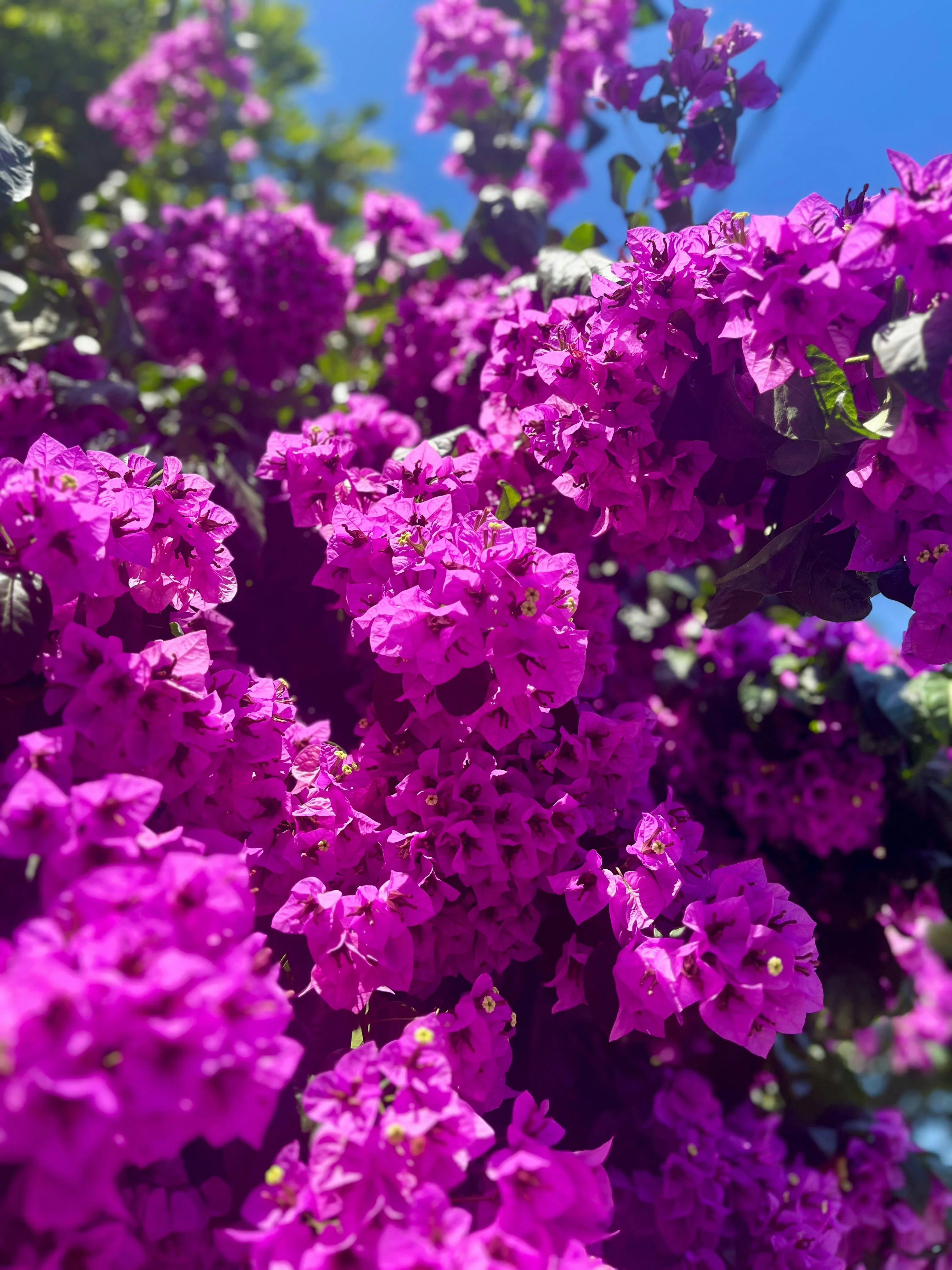
Quick Answer
Success with bougainvillea depends on strong sunlight, fast-draining soil, intentional pruning, and matching your climate's wet/dry cycles.
Think in systems: sun exposure, drainage profile, container volume, and pruning age all interact. The best growers track those four signals before changing care.
Place plants where they receive strong direct light — at least 5–6 hours daily. Build a fast-draining medium, prune with intention, and let new tips mature before expecting color intensity to return.
Switching multiple variables at once makes diagnosis impossible. If growth declines, change one condition, observe for a cycle, then adjust the next.
Sunlight & Placement
Bougainvillea is a sun worshipper. Less than 5 hours of direct sun results in weak growth, few bracts, and increased disease risk. South- or west-facing locations are ideal in the Northern Hemisphere. In extremely hot climates, afternoon shade prevents leaf scorch while still providing sufficient morning sun.
Soil & Drainage (Critical)
Root rot is the #1 killer. Use a coarse, well-draining mix: 60% standard potting soil + 40% perlite or coarse sand. For ground planting, avoid heavy clay; raise beds or amend with horticultural grit. Containers must have multiple drainage holes — never use pots without holes.
Pruning for Bloom & Shape
Bougainvillea blooms on new growth. Prune after each major flowering cycle (not during active blooming). Remove dead wood, thin crowded branches, and cut back long shoots by 1/3 to encourage branching. For hedges or standards, prune more frequently. Heavy pruning is best done in late winter or early spring before the main growing season.
Seasonal Growing Guide (Worldwide)
| Season / Climate Phase | Watering | Fertilizing | Pruning | Special Care |
|---|---|---|---|---|
| Wet / Rainy (Tropics/Monsoon) | Reduce or stop; ensure drainage | Pause feeding | Avoid; wait for dry spells | Check for leaf spot; improve airflow |
| Dry / Hot (Summer) | Water deeply when top 2 inches dry | Low-phosphorus fertilizer (5-5-5 or 10-10-10) every 4 weeks | Light tip pruning only | Mulch to retain moisture; watch for spider mites |
| Cool / Mild (Autumn–Spring) | Reduce watering; allow soil to dry more | Balanced fertilizer every 6–8 weeks | Major pruning after last frost or before growth surge | Protect from frost; bring containers indoors if below 5°C (40°F) |
Climate Adaptations
- Tropical / Wet-dry (e.g., Thailand, Brazil, Florida): Plant in the dry season, stop watering during rains, prune after wet spells end.
- Mediterranean (e.g., California, Spain): Deep soak in summer, protect from winter frosts, prune in late winter.
- Subtropical / Humid (e.g., Southern China, Gulf Coast): Ensure excellent airflow, use wide pots, apply neem oil preventively in humid months.
- Arid / Desert (e.g., Arizona, Middle East): Provide afternoon shade, mulch heavily, increase container size to buffer heat.
- Temperate / Cool (e.g., UK, Northern Europe): Grow in pots, move indoors for winter, use grow lights if needed, prune hard in spring.
Pot Size & Training
Dwarf varieties (e.g., 'Helen Johnson', 'Raspberry Ice'): 25–35 cm pots, bush or bonsai shape.
Medium climbers (e.g., 'Barbara Karst', 'California Gold'): 40–50 cm pots or ground; train on trellis or wall.
Large climbers (e.g., 'Crimson Jewel', 'Orange King'): 60 cm+ pots or direct ground; can cover large structures.
Common Mistakes & Fixes
- Yellow leaves + wet soil: Overwatering → Stop water, improve drainage, repot if needed.
- Green growth but no bracts: Too much nitrogen or too little sun → Switch to low-phosphorus fertilizer (e.g., 5-30-5) and increase light.
- Leaf drop after moving: Normal stress response → Keep stable conditions, don't water excessively, wait 2–3 weeks.
- Weak, leggy stems: Not enough light or no pruning → Move to sun, prune back by 1/3.
Strong blooms come from disciplined rhythm, not constant intervention. Master sun, soil, and pruning — the rest follows naturally.
Recommended next actions
Next Best Actions
Move from reading to action with related calculators, plant profiles, and quiz-based recommendations.
Plant Guide
'Barbara Karst'
Bougainvillea 'Barbara Karst' is a vigorous, popular cultivar prized for its brilliant magenta-red bracts and prolific, nearly year-round blooming habit. One of the hardiest bougainvilleas, it thrives in hot, full-sun gardens, on fences and trellises, and in large containers across tropical and subtropical climates.
Plant Guide
'Adarna' (Shikendari)
Bougainvillea 'Adarna' (Shikendari) is a rare collector's cultivar prized for its spectacular multicoloured bracts that shift between yellow, orange, and deep pink-magenta. A prolific bloomer for hot, full-sun gardens, fences, and large containers across tropical India.
Plant Guide
'California Gold'
Bougainvillea 'California Gold' is a vigorous and popular cultivar prized for its stunning, warm golden-yellow bracts that sometimes shift to a bronze-orange as they age. A prolific bloomer for hot, full-sun gardens, fences, trellises, and containers across tropical and subtropical climates.
Calculator
Bougainvillea Potting Mix Calculator
Calculate the exact volumes of perlite, compost, and soil for a fast-draining Bougainvillea mix.
Calculator
Bougainvillea Soil pH Calculator
Calculate amendments to reach the ideal 5.5 - 6.5 pH for Bougainvillea nutrient uptake.
Calculator
Bougainvillea Garden Mulch Calculator
Calculate exact mulch volumes while learning how to apply it safely around Bougainvilleas.