Bougainvillea Watering Calculator Explained — How It Works +...
A transparent, plain-English explanation of how the bougainvillea watering calculator works — the formula, all variables, and real output examples from Kolkata, Delhi, and Chennai. Plus, when to override the calculator based on your specific conditions.
Quick Answer
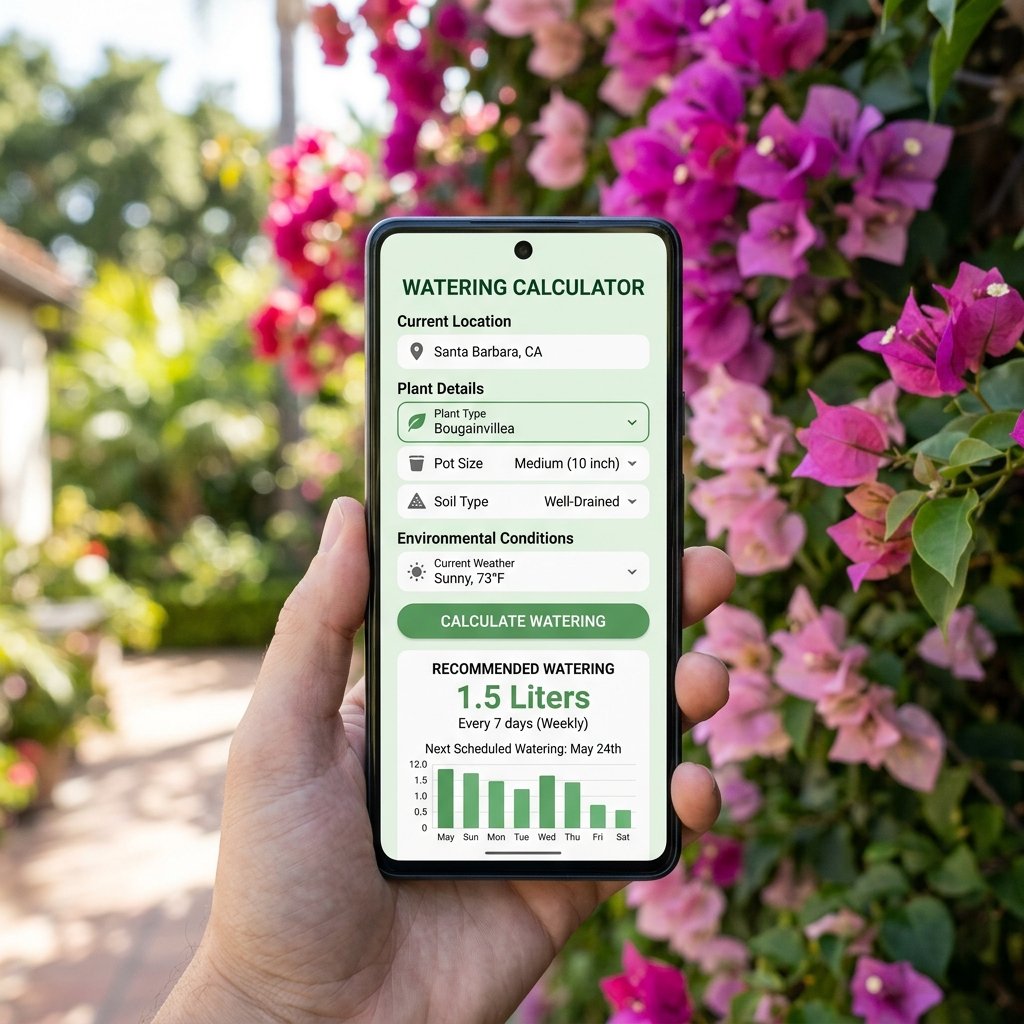
The watering calculator estimates how many days to wait between deep waterings based on your climate, pot material, pot size, plant type, soil drainage, and placement. It starts with a climate baseline (derived from temperature and humidity) and adjusts it with multipliers for each variable. For a Barbara Karst in a 30cm terracotta pot in Kolkata in October, the output is typically 4–5 days. Always override the number if you see morning leaf droop before the interval ends.
Why We Built a Watering Calculator
The most common question we receive at our nursery is some version of: "How often should I water my bougainvillea?" The honest answer is that no single number works for everyone. A plant in a terracotta pot on a sunny Kolkata terrace in May dries out 5–6 times faster than the same plant in a glazed ceramic pot in a shaded Delhi garden in December.
Generic advice — "water every 3 days" or "water when the top inch is dry" — is not wrong, but it is incomplete. The watering calculator attempts to give you a personalised starting number by combining the most important environmental and plant variables into a single formula. It is a baseline, not a prescription. This article explains exactly how it works and when to trust it — and when to ignore it.
The Formula: How the Calculator Works
The calculator uses this core formula:
Watering interval (days) = Climate base interval × Plant type factor × Pot material factor × Pot size factor × Soil drainage factor × Placement factor
Climate Base Interval
This is the starting number — derived from your temperature and relative humidity inputs. High temperature and low humidity (like Delhi in May: 42°C, 20% RH) means very fast evaporation, so the base interval is short: 2–3 days. Low temperature and high humidity (like Kolkata in August: 30°C, 90% RH) means much slower soil drying, so the base interval is longer: 6–8 days.
The climate baseline uses VPD (Vapour Pressure Deficit) as the underlying concept — a measure of how "thirsty" the air is. High VPD = high atmospheric demand for moisture = soil dries faster.
Plant Type Factor
Different plants have different water requirements. Bougainvillea is drought-adapted — it prefers to dry out significantly between waterings. Compared to ferns (which need near-constant moisture) or tomatoes (high demand), bougainvillea gets a multiplier greater than 1.0, stretching the interval longer. This is the "Dry-to-Bloom" principle built directly into the formula.
Pot Material Factor
Terracotta pots lose water through the pot walls in addition to evaporation from the soil surface — this shortens the interval significantly. A terracotta pot multiplier is less than 1.0 (dries faster). A plastic or glazed ceramic pot multiplier is close to 1.0 or slightly above (dries slower). This is one of the most impactful factors in the formula — the same plant in terracotta vs plastic can have a 40% difference in drying speed.
Pot Size Factor
Smaller pots have less soil volume and dry out faster. A 15cm pot dries in half the time of a 30cm pot. The pot size factor adjusts the interval downward for small pots and upward for large pots.
Soil Drainage Factor
Sandy, gritty, or perlite-heavy mixes drain and dry faster. Dense, peat-heavy mixes retain more moisture. The formula adjusts for this — a well-draining mix shortens the interval, a moisture-retaining mix extends it.
Placement Factor
An outdoor plant in full sun dries much faster than an indoor plant in diffuse light. Wind exposure also matters — a plant on a windy high-rise terrace dries 30–40% faster than one in a sheltered ground-floor garden.
Real Output Examples from Indian Conditions
| City / Season | Conditions | Calculator Output | Our Real Observation |
|---|---|---|---|
| Kolkata, October (post-monsoon) | 30°C, 70% RH, 30cm terracotta, outdoor full sun | 4–5 days | 4 days — calculator matched well |
| Kolkata, July (peak monsoon) | 30°C, 92% RH, 30cm terracotta, partially sheltered | 7–9 days | Often no watering needed at all — monsoon rain handles it |
| Delhi, May (pre-monsoon) | 42°C, 20% RH, 30cm terracotta, full sun | 2–3 days | 2 days confirmed — the heat is brutal on soil moisture |
| Chennai, December | 28°C, 75% RH, 40cm plastic pot, outdoor | 5–6 days | 5–7 days — slight variation depending on afternoon wind |
| Mumbai, August (monsoon) | 29°C, 88% RH, 35cm glazed ceramic, sheltered balcony | 8–10 days | 10 days — the glazed pot and monsoon made this accurate |
| Bengaluru, March | 32°C, 55% RH, 25cm terracotta, full sun | 3–4 days | 3 days — the warm, dry Bengaluru spring is deceptive |
When to Override the Calculator
The calculator is a starting point. Override it when:
- You see morning leaf droop before the interval ends: Water now. The plant is telling you it needs water regardless of what the calculator says.
- It rains unexpectedly: Skip watering if the soil received significant rain within the calculator's interval.
- Temperature spikes above 40°C: In extreme heat, soil can dry 2–3× faster than the calculator predicts. Check the plant and the soil, not the timer.
- Your pot has been repotted recently: New soil drainage behaviour takes 2–4 weeks to stabilise. Monitor closely rather than trusting the output.
- The plant is in active bloom: Blooming plants use more water. Reduce the interval by 20–30% during peak bract production.
The Dry-to-Bloom Principle: Why the Calculator Aims Long
The calculator is deliberately calibrated to err on the side of allowing the soil to dry longer rather than watering more frequently. This is because overwatering kills bougainvillea far more reliably and quickly than underwatering. A plant that wilts slightly from underwatering typically recovers within hours of a good watering. A plant with root rot from overwatering takes weeks to months to recover — and often does not.
The Dry-to-Bloom method is also the primary bloom trigger for bougainvillea. Mild drought stress shifts the plant from vegetative growth to reproductive mode. So in practice, the calculator's output is not just preventing overwatering — it is also actively encouraging bloom production.
Common Mistakes When Using the Calculator
- Treating the output as an exact rule rather than a baseline. The calculator cannot account for your specific microclimate, exact pot condition, or individual plant health. Use the number as a starting estimate and adjust from observation.
- Not changing the inputs seasonally. Re-run the calculator as seasons change — the same pot needs completely different watering in May vs October in Kolkata.
- Ignoring the pot material field. The difference between terracotta and plastic is the most impactful single variable in the formula. Enter it accurately.
- Using it during active monsoon. During the Indian monsoon, the calculator output is largely irrelevant — rain is watering your plant. Shift your focus to drainage management rather than watering frequency.
Try the Calculator
The Bougainvillea Watering Calculator is free, requires no registration, and gives you an instant personalised result. After running it, bookmark the result page — you can return and re-run it as your conditions change through the year.
A calculator cannot replace observation — but it gives you a calibrated starting point that is far better than a generic "water every 3 days" rule. Start with the number, then let the plant refine it.
Recommended next actions
Next Best Actions
Move from reading to action with related calculators, plant profiles, and quiz-based recommendations.
Calculator
Bougainvillea Watering Schedule Calculator
Calculate exactly when to water your Bougainvillea using the proven Dry-to-Bloom method.
Calculator
Bougainvillea Heat Stress & Watering Calculator
Diagnose heat stress in potted Bougainvilleas during extreme summer weather.
Calculator
Bougainvillea Potting Mix Calculator
Calculate the exact volumes of perlite, compost, and soil for a fast-draining Bougainvillea mix.
Plant Guide
'Adarna' (Shikendari)
Bougainvillea 'Adarna' (Shikendari) is a rare collector's cultivar prized for its spectacular multicoloured bracts that shift between yellow, orange, and deep pink-magenta. A prolific bloomer for hot, full-sun gardens, fences, and large containers across tropical India.
Plant Guide
'Barbara Karst'
Bougainvillea 'Barbara Karst' is a vigorous, popular cultivar prized for its brilliant magenta-red bracts and prolific, nearly year-round blooming habit. One of the hardiest bougainvilleas, it thrives in hot, full-sun gardens, on fences and trellises, and in large containers across tropical and subtropical climates.
Plant Guide
Chilli Orange
This Chilli Orange bougainvillea is valued for its orange to tangerine bracts and its showy climber that flowers best in strong sun and warm conditions. In warm tropical and subtropical gardens, it performs as a resilient ornamental climber that rewards full sun, sharp drainage, and a restrained feeding regime with long flushes of colour.