Bougainvillea Duck Feet
Bougainvillea 'Duck Feet'
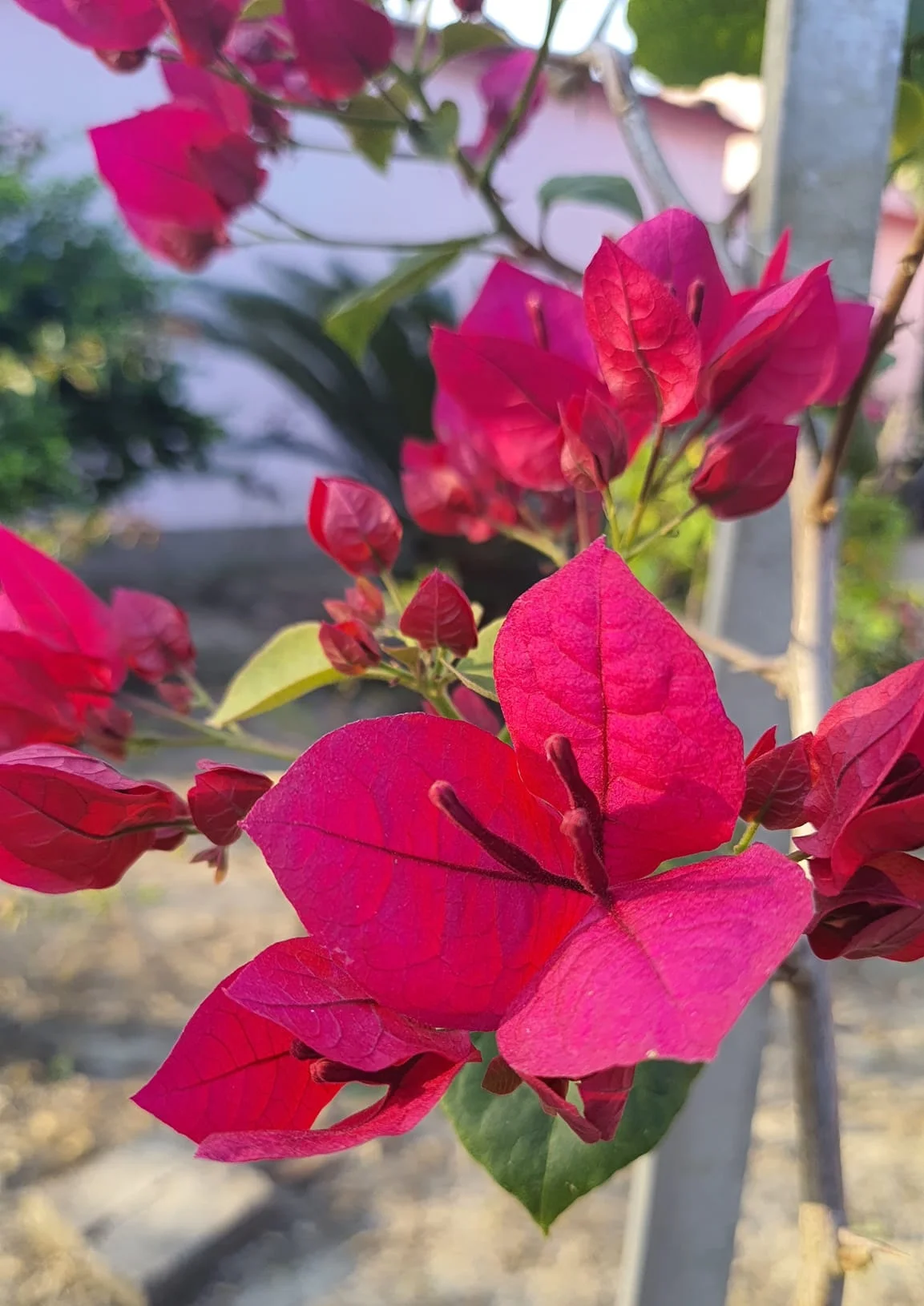
Bougainvillea 'Duck Feet' is a rare compact cultivar prized for its distinctive lobed leaves resembling duck feet and bright pink-magenta bracts. Ideal for containers, balconies, and small gardens where foliage interest matters as much as flower colour.
-
Light
Full sun is essential for best bloom production.
-
Temperature
65°F – 95°F
Growth
Moderate
pH Range
5.5 – 6.5
-
Biggest Owner Mistake
Overwatering in containers. Because Duck Feet is compact, owners assume it needs less drainage. Wrong — its roots are just as sensitive to rot as vigorous vines. Use a gritty, fast-draining mix and never let the pot sit in water.
-
What Nobody Tells You
The lobed leaves are not just ornamental — they are a sign of a genetic mutation that also slightly reduces photosynthetic efficiency. This means Duck Feet grows slower than standard cultivars, but it also means it needs less aggressive pruning to stay compact. Patience is rewarded with a perfectly shaped plant.
-
Real Home Conditions
Duck Feet excels in hot, dry balcony environments where larger vines would become unmanageable. Its compact frame handles wind exposure better than tall climbers, and the smaller leaf surface reduces water loss. Perfect for urban rooftop gardens.
Quick Answer
Bougainvillea 'Duck Feet' performs best in full sun, lean soil, and very sharp drainage. Its compact habit suits containers and small spaces. Water deeply only when dry, use low-nitrogen fertiliser, and prune lightly after each flush.
Overview
The Duck Feet bougainvillea is a unique and interesting variety of bougainvillea, known for its distinctive foliage and vibrant blooms. Here are some key points about this particular plant: Characteristics Appearance: The Duck Feet bougainvillea is named for its distinctive leaves, which resemble the shape of a duck's foot. The leaves are smaller and have a unique, lobed shape that sets them apart from other bougainvillea varieties. Bracts and Flowers: Like other bougainvilleas, it produces colorful bracts that are often mistaken for flowers. The actual flowers are small and white, located within the brightly colored bracts. The bracts typically come in shades of pink, red, or purple. Growth Habit: This variety has a compact and bushy growth habit, making it suitable for smaller spaces and container gardening. It can also be trained to climb if provided with support. Growing Conditions Sunlight: The Duck Feet bougainvillea requires full sun to thrive. It needs at least 6 hours of direct sunlight daily to produce abundant blooms. Soil: Well-draining soil is essential for healthy growth. A mix of garden soil, sand, and organic compost works well to ensure good drainage and nutrients. Watering: Bougainvilleas prefer a dry environment. Water deeply but infrequently, allowing the soil to dry out between waterings to prevent root rot. Temperature: This plant thrives in warm climates and is not frost-tolerant. Ideal temperatures are above 60°F (15°C). Care and Maintenance Pruning: Regular pruning helps maintain the plant's shape and encourages more blooms. Prune after the main flowering period to promote new growth. Fertilizing: Use a balanced, slow-release fertilizer during the growing season. Avoid high-nitrogen fertilizers, which promote foliage growth over flowering. Pests and Diseases: While generally hardy, the Duck Feet bougainvillea can be affected by pests such as aphids, spider mites, and caterpillars. Use insecticidal soap or neem oil to treat infestations. Uses in Gardening Containers and Pots: The compact size and unique foliage of the Duck Feet bougainvillea make it ideal for container gardening, patios, and balconies. Landscaping: It can be used as a colorful ground cover, in mixed borders, or trained to grow on trellises and arbors. Hanging Baskets: The plant's growth habit also makes it suitable for hanging baskets, adding a splash of color to elevated spaces. Benefits Aesthetic Appeal: The unique duck-foot-shaped leaves and vibrant bracts make this bougainvillea a visually interesting addition to any garden. Low Maintenance: Once established, bougainvilleas are relatively low maintenance and drought-tolerant. Versatility: The Duck Feet bougainvillea's compact size and distinctive foliage make it suitable for various gardening styles and spaces. Summary The Duck Feet bougainvillea is a unique and attractive plant that stands out due to its distinctive foliage and vibrant bracts. It thrives in full sun, well-draining soil, and requires moderate watering. With proper care, it can become a striking feature in your garden, whether grown in containers, hanging baskets, or as part of a landscaped area.
Recommended next actions
Next Best Actions
Use calculators and guides to turn this plant profile into a practical care routine.
Calculator
Bougainvillea Watering Schedule Calculator
Calculate exactly when to water your Bougainvillea using the proven Dry-to-Bloom method.
Plant Guide
'Maharani'
A rare, non-seeding repeat bloomer featuring sunset-like dual-colour orange and cream bracts on a compact, collector-grade vine.
Guide
Best Fertilizer for Bougainvillea in 2026 – NPK Ratios That Actually Work
A no-nonsense 2026 guide to bougainvillea fertilization: the NPK ratios that actually produce bracts (not just leaves), what Indian-market products to use, what to avoid, and a season-by-season feeding calendar tested in West Bengal.
Guide
Best Fertilizer for Bougainvillea: Feed for Bracts, Not Leaves (Global Guide)
Global guide to bougainvillea fertilizer: organic vs synthetic, low-nitrogen NPK ratios, feeding schedules for pots and ground, and how to trigger heavy blooms without excess leaf growth.
Guide
Top 10 Bougainvillea Varieties for Indian Gardens — With Where to Buy Guide
The 10 best bougainvillea varieties for Indian gardens, ranked by performance in heat, humidity, and monsoon conditions. Includes care level, bloom frequency, pot suitability, and where to source each variety in India.
Calculator
Bougainvillea Grow Bag Size Calculator
Calculate the ideal fabric grow bag volume for massive Bougainvillea growth.
Structured Plant Data
Plant Data Profile
Care values below are generated from the plant JSON fields so users and crawlers can read the structured plant profile directly on the page.
Growth Characteristics
Growth Rate
Moderate
Mature Height
1.5–2.5 m in containers; 3–4 m unrestricted in ground
Mature Spread
6-15 feet
Life Cycle
Perennial
Flowering Season
Year-round in tropical climates
Container Friendly
yes
Indoor Capable
no
Habit
Compact medium vine to bushy shrub; trainable as standard, espalier, or cascade
Spread
1.2–2.0 m depending on pruning
Thorns
Sparse to moderate; present but less dense than wild-type bougainvillea
Leaf
Medium green, ovate, slightly glossy, 4–8 cm long
Bract Colours
Bright pink to magenta; distinctive lobed duck-foot-shaped leaves
True Flower
Tiny white tubular blooms clustered at centre of bract trusses
Bloom Cycles
Repeat bloomer; peaks in late spring, mid-summer, and early autumn in warm climates; year-round in tropics
Seed Production
Produces viable seed; can self-sow in warm climates
Origin
Hybrid cultivar
Environmental Parameters
| Parameter | Recommended | Survivable |
|---|---|---|
| Temperature | 65°F – 95°F | 50°F – 105°F |
| Humidity | 40% – 70% | 30% – 85% |
| Soil PH | 5.5 – 6.5 | 5.0 – 7.0 |
Lighting
Description
Full sun is essential for best bloom production.
Nutrients
Nitrogen Demand
moderate
Phosphate Demand
high
Potassium Demand
high
Micronutrient Notes
Benefits from iron and magnesium supplementation.
Fertilizer Frequency
Every 2-4 weeks during active growth.
Organic Options
Compost tea and bone meal.
Relationships
-
Root Rot
Vulnerability | High vulnerability
Susceptible to root rot in waterlogged soil.
Growing Position
Placement Notes
Requires maximum sun.
Best Directions
South Or West
Best Rooms
Outdoor position
Light Range
Full sun
Care Profile
Outdoor flowering vine
Troubleshooting Guide
1 Lush green growth but weak or absent bract display
Cause: Too little direct sun or too much nitrogen promoting foliage over flowers.
Move it to full sun and avoid heavy nitrogen feeding.
2 Yellowing, wilting, or sudden decline after watering
Cause: Roots staying too wet for too long in compacted or poorly drained soil.
Improve drainage, reduce watering, and let the top layer dry before watering again.
3 Long, bare stems with blooms only at the tips
Cause: The plant has not been trained or tip-pruned after bloom flushes.
Lightly prune after each flush to keep the plant compact and productive.
Glossary of Terms
- Bracts
- The large, papery, colourful modified leaves of a bougainvillea that are commonly mistaken for flowers. The actual flowers are the small, tubular white structures held at the centre of each bract cluster.
- Lobed Leaf
- A leaf that is divided into distinct rounded or pointed sections (lobes) rather than having a smooth, entire margin. In Duck Feet, the deep lobes create the distinctive duck-foot silhouette.
- Stress-Watering
- A deliberate watering technique where the plant is allowed to dry out significantly between deep waterings, mimicking seasonal drought. This stress triggers heavier flowering in bougainvillea.