SOLAR DEMAND
6–8 Hours
Full direct sun (min. 6h) drives dense internodes and rich bract pigmentation.
 BougainvilleaFIELD NOTES & CULTIVAR INDEX
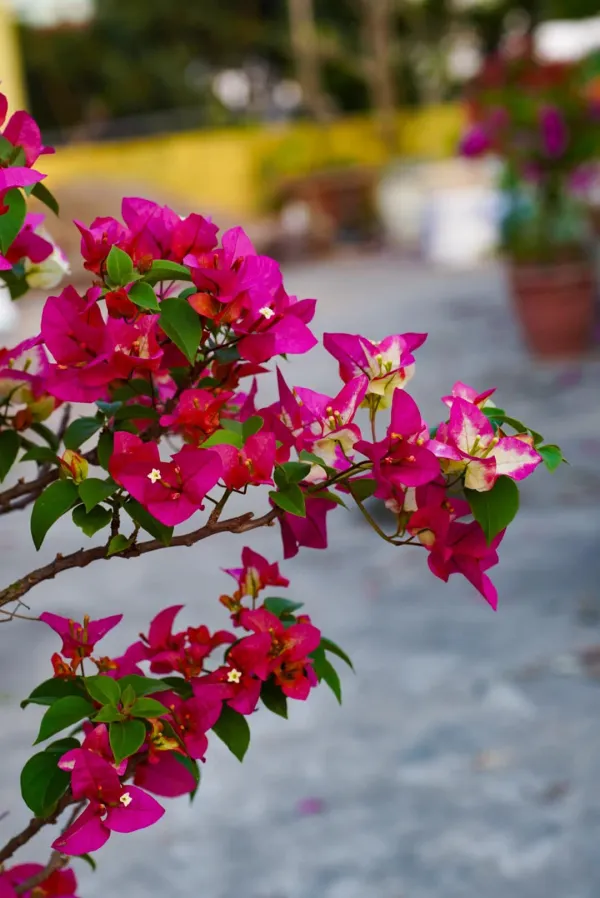
Arjuna is a bougainvillea cultivar (CSIR-NBRI, Lucknow (Gamma-ray induced somatic mutation breeding)) in the Nyctaginaceae family. Bract colour: bright pink to magenta; growth habit: woody vine / climber; common uses: landscaping. Recorded mature height: 10–20 feet with support; spread: 6–15 feet. Provide 6–8 hours direct sun (minimum). Watering: drought-tolerant once established. Preferred soil pH: 5.5–6.5; hardiness: USDA 9b–11; flowering: year-round in tropical climates; suitable for containers.

BRACT COLOR Bright pink to magenta · Multi-Color
Full direct sun (min. 6h) drives dense internodes and rich bract pigmentation.
Responds aggressively to post-flush pruning; sends dense lateral shoots.
Blooms vigorously when slightly root-bound; requires open, gritty drainage.
Deep drench followed by 100% dry-down. Never allow roots to sit in standing water.
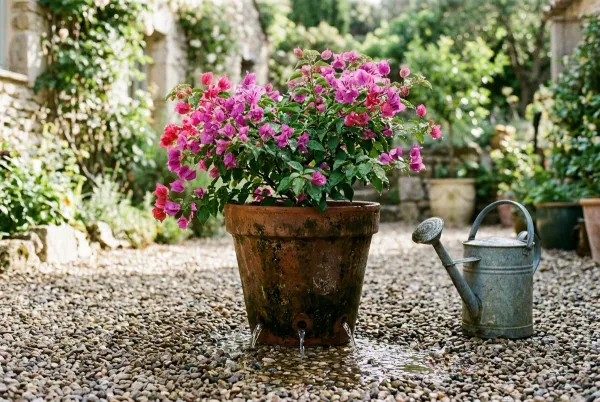
This Arjuna bougainvillea is valued for its bright pink to magenta bracts and its vigorous climber with strong repeat bloom. In warm tropical and subtropical gardens, it performs as a resilient ornamental climber that rewards full sun, sharp drainage, and a restrained feeding regime with long flushes of colour.
CSIR-NBRI, Lucknow (Gamma-ray induced somatic mutation breeding) Garden uses include Landscaping.
Arjuna is a striking and highly floriferous bougainvillea prized for its vivid bracts and vigorous climbing habit, making it one of the more desirable ornamental forms in the genus. For growers searching for arjuna bougainvillea care, this cultivar stands out for its visual impact, dependable bloom cycles, and the way it brings vivid seasonal colour to large frames, walls, and premium landscape plantings.
In tropical and subtropical climates, it performs best as a sun-hungry climber that can be trained over trellises, walls, and large containers; in slightly warmer positions it can flower repeatedly through long seasons, especially when daytime heat and bright light are uninterrupted. If you are researching how to grow arjuna, remember that bougainvillea rewards exposure, air movement, and an established root system far more than sheltered, shaded placement.
The elite growing secret is to manage vegetative vigor rather than chase it: keep nitrogen modest, maintain excellent drainage, and use controlled drought stress to push massive bloom flushes instead of coarse leafy growth. After each flowering cycle, a light structural prune and a deep but infrequent watering routine will keep the plant compact, floriferous, and visually refined.
Field attributes recorded for this cultivar. Values are shown as provided in its botanical profile.
Diagnostic characteristics identifying Arjuna within the foundational botanical breeding complex.
Horticultural cross between B. peruviana and B. glabra. Displays variable vigor, elliptical leaves, and continuous repeat-flowering. Most garden cultivars, multi-color sports, and variegated specimens belong to this complex.
Horticultural cross between B. peruviana and B. glabra. Displays variable vigor, elliptical leaves, and continuous repeat-flowering. Most garden cultivars, multi-color sports, and variegated specimens belong to this complex.
Smooth, glossy elliptical leaves, thinner wood, and shorter, straight thorns. Exceptional repeat bloomer with high tolerance of cooler night temperatures (58–64°F).
Heavily pubescent (hairy) stems and leaf undersides; large recurved thorns; dense floral bract clusters that flush heavily after a cool/dry rest.
Green-barked canes, long glabrous ovate leaves, and short straight thorns with crinkled magenta bracts. Imparts strong branching vigor to its hybrid offspring.
Coppery-to-magenta juvenile bract transitions, vigorous woody climbing canes, and heavy seasonal flower flushes.
Combines the cold resilience and repeat flowering of B. glabra with the large bract cluster volume of B. spectabilis.
CTAHR OF-38 describes cutting lateral shoots back to within 2–3 buds of the main framework canes when resetting post-flush shape.
Check whipping stems where they meet supports. Bark abrasion can girdle canes and cause delayed branch wilting; secure canes with flexible ties.
Reference: Kobayashi, McConnell & Griffis, Bougainvillea (CTAHR OF-38, 2007).
Likely causeToo little direct sun or too much nitrogen promoting foliage over flowers.
What to doMove it to full sun and avoid heavy nitrogen feeding.
Likely causeRoots staying too wet for too long in compacted or poorly drained soil.
What to doImprove drainage, reduce watering, and let the top layer dry before watering again.
Likely causeThe plant has not been trained or tip-pruned after bloom flushes.
What to doLightly prune after each flush to keep the plant compact and productive.
These are general Bougainvillea references, not cultivar-specific vulnerability claims. Use visible symptoms to guide inspection; similar symptoms can have different causes, so confirm before treatment.
Fine feeding speckles, reduced vigor or bract color, stunting, wilting, curled leaves, and leaf drop.
Use insecticidal soap according to its label and manage ants, which may protect aphids and other honeydew-producing pests.
Pronounced scalloping along leaf edges and rapid defoliation.
Check plants after dusk. Where registered and appropriate, use Bacillus thuringiensis (Bt), neem-based products, or spinosad according to the product label; apply late in the evening when caterpillars are active.
Irregular chewing damage, sometimes removing large amounts of leaf tissue.
Inspect and intervene early. Use only products registered for ornamental plants and follow the label.
Stunted growth, dieback, honeydew, and secondary black sooty mold.
Manage ants and use systemic treatments or properly diluted horticultural oil only where labeled. Avoid midday heat; test a small area and protect bracts and leaves from oil burn.
Curling, puckering, distorted leaves, bronzing, and wilting.
Remove weed hosts; wash foliage with a strong cool-water stream. A soft soapy-water wash, soft brush, ultra-fine oil, insecticidal soap, or neem product may be appropriate when label directions permit.
Stunted, chlorotic foliage; wilting under mild stress; thin canopy; bloom drop; and swollen, knotted, gnarled root areas.
Before planting, incorporate suitable organic matter such as compost, manure, or wood shavings; consider French marigold cover cropping and clear-plastic soil solarization where appropriate.
Lumpy stems and a yellow or chlorotic streak radiating from an insect attachment point.
Manage ants. Depending on the infestation and plant condition, use horticultural oil per label, scrub leaf undersides with soapy water, or spot-remove with a rubbing-alcohol cotton swab after testing a small area.
Yellow feeding stipples, yellowing foliage, and black sooty mold on lower leaves.
Thoroughly cover leaf undersides. Successive applications of insecticidal soap, horticultural oil, or pyrethrum may be used only as directed on a product labeled for the site and pest.
Small reddish round spots with pale green halos that may expand into irregular dark patches and cause leaf drop.
Remove fallen and affected leaves, improve spacing and airflow, avoid overhead sprinkling and late-day watering. A broad-spectrum fungicide may be considered only where appropriate and labeled; it will not control bacterial causes.
Wilting, dieback, stunting, and foliar chlorosis; roots may appear dark or decayed.
Avoid overwatering and heavy, poorly draining media. Remove severely infected plants. Pathogen-specific drenches may be considered only after diagnosis and where the product is registered; use label directions.
Pale green or yellow leaves with distinct darker green veins (interveinal chlorosis).
Test soil and roots before treating. For high pH, work toward the cited pH range of 5.5–6.0 using a suitable acidifying amendment per its label; chelated micronutrients may help when deficiency is confirmed. Keep soil evenly moist but never waterlogged.
Reference: Kobayashi, McConnell & Griffis, Bougainvillea, University of Hawaiʻi CTAHR OF-38 (2007).
| Form | Bract Colour | Foliage | Notes |
|---|---|---|---|
| Standard Arjuna | bright pink to magenta | deep green, semi-deciduous | vigorous climber with strong repeat bloom |
Preview and compare flower bract tones, growth habits, and container tolerances with related varieties in this series—instantly without page reload.


| Cultivar Trait | Arjuna (Current) | 21 Jewel Pink Variegated | 3 Star | 7 Star |
|---|---|---|---|---|
| Bract Color & Tone | Variegated / Multi-Color | Variegated / Multi-Color | Variegated / Multi-Color | Variegated / Multi-Color |
| Foliage Type | Variegated Chimera (Cream/Green) | Variegated Chimera (Cream/Green) | Variegated Chimera (Cream/Green) | Variegated Chimera (Cream/Green) |
| Vigor & Height | fast · 10-20 feet with support | fast · 10-20 feet with support | fast · 10-20 feet with support | fast · 10-20 feet with support |
| Growth Architecture | Vigorous woody vine / climber; ideal for trellises, arbors, walls, or pruned containers | Vigorous woody vine / climber; ideal for trellises, arbors, walls, or pruned containers | Vigorous woody vine / climber; ideal for trellises, arbors, walls, or pruned containers | Vigorous woody vine / climber; ideal for trellises, arbors, walls, or pruned containers |
| Container Rating | 14"+ Pot Suitable | yes | yes | yes |
| Breeding Lineage | Bougainvillea 'Arjuna' | Bougainvillea '21 Jewel Pink Variegated' | Bougainvillea '3 Star' | Bougainvillea '7 Star' |
Thrives under intense, unbroken direct sunlight (6–8 hours minimum daily). Maximum photon absorption drives dense node spacing and flower bract production.
Roots require a cyclical dry-down period between deep waterings. Standing water rapidly suffocates fine root hairs and induces premature bract drop.
Prefers an open 60/40 gritty substrate with a slightly acidic pH (5.5–6.5). Protect from freezing temperatures below 32°F (0°C).
Bougainvillea flowers best when root-confined and given a thorough dry-down between waterings. Slide your container diameter below to compute your optimal soaking schedule and root-rot safety margins.
In a 12" container with a 60/40 gritty mix, wait until the top 2 inches feel powdery-dry before watering thoroughly until runoff escapes through bottom drainage holes.
Feed conservatively during warm active growth using a controlled-release or low-nitrogen complete fertilizer per label directions, avoiding excessive nitrogen that drives leafy shoots instead of bracts (UH CTAHR OF-38; UF/IFAS).
Open related grower tool ↗Prune stems back by one-third following each blooming flush. Pruning terminates apical dominance and forces lateral sub-branching, producing significantly denser flower clusters.
Open related grower tool ↗Give it full sun, a very free-draining root zone, and restrained feeding. Strong light and lean nutrition usually produce the richest bract colour.
Use light pruning after bloom flushes unless the plant is being trained as a hedge or standard. Bougainvillea flowers on new growth, so regular tip-pruning is more useful than severe haircutting.
Yes, if the pot is large, the mix is airy, and drainage is excellent. Container plants need more consistent monitoring but should never sit wet.
The cultivar care record recommends 6-8 hours direct sun (minimum). Full sun is essential for best bloom production.
The cultivar profile records container suitability as “yes.” Choose a container with adequate drainage and consider its recorded mature size of 10-20 feet with support tall and 6-15 feet spread.
Drought-tolerant once established.
Care guidelines, moisture dry-down calculations, and seasonal feeding recommendations on this page are benchmarked against official agricultural extension services and botanical research publications.
Corroborated benchmark:Breeding origin (gamma-ray induced somatic mutation), variegation chimera stability (L-I/L-II layer preservation), and progenitor of mutant sport 'Abhimanyu'.
Corroborated benchmark:Official international cultivar registration, scientific naming validation, and germplasm checklist classification.
Corroborated benchmark:DUS morphological descriptor assessment: sectorial variegation patterns, single-bract multiplicity, and caducous bract behavior.
Corroborated benchmark:Drought-stress bloom triggers, soil hydrology thresholds, and nitrogen overfertilization risks
Corroborated benchmark:Vegetative growth vs. blooming cycles, and pot-bound root confinement principles
Corroborated benchmark:Seasonal rest feeding pauses, potting substrate aeration, and pruning standards