Micronutrients
Fix iron, magnesium, and zinc deficiencies in bougainvillea: interveinal chlorosis, Epsom salts, chelated iron, and proper pH.
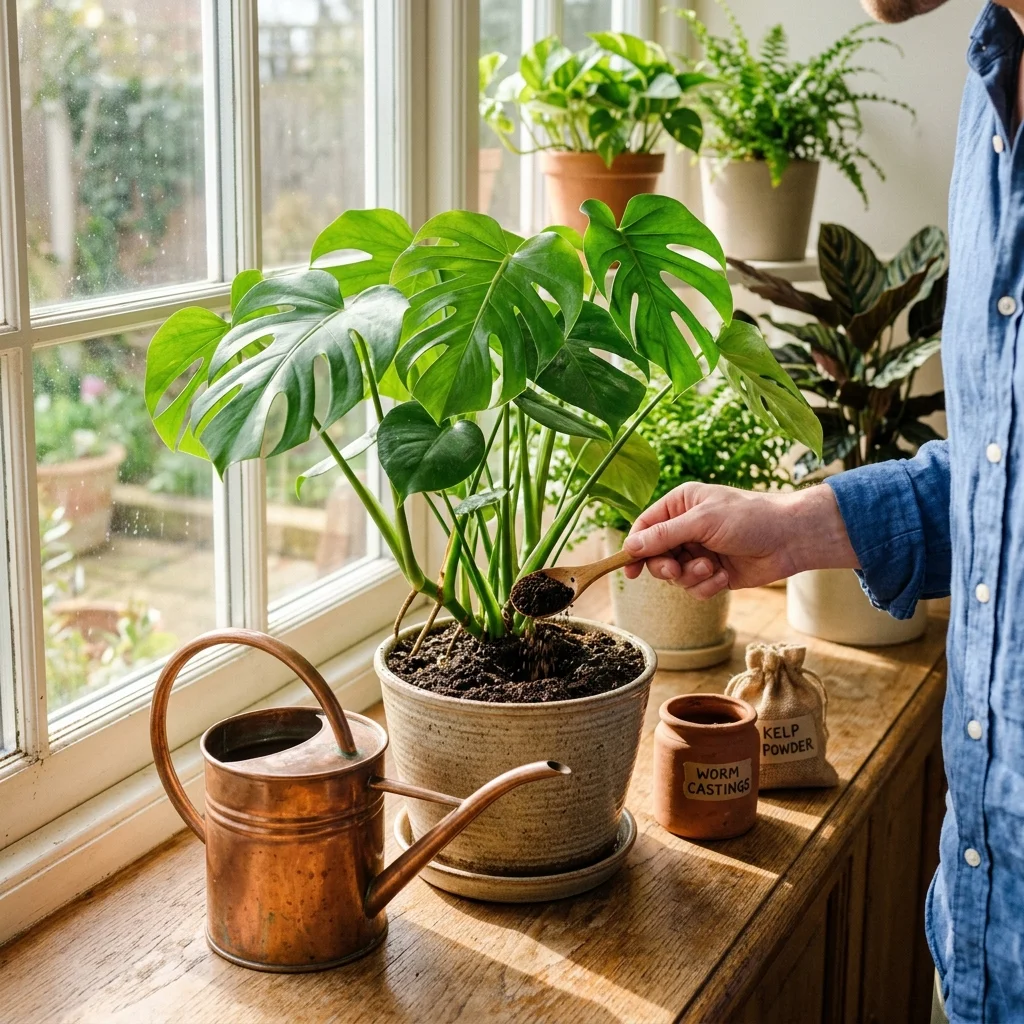
What are Micronutrients for Bougainvillea?
You've heard about NPK—nitrogen, phosphorus, potassium—the big three. But there's a whole other world of nutrients that your bougainvillea needs in tiny amounts, yet without them, the plant falls apart in weird, frustrating ways. I'm talking about micronutrients: iron, magnesium, manganese, zinc, copper, boron, and molybdenum. These are trace elements, required in minuscule quantities, but their absence creates dramatic symptoms. Yellow leaves with green veins? That's often iron or magnesium. Stunted, distorted new growth? Could be zinc or boron. Small, pale leaves? Manganese.
Micronutrients are essential cofactors for enzymes involved in photosynthesis, chlorophyll production, hormone regulation, and cell wall formation. Unlike macronutrients (NPK) that you add regularly, micronutrient deficiencies usually occur not because the soil lacks them, but because the plant can't access them—often due to high soil pH, overwatering, or root damage. Or, you might be using a fertilizer that lacks trace elements.
Why does this matter specifically for bougainvillea? These plants are often grown in containers with soilless mixes that have no inherent micronutrients. They're also frequently fed with bloom-booster fertilizers (high phosphorus) that may lack micronutrients. And many growers use tap water with high pH, which locks out iron. The result: a plant that looks sick even though you're feeding it "everything it needs." Understanding micronutrients is the key to diagnosing those mysterious yellow leaves.
For beginners, micronutrient problems are often mistaken for pests, diseases, or watering issues. For advanced growers, they're a fine-tuning tool: supplementing with Epsom salts (magnesium) for deeper bract colors, or chelated iron to green up leaves.
Why Micronutrients Matter for Bougainvillea
Each micronutrient plays a specific role. Deficiencies directly impact growth and blooming.
Flowering impact: Magnesium (Mg) is central to chlorophyll and also influences bract color. Magnesium-deficient bougainvillea produce paler, smaller bracts. Boron (B) is critical for flower development; deficiency causes bud drop and poor bract formation. Without adequate micronutrients, the plant may grow but bloom poorly, even with perfect NPK and light.
Root health impact: Zinc (Zn) and boron affect root development. Deficiencies lead to stunted, malformed roots, which then struggle to take up water and nutrients. This creates a vicious cycle. Also, micronutrient imbalances often stem from poor drainage or root rot—addressing roots is part of the solution.
Plant vigor and growth rate: Iron (Fe) and manganese (Mn) are essential for photosynthesis. Deficiencies cause interveinal chlorosis (yellow leaves with green veins), reducing the plant's ability to produce energy. Growth slows, leaves are smaller, and the plant looks weak. Zinc deficiency causes small, distorted leaves and short internodes (rosette).
Long-term health: Chronic micronutrient deficiencies weaken the plant, making it susceptible to pests and diseases. They also reduce cold hardiness and drought tolerance. Correcting deficiencies restores the plant's natural resilience.
Container vs. landscape cultivation: Container plants are much more prone to micronutrient deficiencies because soilless mixes have no mineral content. Landscape plants in native soil rarely have true deficiencies unless the soil pH is off (too high or too low) or the soil is extremely sandy.
Quick Facts: Micronutrients for Bougainvillea
| Micronutrient | Key Functions | Deficiency Symptoms |
|---|---|---|
| Iron (Fe) | Chlorophyll synthesis, electron transport | Interveinal chlorosis on new leaves (yellow with green veins); leaves may turn nearly white in severe cases. |
| Magnesium (Mg) | Core of chlorophyll molecule, enzyme activation | Interveinal chlorosis on older leaves; leaf margins curl upward; bract color fades. |
| Manganese (Mn) | Photosynthesis, nitrogen metabolism | Interveinal chlorosis on new or middle leaves; small necrotic spots may appear. |
| Zinc (Zn) | Auxin production, enzyme activation | Small, distorted leaves; shortened internodes (rosette); stunted growth. |
| Boron (B) | Cell wall formation, flower development | Brittle stems, bud drop, distorted new growth, corky spots on stems. |
| Copper (Cu) | Enzyme activation, lignin synthesis | Dark green leaves, stunted growth, dieback of new shoots. |
Identification and Symptoms
Learning to read the pattern of chlorosis and distortion is key to diagnosing which micronutrient is lacking.
Iron deficiency (most common in bougainvillea): New leaves turn yellow while the veins remain dark green (interveinal chlorosis). In severe cases, leaves become almost white, and the edges may scorch. Unlike magnesium deficiency, iron deficiency affects the newest growth first because iron is immobile in the plant. This is almost always caused by high soil pH (above 6.8) that locks out iron, not a lack of iron in the soil. Overwatering and cold soil also induce iron deficiency.
Magnesium deficiency (second most common): Interveinal chlorosis on older leaves (lower part of the plant) because magnesium is mobile. Leaves may also curl upward at the edges. Bract colors become pale and washed out. In severe cases, leaves develop brown spots and drop. This is often caused by low soil magnesium or excess potassium/calcium that competes for uptake.
Manganese deficiency: Similar to iron but appears on middle-aged leaves. Also interveinal chlorosis, but often with small, dark necrotic spots (dead specks) in the yellow areas. Can be confused with iron deficiency; a soil test or leaf analysis is definitive.
Zinc deficiency: Very small, narrow, distorted leaves clustered at the stem tips (little leaf or rosette). Internodes are short. Growth is stunted. Often seen in high-pH soils or after heavy phosphorus application (phosphorus binds zinc).
Boron deficiency: New growth is distorted, with thickened, brittle stems. Growing tips may die back. Buds drop before opening. Leaves may be misshapen and have corky patches. Rare in bougainvillea but possible in very sandy soils.
Common misdiagnoses: Iron deficiency is often mistaken for overwatering (both cause yellow leaves) or nitrogen deficiency (which causes uniform yellowing, not interveinal). Magnesium deficiency is sometimes thought to be a fungal disease. Always look at the pattern: interveinal chlorosis on new leaves = iron; on old leaves = magnesium.
Causes and Contributing Factors
Most micronutrient deficiencies are not due to a lack of nutrients in the soil, but rather conditions that prevent the plant from absorbing them.
High soil pH (above 6.8): Iron, manganese, zinc, and copper become less available as pH rises. Bougainvillea prefer slightly acidic soil (5.5-6.5). In alkaline soils (common in many tap waters and limestone-based potting mixes), iron deficiency is almost guaranteed. This is the #1 cause of micronutrient problems. Test your soil pH; if above 7.0, you need to acidify.
Low soil pH (below 5.5): While rare, very acidic soil can make magnesium, calcium, and molybdenum unavailable. It can also cause manganese or aluminum toxicity. Bougainvillea can tolerate slightly acidic, but extreme acidity harms.
Excess phosphorus: High-phosphorus fertilizers (bloom boosters) can bind zinc and iron, making them unavailable. If you're using a 10-50-10 fertilizer and seeing yellow new leaves, you may have induced iron or zinc deficiency. Switch to a more balanced bloom formula.
Overwatering and cold soil: Soggy, cold roots cannot absorb micronutrients efficiently, even if they're present. Iron deficiency in winter is often due to cold root zones, not actual lack of iron.
High calcium or bicarbonate in water: Hard water (high calcium carbonate) raises pH and also directly interferes with iron uptake. If you use tap water and see persistent iron deficiency, switch to rainwater or reverse osmosis water.
Soilless mixes with no added micronutrients: Many coco coir, peat, or bark-based mixes lack trace elements. If you don't use a fertilizer that includes micronutrients, deficiencies will develop within months.
How to Diagnose and Correct Micronutrient Deficiencies
Follow this step-by-step approach. Start with the simplest fix: pH adjustment and foliar feeding.
- Test your soil pH and water pH. Use a reliable pH meter or test kit. For container mix, test the slurry (mix soil with distilled water 1:1). Ideal pH for bougainvillea is 5.5-6.5. If pH is above 6.8, you need to lower it. If below 5.5, raise it (rare).
- Adjust soil pH if needed. For high pH (alkaline), add elemental sulfur, iron sulfate, or use an acidifying fertilizer (ammonium-based). For quick results, water with a solution of 1 tablespoon vinegar per gallon of water (but this is temporary). For long-term, incorporate sulfur into the soil. In containers, repot with acidic mix (peat-based) and avoid lime.
- Use chelated micronutrients for iron and zinc. Standard iron sulfate is poorly absorbed in alkaline pH. Use chelated iron (EDDHA or EDTA) which remains available up to pH 8.0. Apply as a soil drench or foliar spray. For zinc, use zinc chelate or zinc sulfate (foliar). Chelated micronutrient blends (e.g., Ironite, Southern Ag Essential Minor Elements) are convenient.
- For suspected magnesium deficiency: apply Epsom salts. Mix 1 tablespoon of Epsom salts (magnesium sulfate) per gallon of water. Apply as a soil drench or foliar spray (foliar works faster). Use once a month during growing season. Do not overuse; excess magnesium can lock out calcium.
- For a quick green-up: use a complete micronutrient foliar spray. Products like Seaweed extract, Kelp, or trace element blends can be sprayed on leaves. Foliar feeding bypasses soil pH and root issues, showing results in days. Mix according to label. Spray in the evening to avoid sunburn. Repeat every 2 weeks until symptoms improve.
- Improve root health and watering. Ensure good drainage. Water only when top 2 inches are dry. If soil is cold (below 60°F), move plant to warmer location. Healthy roots absorb micronutrients better.
- Switch to a complete fertilizer with micronutrients. Many all-purpose and bloom fertilizers lack trace elements. Look for products that list iron, manganese, zinc, copper, boron, and molybdenum. Examples: Dyna-Gro Foliage-Pro, Jack's Classic, or organic blends with kelp/seaweed. Avoid high-phosphorus fertilizers that can induce zinc deficiency.
- If symptoms persist, do a soil test. Professional soil test can identify specific deficiencies or toxicities. This is especially useful for rare or valuable plants where you can't afford to guess.
Common Mistakes with Micronutrients
- Applying iron sulfate to alkaline soil without chelation. It won't work. Use chelated iron (EDDHA) for high pH.
- Overusing Epsom salts. Too much magnesium causes calcium deficiency (blossom end rot symptoms, distorted new growth). Use monthly, not weekly.
- Foliar spraying in direct sun or high heat. Causes leaf burn. Spray in evening.
- Ignoring soil pH and just adding micronutrients. If pH is off, added iron won't be absorbed. Fix pH first.
- Using high-phosphorus bloom boosters exclusively. These can induce zinc and iron deficiencies. Alternate with a balanced fertilizer.
- Assuming all yellow leaves are nitrogen deficiency. Interveinal chlorosis is not nitrogen deficiency (which is uniform yellowing). Don't add nitrogen; you'll make it worse.
- Not treating the root cause (overwatering, cold). You can pour chelated iron all day, but if roots are rotting or cold, the plant won't uptake it.
Expert Tips from Experienced Growers
Here's what I've learned from correcting countless micronutrient issues in bougainvillea.
Tropical climate considerations (Florida, Hawaii, SE Asia): High rainfall leaches nutrients, including micronutrients. Sandy soils are especially prone to magnesium and boron deficiencies. Use a complete micronutrient blend in your fertilizer program. Foliar feeding is effective because frequent rain can wash off soil-applied nutrients.
High desert (Arizona, New Mexico): Irrigation water is often alkaline (pH 7.5-8.5), causing iron and zinc deficiencies. The fix: acidify your water with vinegar or citric acid (1 tbsp per gallon) every few waterings. Use chelated iron (EDDHA) in spring. Mulch to keep roots cool. Many desert growers use sulfur to lower soil pH.
Mediterranean climates (coastal California, Spain): Hard tap water is common. Use rainwater for bougainvillea if possible. Apply Epsom salts monthly to prevent magnesium deficiency. In container plants, repot annually with fresh, acidic mix.
Container growing observations: I've found that a monthly foliar spray of a kelp-based micronutrient product keeps my container bougainvillea lush and green. It also deepens bract colors. My favorite homemade mix: 1 tsp Epsom salts, 1/2 tsp chelated iron, 1/2 tsp seaweed extract per gallon of water. Spray leaves until runoff once a month during active growth.
Nursery production secrets: Commercial growers use controlled-release fertilizers that include micronutrients (e.g., Osmocote Plus). They also monitor irrigation water pH and adjust with acid injection. For home growers, a simple pH test kit and a bag of chelated iron solve 90% of micronutrient issues.
Collector-level technique: For rare cultivars with persistent chlorosis, use a soil drench of iron EDDHA (e.g., Sequestrene 138) at 1 teaspoon per gallon. This is the most effective form of iron for alkaline conditions. Combine with a root zone acidifier (sulfur or peat moss). Results appear in 7-10 days.
Troubleshooting Guide
| Problem | Likely Cause | Solution |
|---|---|---|
| New leaves yellow with green veins; rest of plant green | Iron deficiency (high pH, cold roots, overwatering) | Test pH. If >6.8, apply chelated iron (EDDHA) as soil drench. Lower pH with sulfur or vinegar water. Improve drainage. |
| Older leaves yellow between veins; leaf edges curl up | Magnesium deficiency | Apply Epsom salts (1 tbsp/gal) as soil drench or foliar spray. Repeat monthly. Ensure potassium isn't excessive. |
| Yellow leaves with small dead brown spots; on middle leaves | Manganese deficiency (often with high pH) | Apply chelated manganese or complete micronutrient blend. Lower soil pH. |
| Tiny, narrow, distorted leaves at stem tips; short internodes | Zinc deficiency (high pH, high phosphorus) | Reduce phosphorus fertilizer. Apply zinc chelate or zinc sulfate foliar spray. Lower soil pH. |
| Bud drop, brittle stems, distorted new growth | Boron deficiency (rare) | Apply borax (1/4 tsp per 5 gallons) very sparingly; boron toxicity is easy. Use a complete micronutrient blend. |
| Dark green, stunted growth, dieback of shoots | Copper deficiency (rare) | Apply copper sulfate or use a fungicidal copper spray (also provides copper). Don't overuse. |
| Iron deficiency persists after adding iron | pH still too high; roots damaged; overwatering | Test pH again. Lower to 6.0. Check roots for rot. Allow soil to dry between waterings. Use foliar iron spray for quick fix. |
Frequently Asked Questions
How often should I apply Epsom salts to my bougainvillea?
Once a month during the growing season (spring through early fall). Mix 1 tablespoon per gallon of water and apply as a soil drench. You can also use it as a foliar spray at half strength (1/2 tbsp per gallon). Epsom salts provide magnesium and sulfur. Don't overuse; excess magnesium causes calcium deficiency. If you see leaf curling or blossom end rot (on tomatoes, but also distorted new growth on bougainvillea), reduce or stop Epsom salts.
What is the best chelated iron for bougainvillea?
For most soils, iron EDTA works well up to pH 6.8. If your pH is above 7.0 (common with hard water or limestone-based mixes), use iron EDDHA (e.g., Sequestrene 138, Miller's FerriPlus). EDDHA remains available up to pH 9.0. Apply as a soil drench at 1 teaspoon per gallon. For a quick green-up, use a foliar spray of iron chelate (any type).
Can I use human vitamins or supplements for plants?
No. Human supplements are formulated for human metabolism and may contain harmful fillers. Use horticultural-grade micronutrient products. They're inexpensive and safe. A bottle of chelated iron costs less than $10 and lasts years.
Why are my bougainvillea leaves turning yellow even though I fertilize?
Most likely a micronutrient deficiency or pH issue, not lack of NPK. Look at the pattern: if older leaves are uniformly yellow, it's nitrogen. If new leaves are yellow with green veins, it's iron. If older leaves are yellow between green veins, it's magnesium. Test your soil pH. Also check for overwatering—wet roots cause yellowing and mimic deficiencies.
Will using tap water cause micronutrient problems?
Yes, if your tap water is hard (high calcium carbonate). Hard water raises soil pH over time, locking out iron and manganese. It can also add excess calcium, which competes with magnesium. Use rainwater, reverse osmosis, or distilled water if you see persistent chlorosis. Or acidify tap water with vinegar (1 tbsp per gallon) to lower pH.
How do I lower soil pH for my potted bougainvillea?
For quick results: water with a solution of 1 tablespoon white vinegar per gallon of water once a week for 2-3 weeks. For long-term: repot with a peat-based, acidic potting mix (no added lime). Mix in elemental sulfur at 1/2 teaspoon per gallon of soil. Use an acidifying fertilizer like ammonium sulfate or a formulation for acid-loving plants (e.g., Miracle-Gro for Azaleas).
Can I mix Epsom salts and chelated iron together?
Yes, but check compatibility. Both are soluble salts. You can dissolve 1 tbsp Epsom salts and 1 tsp chelated iron in 1 gallon of water. Use as a soil drench. However, do not mix with phosphorus fertilizers (they can precipitate). It's safer to apply them separately on different days, or use a complete micronutrient blend that already contains both.
What is a good complete micronutrient fertilizer for bougainvillea?
Look for products labeled with "minor elements" or "trace elements." Examples: Southern Ag Essential Minor Elements, Dyna-Gro Foliage-Pro (contains all micronutrients), Jack's Classic Petunia Feed (has chelated micronutrients), or any liquid seaweed/kelp extract (contains many trace elements but not iron). For a simple solution, use a citrus/hibiscus fertilizer—they usually include micronutrients.
Related Bougainvillea Topics
- Fertilizer for Bougainvillea: NPK and Micronutrients
- Epsom Salts for Bougainvillea: Magnesium and Sulfur
- Soil pH: Testing and Adjusting for Bougainvillea
- Chlorosis: Yellow Leaves with Green Veins
- Water Quality: pH, Hardness, and Micronutrient Availability
- Distinguishing Nutrient Deficiencies from Leaf Spot Diseases
- Repotting with Acidic Mix to Prevent Iron Deficiency
- Foliar Feeding: Quick Correction of Micronutrient Deficiencies
Summary
Micronutrients—iron, magnesium, manganese, zinc, boron, copper—are essential trace elements that your bougainvillea needs in small amounts. Deficiencies are common in container plants and in alkaline soils. The most frequent issues are iron deficiency (new leaves yellow with green veins) and magnesium deficiency (old leaves yellow between veins). Both can be corrected with proper diagnosis, pH adjustment, and targeted supplements: chelated iron for iron, Epsom salts for magnesium.
The key to success is to test your soil pH. Most micronutrient deficiencies are caused by high pH (above 6.8), not a lack of nutrients. Lowering pH to 5.5-6.5 with vinegar, sulfur, or acidic potting mix often solves the problem without adding anything else. Use chelated micronutrients for quick results. Apply foliar sprays for rapid greening. Avoid overusing high-phosphorus fertilizers that can induce zinc deficiency.
My final advice: before you reach for a fungicide or insecticide for yellow leaves, consider micronutrients. The pattern of chlorosis (which leaves? new or old? veins green or yellow?) tells the story. Learn to read the leaves, and you'll save your plant from unnecessary treatments. A healthy bougainvillea with balanced nutrition will reward you with deep green leaves and intensely colored bracts.
Related Plants
Plant Guide
21 Jewel Pink Variegated
This 21 Jewel Pink Variegated bougainvillea is valued for its pink with cream or white variegation bracts and its floriferous climber with reliable warm-season colour. In warm tropical and subtropical gardens, it performs as a resilient ornamental climber that rewards full sun, sharp drainage, and a restrained feeding regime with long flushes of colour.
Plant Guide
21 Jewel Pink
This 21 Jewel Pink bougainvillea is valued for its pink to deep rose bracts and its floriferous climber with reliable warm-season colour. In warm tropical and subtropical gardens, it performs as a resilient ornamental climber that rewards full sun, sharp drainage, and a restrained feeding regime with long flushes of colour.
Plant Guide
21 Jewel Yellow
This 21 Jewel Yellow bougainvillea is valued for its golden yellow to creamy yellow bracts and its sun-loving climber that shows best colour in bright, hot exposure. In warm tropical and subtropical gardens, it performs as a resilient ornamental climber that rewards full sun, sharp drainage, and a restrained feeding regime with long flushes of colour.
Plant Guide
3 Star
This 3 Star bougainvillea is valued for its bright pink to magenta bracts and its vigorous climber with strong repeat bloom. In warm tropical and subtropical gardens, it performs as a resilient ornamental climber that rewards full sun, sharp drainage, and a restrained feeding regime with long flushes of colour.
Plant Guide
7 Star
This 7 Star bougainvillea is valued for its bright pink to magenta bracts and its vigorous climber with strong repeat bloom. In warm tropical and subtropical gardens, it performs as a resilient ornamental climber that rewards full sun, sharp drainage, and a restrained feeding regime with long flushes of colour.
Plant Guide
Abraham Kavoo Or Yellow Dauphine
This Abraham Kavoo Or Yellow Dauphine bougainvillea is valued for its golden yellow to creamy yellow bracts and its sun-loving climber that shows best colour in bright, hot exposure. In warm tropical and subtropical gardens, it performs as a resilient ornamental climber that rewards full sun, sharp drainage, and a restrained feeding regime with long flushes of colour.
Related Articles
Guide
Best Fertilizer for Bougainvillea in 2026 – NPK Ratios That Actually Work
A no-nonsense 2026 guide to bougainvillea fertilization: the NPK ratios that actually produce bracts (not just leaves), what Indian-market products to use, what to avoid, and a season-by-season feeding calendar tested in West Bengal.
Guide
Common Bougainvillea Problems & Fixes: Root Rot, No Blooms, Yellow Leaves (Complete Guide)
The 8 most common bougainvillea problems diagnosed and fixed: root rot, no blooms, yellow leaves, leaf drop, leggy growth, pests, powdery mildew, and overwatering. Each entry includes symptoms, cause, exact fix, and expected recovery time.
Guide
Why Your Bougainvillea is Dropping Leaves (And How to Save It)
Bougainvillea leaf drop is usually a stress signal, not a death sentence. This guide explains the most common causes, how to diagnose them quickly, and the exact steps to restore growth before the plant declines further.
Guide
Why Every Gardener Should Have the Arjuna Bougainvillea (Complete Variety Guide)
The Arjuna Bougainvillea is a near-year-round bloomer prized for its vivid multi-color flowers, disease resistance, and beginner-friendly nature. Here's why it earns a spot in every garden, plus a full care guide.
Guide
How to Make Bougainvillea Bloom Heavily in Monsoon Season (Kolkata / West Bengal Guide)
Monsoon rain is the enemy of bougainvillea blooms. This guide explains how to protect your plant during Bengal's June–September rainy season and time the October dry-stress window to trigger the most spectacular flush of the year.
Guide
Bougainvillea Bonsai: Complete Beginner's Guide to Growing, Styling, and Caring
Bougainvillea makes a spectacular bonsai — fast-growing, drought-tolerant, and capable of producing vivid bracts even in a tiny pot. This guide covers species selection, soil, root pruning, wire training, and seasonal care for Indian conditions.
Related Calculators & Tools
Calculator
Bougainvillea Neem Oil & Pest Calculator
Calculate precise neem oil dilutions to eradicate Bougainvillea Loopers and aphids.
Calculator
Bougainvillea Potting Mix Calculator
Calculate the exact volumes of perlite, compost, and soil for a fast-draining Bougainvillea mix.
Calculator
Bougainvillea Soil pH Calculator
Calculate amendments to reach the ideal 5.5 - 6.5 pH for Bougainvillea nutrient uptake.
Calculator
Bougainvillea Compost Top-Dressing Calculator
Calculate precise compost volumes to naturally amend your Bougainvillea garden beds.
Calculator
Bougainvillea NPK Fertilizer Calculator
Analyze your fertilizer NPK ratio to ensure it promotes Bougainvillea blooms rather than just green leaves.
Calculator
Bougainvillea Grow Bag Size Calculator
Calculate the ideal fabric grow bag volume for massive Bougainvillea growth.