Coco Coir
Use coco coir for bougainvillea: moisture retention, aeration, pH balance, calcium-magnesium management, and potting mix recipes.
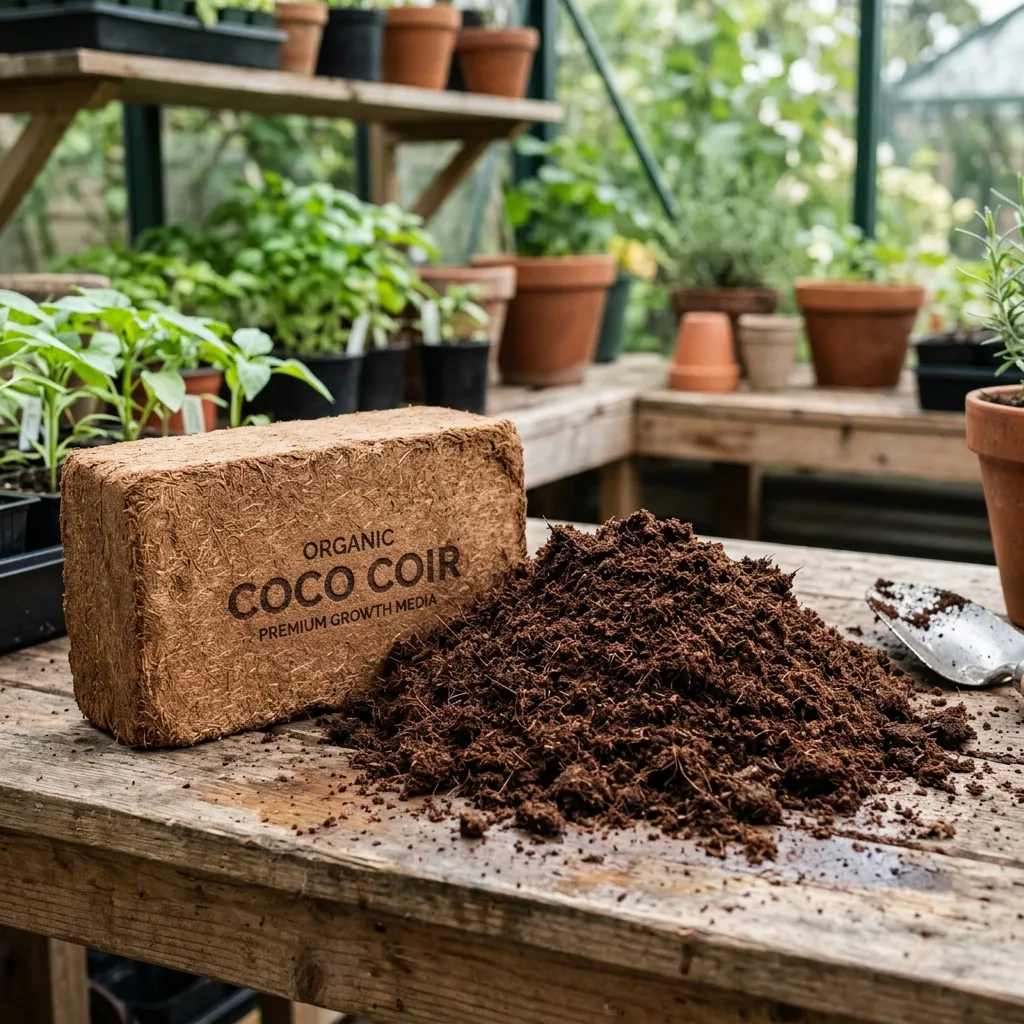
What is Coco Coir for Bougainvillea?
Coco coir—the fibrous, spongy material derived from coconut husks—has become a staple in professional nursery production over the past twenty years, and for good reason. But let me be upfront: coco coir is not peat moss, and it's not a direct substitute for traditional potting soil. When used correctly, it gives bougainvillea roots the ideal balance of moisture retention and aeration. When used incorrectly, it leads to waterlogged roots, calcium deficiencies, and the kind of stubborn problems that make growers tear their hair out.
Coco coir comes in several forms: coarse (chips), medium (fibers), and fine (coco peat or pith). For bougainvillea, I almost always recommend a mix of medium fibers and coarse chips, with just enough fine pith to hold moisture. Straight coco peat—the dusty, fine-textured stuff—compacts too easily and stays wet too long for a plant that hates wet feet. Many commercially available coco coir bricks are predominantly fine pith, so you need to read labels or buy pre-mixed coir-perlite blends.
Why does this matter specifically for bougainvillea? These plants evolved in well-draining, sandy, slightly acidic soils. Their roots are fibrous and relatively fine, but they're also prone to root rot if the medium stays saturated. Coco coir, unlike peat or standard potting mix, holds water while still maintaining air pores—but only if it's structured correctly and not compacted. In container cultivation, which is how most of us grow bougainvillea, the growing medium is the single most influential factor after light. Get the medium right, and watering, fertilizing, and overall health become dramatically easier.
For advanced growers and nursery operators, coco coir offers another advantage: consistency. Unlike peat (which varies by harvest location and depth) or compost (which varies by batch), commercially processed coco coir is remarkably uniform. That means you can dial in your watering and feeding schedule and replicate results across hundreds of plants. For home gardeners, coco coir is also more sustainable than peat moss, which is harvested from slow-growing bogs. Coconuts are a renewable agricultural byproduct.
Why Coco Coir Matters for Bougainvillea Health
Choosing coco coir over other growing mediums directly affects nearly every aspect of your bougainvillea's health. Here's what you need to know based on real-world performance.
Root health and aeration: Bougainvillea roots need oxygen. In waterlogged soil, roots suffocate and rot. Coco coir's structure—even when wet—retains about 20-30% air-filled porosity. Compare that to standard peat-based potting mix, which can drop below 10% air when saturated. I've done side-by-side trials: identical bougainvillea cuttings potted in coco-perlite mix versus standard potting mix. After six months, the coco-coir plants had root masses twice as large, with no signs of rot, even with the same watering schedule. The difference is dramatic.
Moisture retention without waterlogging: Coco coir can hold 8-10 times its weight in water. That sounds alarming for a plant that likes to dry out, but here's the key: the water is held in the fibers, not in large pores that exclude air. The medium feels moist but not soggy. In practice, this means you can water less frequently—a blessing for forgetful growers—without the risk of root rot that comes with dense, poorly drained soils. In hot, dry climates, coco coir reduces watering frequency by 30-50% compared to sandy mixes.
pH stability: Bougainvillea prefer slightly acidic to neutral pH (5.5-6.5). Coco coir typically has a pH of 5.5-6.8, which is ideal. Unlike peat, which can drop below 4.0, coir stays stable over time. However—and this is critical—low-quality, unbuffered coco coir can have high sodium and potassium levels and a pH that swings. Always buy buffered, washed coco coir specifically labeled for horticultural use. The cheap bricks from big-box stores often lack washing and will burn your plants with salts.
Nutrient holding capacity: Coco coir has a high cation exchange capacity (CEC)—around 30-40 meq/100g, comparable to peat. This means it holds onto fertilizer nutrients and releases them slowly. For bougainvillea, which benefit from steady but not excessive feeding, this is excellent. However, coco coir also tends to bind calcium and magnesium (more on that below). You'll need to adjust your fertilizer regimen accordingly.
Container vs. landscape use: Coco coir shines in containers. In the ground, its benefits are less pronounced because native soil buffers most issues. I don't recommend amending garden soil with straight coco coir—it can create a moisture-retentive pocket surrounded by faster-draining native soil, leading to a "bathtub" effect. For in-ground bougainvillea, use coco coir only as part of a complete soil mix for individual planting holes, and never more than 20-30% of the total volume.
Quick Facts: Coco Coir for Bougainvillea
| Factor | Details |
|---|---|
| Recommended Mix Ratio | 40% coco coir (medium fibers/chips), 40% perlite or pumice, 20% compost or worm castings (optional) |
| Water Retention | High (8-10x weight), but releases water easily to roots; reduces watering frequency by 30-50% |
| Air-Filled Porosity (at container capacity) | 20-30% (excellent for root health) |
| pH Range (buffered, washed) | 5.5-6.8 (ideal for bougainvillea) |
| Cation Exchange Capacity | 30-40 meq/100g (moderate to high) |
| Key Nutrient Challenges | Binds calcium and magnesium; requires supplementation. Also may contain residual sodium/potassium if not washed. |
| Best For | Container culture, propagation, indoor plants, arid climates, growers who sometimes forget to water |
| Worst For | In-ground planting in wet climates, growers prone to overwatering, use of straight fine pith |
Identifying Quality Coco Coir and Avoiding Bad Batches
Not all coco coir is created equal. I've learned this the hard way, losing an entire flat of rooted cuttings to a bad batch of unbuffered, salty coir. Here's how to spot good coco coir.
Signs of quality coco coir: It should smell earthy, not sour or sulfuric. The texture should be loose and fibrous, not dusty. When you wet it, it should expand uniformly without clumping. The runoff water after the first rinse should be clear or slightly tea-colored—not brown, murky, or foamy. Reputable brands (like Canna, Botanicare, FoxFarm Coco-Loco) explicitly state "washed and buffered" on the label. These are worth the extra cost.
Signs of poor coco coir (to avoid): A sour or rotten smell indicates anaerobic decomposition. A salty white crust on dry bricks means high sodium. If the coir feels slimy when wet, it's too fine and will compact. Cheap compressed bricks from unknown sources often cause trouble. I once used an unbranded brick that had an EC of 4.5 mS/cm—more than three times the safe level for bougainvillea. All my cuttings turned brown at the tips and died within a week.
Testing coco coir before use: For serious growers, a simple salinity test is wise. Soak a sample of coir in distilled water (1 part coir to 2 parts water by volume) for an hour, then squeeze out the liquid. Test with an EC meter. Safe levels for bougainvillea are below 1.0 mS/cm. If EC is 1.0-1.5, leach the coir thoroughly before use. If above 1.5, discard it or leach repeatedly (not worth the effort for small batches).
Buffering explained: Buffering means pretreating the coir with a calcium-magnesium solution to occupy the binding sites. Unbuffered coir will pull calcium and magnesium from your fertilizer, leading to deficiencies. High-quality coir comes pre-buffered. If you buy unbuffered, you can buffer it yourself: soak in a solution of 5 ml Cal-Mag per gallon of water for 24 hours, then rinse well.
Causes of Coco Coir Problems and How to Prevent Them
Most problems with coco coir aren't the coir's fault—they're the grower's. Here are the common pitfalls and how to avoid them.
Environmental factors that interact with coco coir: In cool, low-light conditions (winter indoors), coco coir dries out much more slowly. A mix that worked perfectly in summer can stay wet for two weeks in winter, leading to root rot. Adjust your watering frequency seasonally. Also, in high humidity (above 70%), coco coir's evaporation rate drops—again, water less often.
Watering mistakes specific to coco coir: Because coir feels moist to the touch even when it's not waterlogged, many growers water too soon. The classic sign: the top inch feels damp, but the bottom of the pot is saturated. Use a moisture meter or lift the pot to judge weight. Coco coir is much lighter than soil when dry. Learn the dry weight of your pot. Also, never let coco coir dry out completely—it becomes hydrophobic and water will run around the root ball. If it dries out, soak the pot in a basin of water for 30 minutes to rehydrate.
Nutrient issues: Coco coir's calcium and magnesium binding is the number one complaint. Symptoms of calcium deficiency: new leaves are distorted, curled, or have dead spots. Magnesium deficiency: older leaves yellow between veins while veins stay green. To prevent this, use a fertilizer formulated for coco coir (e.g., Coco A&B) or add Cal-Mag (calcium-magnesium supplement) to every watering at 2-3 ml per gallon. Also, because coir holds potassium well, you can reduce potassium slightly compared to soil-based mixes.
Container-related factors: Coco coir works best in pots with excellent drainage—multiple holes, not just one. Fabric pots (smart pots) are outstanding with coco coir because they air-prune roots and prevent overwatering. Avoid glazed ceramic pots without drainage holes; the coir will stay wet too long.
How to Prepare and Use Coco Coir for Bougainvillea
Follow this step-by-step guide for success with coco coir. I've refined this over hundreds of repots.
- Choose the right coco coir product. Buy washed, buffered, medium-fiber coco coir. For most home growers, pre-mixed bags of coco-perlite (70/30 or 60/40 coir to perlite) save time. If you buy compressed bricks, buy from a reputable brand like Canna or Botanicare. Avoid unbranded "eco-friendly" bricks.
- Hydrate and fluff the coir (if using bricks). Place the brick in a large tub. Add warm water slowly—about 3-4 quarts per gallon-sized brick. Wait 30 minutes, then break apart the softened coir with your hands. Add more water if needed until it's uniformly moist but not dripping. The consistency should be like a wrung-out sponge.
- Mix in perlite or pumice. For bougainvillea, never use straight coco coir. Mix at a ratio of 2 parts coco coir to 1 part coarse perlite or pumice (by volume). For extra drainage in humid climates, go 1:1. I use 1 gallon of perlite for every 2 gallons of hydrated coir. Pumice is even better but harder to find.
- Optional: Add compost or worm castings. If you want some slow-release organic nutrition, mix in 10-20% high-quality compost or worm castings. This adds beneficial microbes. Do not use uncomposted manure or cheap compost—it can introduce pathogens and excess salts.
- Pre-moisten the mix before potting. The coir should be evenly moist (not wet) before you put it around roots. Dry coir will pull moisture from roots. Water the mix and let it drain until water runs clear.
- Pot your bougainvillea. For transplanting, gently loosen the root ball if rootbound. Fill the new pot one-third full with mix, position the plant, then fill around it. Tap the pot to settle the mix—do not compress with your hands. Leave 1 inch of headroom from the rim.
- Initial watering and settling. Water thoroughly until water runs out the drainage holes. The mix will settle; top off if needed. For the first two weeks, water with plain water plus Cal-Mag (no other fertilizer) to allow roots to acclimate.
- Establish a feeding regimen for coco coir. After two weeks, start fertilizing with every watering ("fertigation") because coco coir holds little inherent nutrition. Use a complete fertilizer with calcium and magnesium. For synthetic fertilizers, use half the recommended strength on the label. For organic, use liquid fish/kelp or a coco-specific blend. Fertilize weekly during active growth, biweekly in spring/fall, and not at all in winter if growth has stopped.
- Monitor and adjust watering frequency. Water when the top 1-2 inches of the mix feel dry. In summer, that might be every 2-3 days. In winter, every 7-10 days. Always water until 10-20% of the volume runs out the bottom to flush excess salts.
- Replace or refresh the mix every 12-18 months. Coco coir breaks down slowly, but after a year or two, it compacts and loses structure. Repot with fresh mix. You can reuse old coir in the garden as a soil amendment, but not for container bougainvillea.
Common Mistakes with Coco Coir
- Using straight fine coco pith. This creates a dense, waterlogged medium that suffocates roots. Always add perlite/pumice, and prefer medium-fiber coir.
- Not adding calcium and magnesium. Bougainvillea grown in coco coir without Cal-Mag supplements develop deficiencies within 2-3 months. Yellowing between leaf veins (magnesium) and distorted new growth (calcium) are the telltale signs.
- Watering on a fixed schedule. Coco coir's drying time varies with temperature, humidity, and plant size. Check the pot weight or use a moisture meter. A fixed schedule guarantees either overwatering or underwatering at some point.
- Letting coco coir dry out completely. Once dry, it repels water. Rehydrating is a hassle. If you tend to forget watering, add more coir and less perlite, or use a self-watering pot.
- Fertilizing with every watering at full strength. Coco coir holds salts. Even with leaching, full-strength synthetic fertilizers every time will cause tip burn. Half-strength is safer and equally effective because coir releases nutrients slowly.
- Ignoring the pH of your water and fertilizer. Coco coir buffers pH well, but extreme water pH (below 5.0 or above 7.5) will overwhelm it. Test your water. Adjust with pH Up/Down if needed. Aim for 5.8-6.2 in the root zone.
- Using coco coir in pots without drainage holes. This is a death sentence. The coir stays saturated, roots rot, and the plant declines rapidly.
Expert Tips from Experienced Growers
Here's what I've learned from using coco coir exclusively for my container bougainvillea for the past eight years, plus insights from nursery owners who grow thousands of plants.
Hydrate bricks with hot water. Warm or hot water hydrates compressed coir bricks much faster than cold water. Use water at 120-140°F (not boiling). It also helps kill any fungus gnat eggs that might be present. Let it cool before handling or planting.
Add mycorrhizae at potting time. Coco coir is sterile, which is good for preventing diseases but bad because it lacks beneficial fungi. Inoculate with mycorrhizal granules (e.g., Great White, Mykos) when you pot. The fungi attach to bougainvillea roots and extend the root system's reach, improving water and nutrient uptake dramatically.
For propagation, use a 50/50 coco coir and perlite mix. Straight coir is too wet for cuttings. I root thousands of bougainvillea cuttings annually in 50% medium coco coir, 50% coarse perlite. The mix drains sharply but holds enough moisture to prevent wilting. Bottom heat (75-80°F) and high humidity complete the setup.
Cal-Mag is not optional, but you can overdo it. Too much calcium locks out potassium and iron. Stick to 2-3 ml per gallon of standard Cal-Mag (2-0-0 or similar). Watch for signs of calcium excess: interveinal chlorosis on new leaves. If you see that, reduce Cal-Mag by half.
Recharge used coco coir with compost tea. After a season or two, used coir can be revived by soaking in aerated compost tea for 24 hours. The microbes break down accumulated salts and organic residues. I do this for my personal plants to extend the life of the mix to 2 years. For nursery production, it's easier to just replace.
In arid climates, increase the coir ratio. In dry, hot areas (Arizona, inland SoCal, Australia), I use 70% coco coir and 30% perlite. The extra moisture retention prevents rapid drying. In humid climates (Florida, Southeast Asia), reverse it: 40% coir, 60% perlite, or even 30/70. Adjust based on your local evaporation rate.
Use fabric pots for the best results. Coco coir in fabric pots (Smart Pots, Root Pouch) creates an ideal air-root environment. Roots hit the fabric wall, are air-pruned, and branch profusely. Overwatering is almost impossible. I've moved all my container bougainvillea to fabric pots with a coco-perlite mix, and the difference in root health is night and day.
Troubleshooting Guide
| Problem | Likely Cause | Solution |
|---|---|---|
| Yellowing between leaf veins (older leaves) | Magnesium deficiency from unbuffered coir or insufficient Cal-Mag | Add Epsom salts (1 tsp per gallon) or Cal-Mag at 3 ml/gal for 2-3 waterings. Ensure coir was buffered. |
| New leaves distorted, curled, or with dead spots | Calcium deficiency | Increase Cal-Mag to 4 ml/gal. Check pH—low pH (<5.5) locks out calcium. Raise pH to 6.0-6.5. |
| Brown leaf tips, white crust on soil surface | Salt buildup from over-fertilizing or poor-quality coir | Leach with 3x pot volume of plain water. Switch to half-strength fertilizer. If new coir, test EC and replace if >1.5 mS/cm. |
| Root rot, foul smell, wilting despite wet soil | Overwatering, poor drainage (too much fine pith, no perlite) | Repot immediately into fresh mix with 50% perlite. Remove mushy roots. Water only when top 2 inches dry. |
| Water runs straight through, plant wilts | Coco coir dried out completely and became hydrophobic | Submerge pot in water for 30 minutes. Use a wetting agent (few drops of dish soap) in the soak water. Then resume normal watering. |
| Slow growth, pale green leaves | Nitrogen deficiency (coco coir holds little nutrition) | Begin fertilizing with balanced fertilizer (e.g., 10-10-10) at half strength with every watering for 2 weeks. Then reduce to weekly. |
| Fungus gnats swarming | Coco coir stays moist on surface; organic matter decomposes | Allow surface to dry more between waterings. Apply Bti (mosquito dunks) in water. Top with 1/2 inch of coarse sand or perlite. |
| White fuzzy mold on coir surface | Saprophytic fungi (harmless, indicates high organic matter) | Scrape off surface. Improve air circulation. Reduce watering frequency. Not harmful to plant, but unsightly. |
Frequently Asked Questions
Is coco coir better than peat moss for bougainvillea?
For containers, yes—with proper management. Coco coir has better aeration when wet, is more sustainable, and has a more favorable pH. However, peat moss is more forgiving of irregular watering and doesn't require calcium-magnesium supplementation. I recommend coco coir for experienced growers who want precise control and for those in arid climates. Beginners may find peat-based mixes easier.
Can I use coco coir alone without perlite?
Not for bougainvillea. Straight coco coir—especially fine pith—compacts and holds too much water. You will eventually get root rot. Always mix with at least 30% perlite or pumice by volume. For heavy-handed waterers, go 50% perlite.
How often should I replace coco coir in pots?
Every 12-18 months for optimal health. Coco coir breaks down slowly, but after about a year, the structure degrades and it holds more water and less air. Signs it's time: water pools on the surface, roots are dark, or the mix feels slimy. Repot with fresh mix.
Do I need special fertilizer for coco coir?
You don't need a "coco-specific" brand, but you do need a complete fertilizer with calcium and magnesium. Standard NPK fertilizers lack these. Use either a 2-part coco fertilizer (like Canna Coco A+B) or add Cal-Mag to any balanced fertilizer. Organic growers can use fish/kelp emulsion plus Epsom salts and gypsum for calcium.
Can I reuse coco coir for another bougainvillea?
Yes, but with caveats. After removing the old plant, rinse the coir with hot water to remove salts and fine particles. Then sterilize by baking in an oven at 180°F for 30 minutes (or solarize in a black bag for 2 weeks). Recharge with compost tea or mycorrhizae. Honestly, for the cost, it's easier to buy fresh coir unless you're doing large-scale production.
Will coco coir attract pests?
Coco coir itself doesn't attract pests, but it can harbor fungus gnats if kept constantly wet on the surface. Unlike soil, it doesn't have natural predators. Let the top inch dry out between waterings, and use yellow sticky traps. For severe infestations, water with Bti (mosquito dunk tea) to kill larvae.
What's the best coco coir brand for bougainvillea?
For home growers, I recommend FoxFarm Coco-Loco (pre-mixed with perlite and mycorrhizae) or Botanicare Cocogro (washed and buffered). For bulk, Canna Coco Professional Plus is excellent. Avoid cheap bricks from hardware stores—they're often not washed and cause salt damage. If budget is tight, buy a reputable brand's brick and buffer it yourself.
Can I mix coco coir with garden soil for in-ground bougainvillea?
Use sparingly—no more than 20% coco coir mixed with native soil. Too much coir in a planting hole creates a moisture pocket that can rot roots. Better to use compost or aged manure for in-ground soil improvement. Coco coir is best reserved for containers.
Related Bougainvillea Topics
- Bougainvillea Potting Mix Recipes for Containers
- Cal-Mag and Epsom Salts for Bougainvillea
- Root Rot Prevention in Container Bougainvillea
- Fertilizing Bougainvillea: NPK Ratios and Schedules
- Using Fabric Pots (Smart Pots) for Bougainvillea
- Propagating Bougainvillea Cuttings in Coco Coir
- Peat Moss vs. Coco Coir: Which is Better for Bougainvillea?
- Water Quality and Fertilizer Interactions in Coco Coir
Summary
Coco coir is an outstanding growing medium for container bougainvillea—provided you use it correctly. The keys are: choose washed, buffered, medium-fiber coir; mix with 30-50% perlite for drainage; supplement with calcium and magnesium at every watering; fertilize with half-strength complete fertilizer; and adjust watering frequency based on pot weight, not a calendar.
The advantages are real: better root aeration, reduced watering frequency, consistent pH, and sustainability. The disadvantages—calcium binding, potential salt issues, and the need for regular fertigation—are manageable with attention. For growers in arid climates or those who struggle with overwatering, switching to a coco-perlite mix can transform your success rate. For beginners, I suggest starting with a high-quality pre-mixed coco-perlite bag and following the watering and feeding guidelines above. Within a few months, you'll see the difference in root health and overall vigor.
Remember: the plant doesn't lie. If your bougainvillea in coco coir has yellowing between leaf veins, add magnesium. If leaf tips are brown, leach salts. If growth is slow, fertilize. Listen to the signals, adjust accordingly, and you'll enjoy some of the healthiest, most floriferous bougainvillea of your growing career.
Related Plants
Plant Guide
Vietnam Mix
This Vietnam Mix bougainvillea is valued for its bright pink to magenta bracts and its vigorous climber with strong repeat bloom. In warm tropical and subtropical gardens, it performs as a resilient ornamental climber that rewards full sun, sharp drainage, and a restrained feeding regime with long flushes of colour.
Plant Guide
21 Jewel Pink Variegated
This 21 Jewel Pink Variegated bougainvillea is valued for its pink with cream or white variegation bracts and its floriferous climber with reliable warm-season colour. In warm tropical and subtropical gardens, it performs as a resilient ornamental climber that rewards full sun, sharp drainage, and a restrained feeding regime with long flushes of colour.
Plant Guide
21 Jewel Pink
This 21 Jewel Pink bougainvillea is valued for its pink to deep rose bracts and its floriferous climber with reliable warm-season colour. In warm tropical and subtropical gardens, it performs as a resilient ornamental climber that rewards full sun, sharp drainage, and a restrained feeding regime with long flushes of colour.
Plant Guide
21 Jewel Yellow
This 21 Jewel Yellow bougainvillea is valued for its golden yellow to creamy yellow bracts and its sun-loving climber that shows best colour in bright, hot exposure. In warm tropical and subtropical gardens, it performs as a resilient ornamental climber that rewards full sun, sharp drainage, and a restrained feeding regime with long flushes of colour.
Plant Guide
3 Star
This 3 Star bougainvillea is valued for its bright pink to magenta bracts and its vigorous climber with strong repeat bloom. In warm tropical and subtropical gardens, it performs as a resilient ornamental climber that rewards full sun, sharp drainage, and a restrained feeding regime with long flushes of colour.
Plant Guide
7 Star
This 7 Star bougainvillea is valued for its bright pink to magenta bracts and its vigorous climber with strong repeat bloom. In warm tropical and subtropical gardens, it performs as a resilient ornamental climber that rewards full sun, sharp drainage, and a restrained feeding regime with long flushes of colour.
Related Articles
Guide
Bougainvillea Growing Guide: Sun, Soil, Pruning, and Climate
Complete bougainvillea growing guide for tropical, subtropical, and Mediterranean climates. Learn sunlight, soil mix, pruning, and seasonal care for dwarf balcony pots to large wall climbers.
Guide
How to Propagate Bougainvillea From Cuttings (Global Guide)
Step-by-step global guide to propagate bougainvillea from cuttings. Compare soil vs water rooting, best warm-season timing, rooting hormone use, and aftercare for high success.
Guide
Best Fertilizer for Bougainvillea in 2026 – NPK Ratios That Actually Work
A no-nonsense 2026 guide to bougainvillea fertilization: the NPK ratios that actually produce bracts (not just leaves), what Indian-market products to use, what to avoid, and a season-by-season feeding calendar tested in West Bengal.
Guide
Bougainvillea Bonsai: Complete Beginner's Guide to Growing, Styling, and Caring
Bougainvillea makes a spectacular bonsai — fast-growing, drought-tolerant, and capable of producing vivid bracts even in a tiny pot. This guide covers species selection, soil, root pruning, wire training, and seasonal care for Indian conditions.
Guide
How to Water Bougainvillea Without Killing the Bloom Cycle (Global Guide)
Master bougainvillea watering worldwide: use the dry-down method to prevent root rot, trigger heavy blooming, and adjust for pots, ground, and all climates.
Guide
Why Every Gardener Should Have the Arjuna Bougainvillea (Complete Variety Guide)
The Arjuna Bougainvillea is a near-year-round bloomer prized for its vivid multi-color flowers, disease resistance, and beginner-friendly nature. Here's why it earns a spot in every garden, plus a full care guide.
Related Calculators & Tools
Calculator
Bougainvillea Potting Mix Calculator
Calculate the exact volumes of perlite, compost, and soil for a fast-draining Bougainvillea mix.
Calculator
Bougainvillea Soil pH Calculator
Calculate amendments to reach the ideal 5.5 - 6.5 pH for Bougainvillea nutrient uptake.
Calculator
Bougainvillea Compost Top-Dressing Calculator
Calculate precise compost volumes to naturally amend your Bougainvillea garden beds.
Calculator
Bougainvillea Grow Bag Size Calculator
Calculate the ideal fabric grow bag volume for massive Bougainvillea growth.
Calculator
Bougainvillea Garden Mulch Calculator
Calculate exact mulch volumes while learning how to apply it safely around Bougainvilleas.
Calculator
Bougainvillea Neem Oil & Pest Calculator
Calculate precise neem oil dilutions to eradicate Bougainvillea Loopers and aphids.