Potting Mix
Create the perfect potting mix for bougainvillea: well-draining recipes, pH balance, commercial options, and root health secrets.
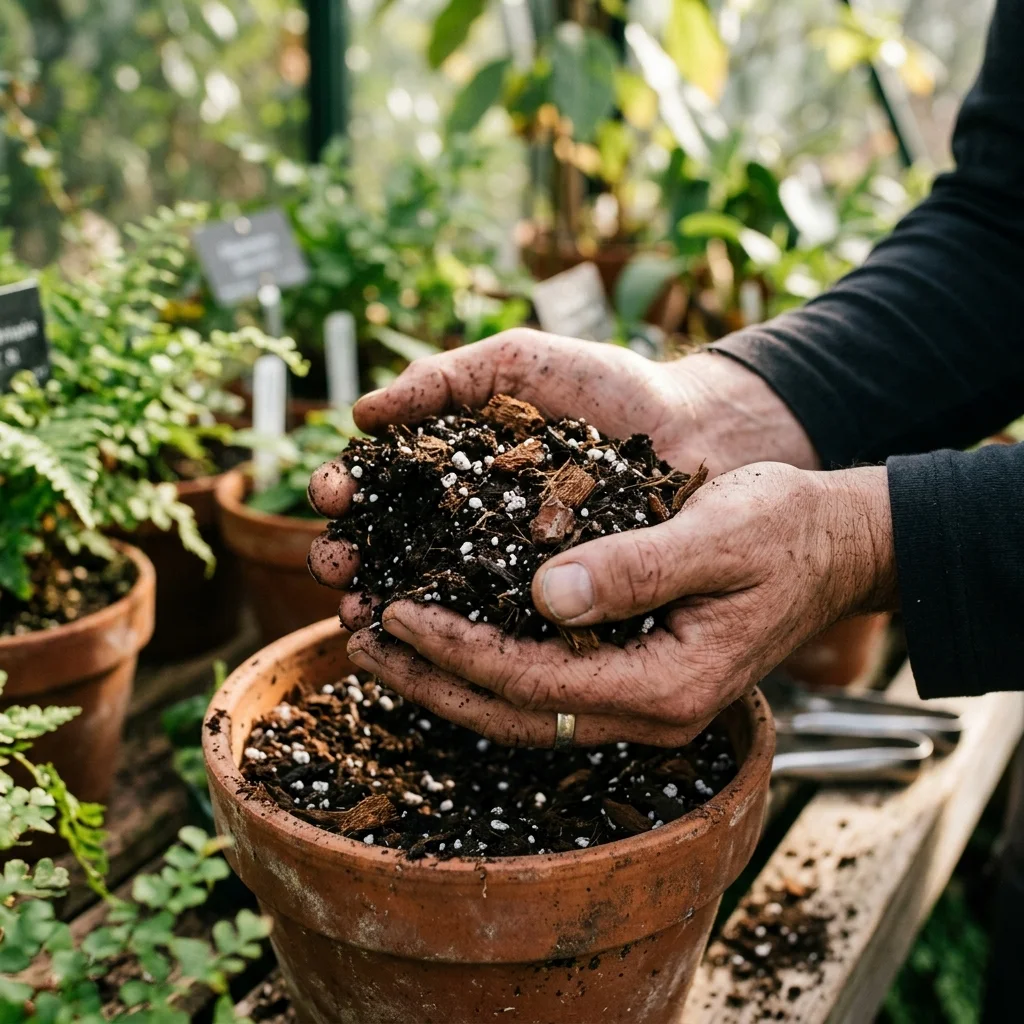
What is a Potting Mix for Bougainvillea?
If you take away nothing else from this article, remember this: bougainvillea roots need air almost as much as they need water. The right potting mix is not just a place for roots to sit—it's a life support system that balances moisture, oxygen, and nutrients. Get it wrong, and you're fighting root rot, yellow leaves, and a plant that refuses to bloom. Get it right, and your bougainvillea will explode with color, year after year.
A potting mix is an engineered soil substitute designed for container growing. Unlike garden soil, it's lightweight, sterile, and formulated to drain quickly. For bougainvillea, the ideal mix must be: incredibly well-draining (water passes through within seconds), slightly acidic (pH 5.5-6.5), and only moderately fertile (low nitrogen, balanced nutrients). It should never be dense, heavy, or moisture-retentive like a typical all-purpose potting soil. Bougainvillea are not ferns; they don't want to stay wet.
Why does this matter specifically for bougainvillea? They are native to rocky, sandy, well-drained soils along coastal South America. In containers, we must replicate that environment. Standard commercial potting mixes (even ones labeled "premium") are often too dense, containing too much peat or compost and not enough perlite or pumice. They hold water like a sponge, and bougainvillea roots drown. I've seen countless plants killed by "good" potting soil that was actually a death trap. The solution is simple: amend any commercial mix with 30-50% perlite, or make your own from scratch.
For beginners, the idea of mixing your own soil can seem intimidating. It's not. You need three or four ingredients and a tub. For advanced growers, fine-tuning the mix for your specific climate (humid vs. arid), pot type (plastic vs. fabric), and watering habits is the path to perfection. This guide will walk you through everything: ingredients, recipes, testing, and troubleshooting.
Why Potting Mix Matters for Bougainvillea
The potting mix is the foundation of everything: root health, flowering, vigor, and longevity. Here's how.
Flowering impact: A well-draining mix encourages the mild root stress that triggers blooming. In a dense, waterlogged mix, roots suffocate, and the plant focuses on survival, not flowers. In an airy, fast-draining mix, the plant sends out roots to explore every particle, and once the pot is full, it shifts energy to bract production. Blooming is directly tied to root zone conditions. The wrong mix = no blooms.
Root health impact: This is ground zero. Roots need oxygen. In a heavy mix, water fills the pore spaces, oxygen is depleted, and roots die within 48 hours. Root rot fungi (Pythium, Phytophthora) move in. The mix must have at least 20-30% air-filled porosity after watering. That means large particles (perlite, pumice, bark) that create air pockets. A good bougainvillea mix feels light and crumbly, not like wet clay.
Plant vigor and growth rate: In a well-structured mix, roots grow rapidly and branch profusely. The plant can take up water and nutrients efficiently, leading to strong stems, dark green leaves, and rapid growth. In a poor mix, growth is slow, leaves are pale, and the plant is stunted. You'll see a dramatic difference: two identical cuttings in different mixes can be worlds apart after 6 months.
Long-term health: A good potting mix resists compaction over time. Perlite and pumice don't break down, so the mix stays airy for years. Organic components (peat, coir) eventually decompose, but with a high percentage of perlite, the structure remains. In contrast, a mix without perlite will turn into a dense, anaerobic sludge within a year, leading to chronic root problems.
Container vs. landscape cultivation: In containers, you have complete control over the mix. That's an advantage—you can create the perfect environment. In the landscape, you're stuck with native soil, which you can amend but not replace. For container growing, never use garden soil; it's too heavy and may contain pathogens. Always use a soilless potting mix as your base.
Quick Facts: Potting Mix for Bougainvillea
| Factor | Details |
|---|---|
| Essential Components | Perlite or pumice (30-50%), coco coir or peat moss (30-40%), compost or worm castings (10-20%). Optional: pine bark fines, charcoal. |
| Ideal pH Range | 5.5 to 6.5 (slightly acidic). Test with a pH meter or kit. |
| Water Drainage Speed | Water should flow through within 5-10 seconds and the mix should feel like a wrung-out sponge after 1 hour. |
| Air-Filled Porosity | At least 20-30% after watering. Achieved with 30-50% coarse perlite. |
| Best Base Materials | Coco coir (preferred, sustainable, pH stable) or peat moss (acidic, but less sustainable). |
| Avoid | Garden soil, vermiculite (too water-retentive), fine sand, moisture-control crystals, heavy compost. |
| Commercial Mixes to Look For | Pro-Mix HP (high porosity), FoxFarm Ocean Forest (add perlite), Black Gold Cactus Mix (add perlite). |
| Repotting Frequency | Every 2-3 years, or when roots fill the pot. Top-dress annually with fresh mix. |
Identifying Potting Mix Problems
Your bougainvillea will show clear symptoms if the potting mix is wrong. Learn to read them.
Signs of poor drainage (too dense): Water pools on the surface and takes more than 10 seconds to drain. The mix stays wet for over a week. Leaves turn yellow, especially lower ones, and drop. The plant wilts even though the soil is wet. You see fungus gnats or smell a sour, rotten odor. Roots, if exposed, are brown and mushy. This is the most common problem. Fix: repot with more perlite (40-60%).
Signs of too much drainage (too gritty): Water runs through instantly, and the mix feels dry within a day. The plant wilts frequently, even after watering. Leaves may brown at the edges. Growth is slow because roots can't access enough moisture. This can happen if you use more than 70% perlite or too much coarse sand. Fix: add more coco coir or peat (increase water-holding capacity).
Signs of incorrect pH: New leaves are yellow with green veins (iron deficiency) if pH is too high (above 7.0). If pH is too low (below 5.0), you may see magnesium deficiency (older leaves yellow between green veins) or manganese toxicity (brown spots). A pH test is the only way to confirm. Fix: add sulfur or vinegar to lower pH; add lime to raise pH.
Signs of poor aeration (compacted mix): The mix feels hard and crusty on top. Roots are thin and sparse. The plant is stunted. This often happens after a year or two as organic components break down. Fix: repot with fresh mix containing more perlite.
Causes and Contributing Factors
Understanding why potting mixes fail helps you prevent problems.
Using garden soil in containers: Garden soil compacts, has poor drainage, and may contain pathogens, weed seeds, or insect eggs. Never use it. Always use a soilless potting mix as your base.
Not adding enough perlite: Commercial potting mixes are usually too dense for bougainvillea. Even mixes labeled "well-draining" often contain only 10-20% perlite. You need to add more—aim for 30-50% total perlite by volume. Measure, don't guess.
Over-reliance on peat moss: Peat moss is acidic and holds water well, but it becomes hydrophobic when dry and breaks down over time. Coco coir is a better base for bougainvillea because it has a neutral pH, holds water evenly, and doesn't compact as much. However, both need ample perlite.
Adding water-retentive amendments: Vermiculite, hydrogel crystals, and heavy compost are traps. They hold too much water for bougainvillea. Avoid them. Use only perlite or pumice for aeration.
Not replacing old mix: Over time, organic matter breaks down, and perlite can float to the top. The mix compacts, losing aeration. Repot every 2-3 years with fresh mix, or at least top-dress annually.
Incorrect pH from water or amendments: If your tap water is alkaline (pH 7.5+), it will raise the pH of your mix over time. Use rainwater or acidify tap water with vinegar. Some composts are also alkaline. Test pH regularly.
How to Make the Perfect Potting Mix for Bougainvillea
Follow this step-by-step guide to create a custom mix tailored to your climate and needs.
- Gather your ingredients. You will need:
- Base material (30-40%): Coco coir (preferred) or peat moss. Coco coir comes in compressed bricks; rehydrate with warm water. Peat moss is sold in bales.
- Aeration material (30-50%): Coarse perlite (1/8 to 1/4 inch) or pumice. Avoid fine perlite.
- Organic fertility (10-20%): High-quality compost, worm castings, or well-aged manure. Use sparingly.
- Optional amendments: Pine bark fines (for extra texture), horticultural charcoal (to absorb toxins), dolomitic lime (if using peat to raise pH).
- Choose your ratio based on climate and pot type.
- Humid climate (Florida, SE Asia, Pacific Northwest) or plastic pots: 50% perlite, 30% coco coir, 20% compost.
- Average climate (Mediterranean, coastal California): 40% perlite, 40% coco coir, 20% compost.
- Arid climate (Arizona, inland SoCal) or fabric/terracotta pots: 30% perlite, 50% coco coir, 20% compost.
- For rooting cuttings: 60-70% perlite, 30-40% coco coir, no compost.
- Mix thoroughly. In a large tub or on a tarp, combine all ingredients. Wear a dust mask when handling dry perlite and peat. Moisten the mix slightly to reduce dust. Mix with your hands or a shovel until uniform. The color should be consistent, and you should see white perlite evenly distributed.
- Test the mix before using. Fill a small pot with the mix. Water it thoroughly. Time how long it takes for water to drain out. It should drain within 5-10 seconds. After 1 hour, squeeze a handful of the mix. It should feel like a wrung-out sponge—moist but not dripping. If water drips, add more perlite. If it feels dry, add more coco coir.
- Adjust pH if needed. Use a pH meter or test kit on a sample moistened with distilled water. Ideal is 5.5-6.5. If too high (alkaline), add elemental sulfur or peat moss. If too low (acidic), add dolomitic lime (1 tablespoon per gallon of mix). Most coco coir mixes are naturally pH 5.5-6.5; peat-based mixes are more acidic.
- Pot your bougainvillea. Use a pot with drainage holes, only 1-2 inches larger than the root ball. Fill with mix, place the plant at the same depth as before, backfill, and gently firm. Do not pack tightly. Water thoroughly to settle the mix.
- Maintain the mix. Water when the top 2 inches are dry. Every 4-6 weeks, leach with plain water to prevent salt buildup. Top-dress annually with a thin layer of fresh compost or worm castings. Repot every 2-3 years, or when you see roots circling.
Common Mistakes with Potting Mix
- Using garden soil in containers. This is a cardinal sin. It compacts, drains poorly, and introduces pests. Always use a soilless mix.
- Not adding enough perlite. Many growers add a handful to a bag of potting soil, thinking that's enough. You need 30-50% perlite by volume. Measure properly.
- Using fine perlite or vermiculite. Fine particles compact; vermiculite holds water. Use coarse perlite for aeration.
- Adding too much compost or manure. This makes the mix too rich and water-retentive. Limit to 20% or less. Bougainvillea prefer lean soil.
- Reusing old mix without sterilizing. Old mix may contain root rot pathogens. If you reuse, bake at 200°F for 30 minutes or solarize in a black bag for 2 weeks. Better to use fresh.
- Ignoring pH. Most tap water is alkaline, which raises pH over time. Test pH yearly and adjust.
- Packing the mix too tightly when potting. This destroys air pockets. Just tap the pot to settle; don't compress with your hands.
Expert Tips from Experienced Growers
Here's what seasoned bougainvillea collectors and nursery owners know about potting mix that you won't find on commercial bags.
The "Coco Coir + Perlite" base is unbeatable: After years of testing, my go-to mix is 40% coarse perlite, 40% coco coir, and 20% worm castings. Coco coir holds water evenly without becoming soggy, and it doesn't become hydrophobic like peat. It also has a neutral pH. Worm castings provide gentle, slow-release nutrients and beneficial microbes. This mix has given me the healthiest roots I've ever seen.
Add a scoop of charcoal: Horticultural charcoal (1 cup per 5 gallons of mix) absorbs toxins, keeps the mix sweet, and provides habitat for beneficial bacteria. It also improves drainage. I add it to all my bougainvillea mixes, especially for plants in plastic pots.
Tropical climate considerations (Florida, Hawaii, SE Asia): Use 60% perlite, 30% coco coir, 10% compost. The extra perlite compensates for high humidity and frequent rain. Fabric pots are ideal because they allow even more evaporation. Avoid peat; it stays too wet.
High desert (Arizona, New Mexico): Use 30% perlite, 50% coco coir, 20% compost. The higher coco coir percentage retains moisture longer. Also, top-dress with a layer of mulch (bark or gravel) to reduce evaporation. In extreme heat, you may need to water daily, but the mix should still drain well.
Container growing observations: The pot material interacts with the mix. In plastic pots, use a higher perlite ratio (50%) because plastic doesn't breathe. In terracotta, use 40% perlite. In fabric pots, you can use 30-40% perlite because the pot itself provides aeration. I've standardized on fabric pots with a 40/40/20 mix for most of my collection.
Nursery production secrets: Commercial growers often use a mix of 50% pine bark fines, 25% peat, 25% perlite. Pine bark is cheap, resists compaction, and provides slow-release organic matter. For home growers, pine bark fines are harder to find, but you can substitute with orchid bark (not cedar). This mix is excellent for bougainvillea.
Troubleshooting Guide
| Problem | Likely Cause | Solution |
|---|---|---|
| Water pools on surface, takes >30 seconds to drain | Too much fine material (peat, compost), not enough perlite | Repot with mix containing 50% coarse perlite. Ensure drainage holes are clear. Do not pack mix. |
| Mix stays wet for 10+ days, plant wilts, leaves yellow | Overly dense mix, or pot too large | Repot into smaller pot with 50-60% perlite. Add more drainage holes. Reduce watering. |
| Water runs through instantly, plant wilts daily | Too much perlite (over 60%) or mix too coarse | Repot with less perlite (30-40%) and more coco coir or peat. Water more frequently. |
| White crust on soil surface, brown leaf tips | Salt buildup from fertilizer, hard water, or low-quality compost | Leach with 3x pot volume of distilled water. Repot with fresh mix. Use lower fertilizer concentration. |
| Green algae or moss on soil surface | Mix stays too wet, high humidity, low light | Scrape off. Improve air circulation. Reduce watering. Increase light. Top-dress with perlite or sand. |
| Fungus gnats in large numbers | Organic-rich mix staying too wet | Allow top 2 inches to dry. Apply Bti (mosquito dunks). Top-dress with sand. Reduce organic content next repot. |
| New leaves yellow with green veins (iron chlorosis) | pH too high (alkaline) locking out iron | Lower pH with vinegar water (1 tbsp/gal) or elemental sulfur. Apply chelated iron. Test pH. |
| Old leaves yellow between green veins (magnesium deficiency) | pH too low, or lack of magnesium | Raise pH with lime. Apply Epsom salts (1 tbsp/gal) monthly. Test pH. |
Frequently Asked Questions
What is the best commercial potting mix for bougainvillea?
No commercial mix is perfect out of the bag, but some are good bases. Pro-Mix HP (High Porosity) is excellent—it already contains perlite and vermiculite, but I still add another 20% perlite. FoxFarm Ocean Forest is good but too rich; mix it 50/50 with perlite. Black Gold Cactus Mix is another decent base. Avoid Miracle-Gro Moisture Control or any mix with added water-retaining crystals. Always, always add extra perlite (30-50% by volume).
Can I use cactus/succulent mix for bougainvillea?
Yes, as a base. Cactus mixes are designed to drain quickly. However, some are too sandy or contain fine particles. Add extra perlite to any cactus mix (about 20-30% by volume). Also, cactus mixes may lack organic matter; add 10-20% compost or worm castings. The result is an excellent bougainvillea mix.
Do I need to sterilize potting mix?
Commercial bagged mixes are usually sterile. If you make your own from fresh ingredients, sterilization is not necessary. However, if you reuse old mix, sterilize it by baking at 200°F (93°C) for 30 minutes, or solarizing in a black plastic bag for 2-4 weeks in summer. This kills pathogens and weed seeds. But for convenience, it's easier to use fresh mix.
How often should I change the potting mix?
Every 2-3 years, repot your bougainvillea with fresh mix. Over time, organic components break down, and salts accumulate. Even if you don't repot, top-dress annually by removing the top 1-2 inches of old mix and replacing with fresh compost and perlite. This replenishes nutrients and maintains structure.
Is it okay to use peat moss as the base?
Yes, but with caveats. Peat moss is acidic (pH 3.5-4.5) and must be balanced with lime (dolomitic lime, 1 tablespoon per gallon). It also becomes hydrophobic when dry, making re-wetting difficult. Coco coir is more sustainable and user-friendly. If you use peat, mix it with 40-50% perlite and add lime. Many successful growers use peat, but I've switched to coco coir.
Can I add sand to my potting mix for drainage?
Only if you use coarse builder's sand (sharp grit). Fine beach sand or play sand compacts and actually reduces drainage. Even with coarse sand, it adds weight. Perlite or pumice are much better for aeration because they're lightweight and create air pockets. If you must use sand, use no more than 20% and mix with perlite. I recommend skipping sand entirely.
What is the best way to rehydrate coco coir bricks?
Place the brick in a large tub. Add warm water (not boiling) slowly—about 3-4 quarts per gallon-sized brick. Wait 30 minutes, then break apart with your hands. Add more water if needed until it's uniformly moist but not dripping. The consistency should be like a wrung-out sponge. Fluff it with your fingers. Then mix with perlite and compost.
My potting mix has white fuzzy mold on top. Is it bad?
Usually harmless saprophytic fungi. It indicates the mix is rich in organic matter and staying moist. Scrape it off. Improve air circulation with a small fan. Let the top inch dry out more between waterings. If you see any green, blue, or black mold, that could be pathogenic; remove the affected soil and treat with neem oil or cinnamon.
Related Bougainvillea Topics
- Perlite: The Aeration Essential
- Coco Coir vs. Peat Moss for Bougainvillea
- Drainage: Why Your Mix Must Be Fast-Draining
- Pot Size and Its Relationship to Potting Mix
- How to Repot Bougainvillea Step by Step
- Soil pH Testing and Adjustment for Bougainvillea
- Overwatering: The Danger of Dense Mixes
- Root Rot Prevention Through Proper Mix
Summary
The right potting mix is the single most important factor for healthy, blooming bougainvillea in containers. A good mix must be incredibly well-draining, slightly acidic (pH 5.5-6.5), and only moderately fertile. The essential formula: 30-50% coarse perlite or pumice for aeration, 30-50% coco coir or peat for moisture retention, and 10-20% compost or worm castings for gentle nutrition. Adjust the perlite ratio based on your climate: more perlite in humid conditions, less in arid conditions.
Never use garden soil, vermiculite, or moisture-control crystals. Avoid dense, compost-heavy commercial mixes unless you amend them with ample perlite. Test your mix before planting: water should drain through within 5-10 seconds, and the mix should feel like a wrung-out sponge after an hour. Repot every 2-3 years with fresh mix, or at least top-dress annually.
My final advice: invest in quality ingredients and take the time to mix your own soil. It costs a fraction of bagged mixes and will outperform anything you can buy. Your bougainvillea's roots will be white, vigorous, and rot-free. The plant will reward you with lush growth and spectacular, long-lasting blooms. The potting mix is not glamorous, but it's the foundation of everything. Get it right, and the rest becomes easy.
Related Plants
Plant Guide
'Singapore Pink'
Singapore Pink is a dwarf, compact bougainvillea cultivar known for its delicate pink bracts and nearly thornless growth habit. Perfect for container gardening, balconies, hanging baskets, and indoor growing.
Plant Guide
'Barbara Karst'
Bougainvillea 'Barbara Karst' is a vigorous, popular cultivar prized for its brilliant magenta-red bracts and prolific, nearly year-round blooming habit. One of the hardiest bougainvilleas, it thrives in hot, full-sun gardens, on fences and trellises, and in large containers across tropical and subtropical climates.
Plant Guide
Chilli Red
The Chilli Red bougainvillea is a vibrant and eye-catching variety known for its intense red bracts. Here are some key details about this bougainville...
Plant Guide
Vietnam Mix
This Vietnam Mix bougainvillea is valued for its bright pink to magenta bracts and its vigorous climber with strong repeat bloom. In warm tropical and subtropical gardens, it performs as a resilient ornamental climber that rewards full sun, sharp drainage, and a restrained feeding regime with long flushes of colour.
Plant Guide
21 Jewel Pink Variegated
This 21 Jewel Pink Variegated bougainvillea is valued for its pink with cream or white variegation bracts and its floriferous climber with reliable warm-season colour. In warm tropical and subtropical gardens, it performs as a resilient ornamental climber that rewards full sun, sharp drainage, and a restrained feeding regime with long flushes of colour.
Plant Guide
21 Jewel Pink
This 21 Jewel Pink bougainvillea is valued for its pink to deep rose bracts and its floriferous climber with reliable warm-season colour. In warm tropical and subtropical gardens, it performs as a resilient ornamental climber that rewards full sun, sharp drainage, and a restrained feeding regime with long flushes of colour.
Related Articles
Guide
Bougainvillea Bonsai: Complete Beginner's Guide to Growing, Styling, and Caring
Bougainvillea makes a spectacular bonsai — fast-growing, drought-tolerant, and capable of producing vivid bracts even in a tiny pot. This guide covers species selection, soil, root pruning, wire training, and seasonal care for Indian conditions.
Guide
Bougainvillea Variety Showdown: 5 Cultivars Head-to-Head
We compare 5 top bougainvillea cultivars head-to-head — Maharani, Adarna, Barbara Karst, Balaka, and Torch Glow — scoring each for colour, size, cold hardiness, and maintenance so you can pick the perfect vine.
Guide
Bougainvillea Growing Guide: Sun, Soil, Pruning, and Climate
Complete bougainvillea growing guide for tropical, subtropical, and Mediterranean climates. Learn sunlight, soil mix, pruning, and seasonal care for dwarf balcony pots to large wall climbers.
Guide
Early Identification of Common Bougainvillea Diseases and Effective Responses
Learn to spot early signs of bougainvillea diseases: leaf spot, root rot, and dieback. Practical treatment tips for high-humidity tropical and monsoon conditions.
Guide
How to Water Bougainvillea Without Killing the Bloom Cycle (Global Guide)
Master bougainvillea watering worldwide: use the dry-down method to prevent root rot, trigger heavy blooming, and adjust for pots, ground, and all climates.
Guide
Why Every Gardener Should Have the Arjuna Bougainvillea (Complete Variety Guide)
The Arjuna Bougainvillea is a near-year-round bloomer prized for its vivid multi-color flowers, disease resistance, and beginner-friendly nature. Here's why it earns a spot in every garden, plus a full care guide.
Related Calculators & Tools
Calculator
Bougainvillea Potting Mix Calculator
Calculate the exact volumes of perlite, compost, and soil for a fast-draining Bougainvillea mix.
Calculator
Bougainvillea Soil pH Calculator
Calculate amendments to reach the ideal 5.5 - 6.5 pH for Bougainvillea nutrient uptake.
Calculator
Bougainvillea Grow Bag Size Calculator
Calculate the ideal fabric grow bag volume for massive Bougainvillea growth.
Calculator
Bougainvillea Compost Top-Dressing Calculator
Calculate precise compost volumes to naturally amend your Bougainvillea garden beds.
Calculator
Bougainvillea Garden Mulch Calculator
Calculate exact mulch volumes while learning how to apply it safely around Bougainvilleas.
Calculator
Bougainvillea Neem Oil & Pest Calculator
Calculate precise neem oil dilutions to eradicate Bougainvillea Loopers and aphids.