Perlite
Use perlite in bougainvillea potting mix for superior drainage, root aeration, and preventing root rot in containers.
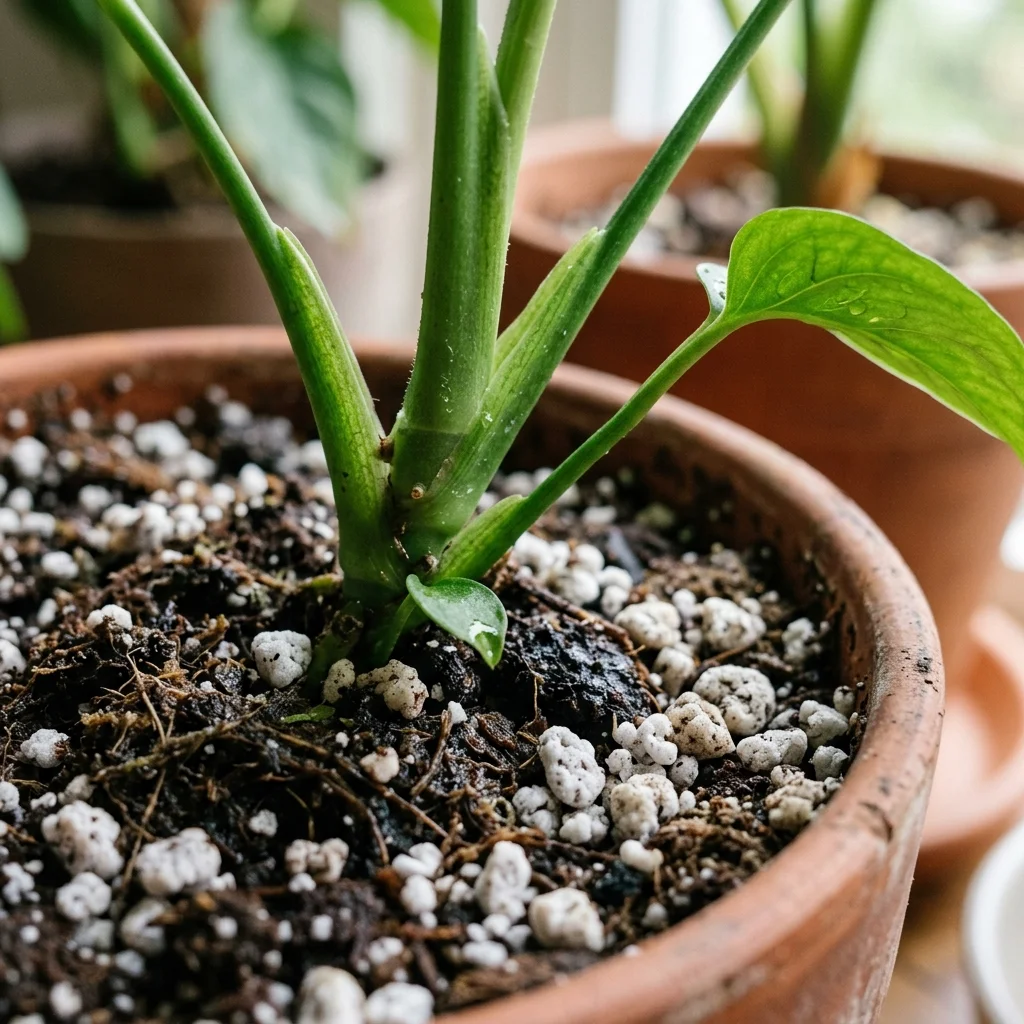
What is Perlite for Bougainvillea?
If you've ever opened a bag of commercial potting soil and noticed those little white, Styrofoam-like nuggets, you've seen perlite. But unlike Styrofoam, perlite is actually a natural volcanic glass that has been heated to about 1600°F (870°C), causing it to pop like popcorn into lightweight, porous, sterile particles. For bougainvillea growers, perlite is nothing short of a miracle amendment. It transforms dense, waterlogged potting mix into a light, airy, fast-draining medium that bougainvillea roots absolutely love.
Perlite doesn't decompose, doesn't compact, and has a neutral pH. Its primary function is to create air pockets in the soil, allowing oxygen to reach roots and water to drain quickly. Bougainvillea are extremely sensitive to overwatering and root rot. Without perlite (or similar amendments like pumice or coarse sand), most commercial potting mixes are too dense and moisture-retentive. I've seen countless beginners kill their plants in "premium" potting soil that held water like a sponge. Adding 30-50% perlite transforms that death trap into a bougainvillea paradise.
Why does this matter specifically for bougainvillea? Their roots need oxygen as much as water. In a dense mix, water fills the pore spaces, roots suffocate, and rot sets in. Perlite creates large, stable air pockets that remain even when the mix is wet. This allows roots to breathe, prevents waterlogging, and makes it nearly impossible to overwater (within reason). For container cultivation, perlite is the single most important soil amendment you can use.
For beginners, adding perlite seems counterintuitive—"won't the water just run out?" But what you want is a mix that holds moisture in the particles while draining quickly between them. Perlite achieves that balance. For advanced growers, choosing the right perlite grade (coarse vs. fine) and mixing ratios for different climates and container sizes is part of the art.
Why Perlite Matters for Bougainvillea
The benefits of perlite go far beyond drainage. Here's how it transforms your bougainvillea's growing environment.
Flowering impact: A healthy, well-aerated root system supports vigorous top growth and abundant blooms. Perlite prevents root rot, which is the #1 killer of bougainvillea. A plant with healthy roots will reward you with spectacular, long-lasting bracts. Conversely, a plant in dense soil may survive but will never reach its blooming potential.
Root health impact: This is where perlite shines. By creating air-filled porosity (typically 20-30% in a perlite-amended mix), perlite ensures roots have constant access to oxygen. Oxygen is essential for root respiration, nutrient uptake, and preventing anaerobic pathogens. Roots in perlite-rich mix are white, fibrous, and extensive. Roots in dense mix are brown, stunted, and prone to rot.
Plant vigor and growth rate: With better root health comes faster growth. A bougainvillea in a 50% perlite mix will often outgrow one in straight potting soil by 2-3x. The mix also warms faster in spring (perlite is light-colored and doesn't hold cold water), promoting earlier root activity. However, note that perlite mixes dry out faster, so you need to water more frequently. That's a feature, not a bug—it forces you to pay attention.
Long-term health: Perlite doesn't decompose, so its benefits last for years. In contrast, organic components like peat and compost break down and compact over time. Adding perlite to your potting mix ensures long-term aeration and drainage. When you repot, you can even rinse and reuse perlite (though it's inexpensive enough to replace).
Container vs. landscape cultivation: Perlite is essential for containers. In the landscape, you can mix perlite into planting holes for individual plants, but it's not practical for large areas. For in-ground bougainvillea, focus on amending clay soil with coarse sand and compost instead. Perlite is light and can float to the surface in heavy rain, making it less ideal for landscape use.
Quick Facts: Perlite for Bougainvillea
| Factor | Details |
|---|---|
| Ideal Perlite Percentage in Mix | 30-50% by volume; 40% is a good starting point. In humid climates or for heavy-handed waterers, go to 50-60%. |
| Best Perlite Grade | Coarse or medium grade (1/8 to 1/4 inch particles). Avoid fine or "dust" grade, which compacts. |
| Function | Improves aeration, drainage, and soil structure; prevents compaction; sterile and pH neutral. |
| Water Retention | Perlite itself holds some water (about 3-4 times its weight), but it releases it readily. The main benefit is air spaces. |
| Mixing Recipe (Basic) | 40% perlite + 40% coco coir/peat + 20% compost. Or 50% perlite + 50% commercial potting soil. |
| Advantages Over Pumice | Lighter weight, more widely available, cheaper. Disadvantages: floats, can create dust, less durable. |
| Disadvantages | Can float to top of pot when watering; white color is noticeable; dusty when dry (wear a mask). |
| Reusability | Can be rinsed and reused, but it's inexpensive to replace. Reused perlite may harbor pathogens; sterilize by baking. |
Identifying the Need for Perlite (Symptoms of Poor Aeration)
You don't need a lab test to know if your potting mix lacks perlite. Your bougainvillea will show you.
Signs your mix needs more perlite: Water pools on the soil surface after watering and takes more than 10 seconds to drain. The soil feels heavy and stays wet for over a week. The plant's leaves yellow and drop, especially lower leaves. The plant wilts even when the soil is wet (root rot). You see fungus gnats or a sour smell from the soil. Growth is slow and stunted. These are classic overwatering symptoms caused by poor drainage—which perlite fixes.
What a good perlite-amended mix looks like: After watering, water flows through within 5-10 seconds. The mix feels light and fluffy, not dense. When you squeeze a handful, it holds together loosely but crumbles easily. After a minute, it feels like a wrung-out sponge. Roots are white and spread throughout the pot.
Common misdiagnoses: Many growers mistake root rot from poor drainage (lack of perlite) for underwatering or nutrient deficiency. They add more water or fertilizer, making it worse. If your soil is heavy and stays wet, perlite is the solution—not more amendments.
Causes of Poor Aeration and How Perlite Helps
Understanding why potting mixes fail helps you appreciate perlite's role.
Environmental factors: In high humidity or low light, transpiration slows, and soil stays wet longer. Without perlite, the extended wet period guarantees root rot. Perlite accelerates drainage, reducing the time roots sit in water.
Watering mistakes: Even if you water correctly, a dense mix holds too much water. Perlite reduces the water-holding capacity to a safe level. You can water thoroughly without fear of waterlogging.
Container-related factors: Plastic pots and glazed ceramic pots don't breathe like terracotta. They rely entirely on the mix for aeration. Perlite becomes even more critical. In fabric pots, perlite helps maintain structure, but fabric also provides aeration from the sides.
Soil mix ingredients: Peat moss, coco coir, and compost are excellent but can be too water-retentive alone. Perlite balances them. Without perlite, these organic components compact and exclude air.
How to Use Perlite for Bougainvillea
Follow this step-by-step guide to incorporate perlite into your potting routine.
- Choose the right perlite grade. For bougainvillea, use coarse or medium perlite (particles 1/8 to 1/4 inch). Avoid fine perlite or "horticultural perlite" that's mostly dust. Look for brands like Vigoro, Espoma, or Mother Earth. Coarse perlite is sometimes labeled "coarse" or "#3." If you only find fine perlite, sift out the dust with a mesh screen.
- Determine the ratio based on your conditions.
- Humid climate or heavy-handed waterer: 50-60% perlite.
- Average conditions (temperate, moderate watering): 40% perlite.
- Arid climate or forgetful waterer: 30% perlite (retains more moisture).
- For rooting cuttings: 60-70% perlite (mixed with coco coir).
- Mix thoroughly. In a large tub or on a tarp, combine perlite with your other components: coco coir or peat moss (30-40%) and compost (20-30%). Or simply mix 50% perlite with 50% commercial potting soil. Wear a dust mask when handling dry perlite—the dust is irritating to lungs. Moisten the mix slightly to reduce dust.
- Test the mix before potting. Fill a pot with your mix and water it. Water should drain out within 5-10 seconds. After 1 hour, the mix should feel like a wrung-out sponge—moist but not dripping. If water pools, add more perlite. If water runs through instantly and the mix is dry, reduce perlite or add more coco coir.
- Pot your bougainvillea. Use the mix as you would any potting soil. Do not pack it tightly—gentle firming is enough. Perlite will float to the surface over time; you can top-dress with more perlite or simply ignore it.
- Water thoroughly after potting. Because perlite improves drainage, water deeply until it runs out the holes. Then allow the top 2 inches to dry before watering again.
- Adjust watering frequency. With perlite, you may need to water more often than with dense mixes. In summer, a 40% perlite mix may need water every 2-3 days. In winter, every 10-14 days. Always check soil moisture first.
Common Mistakes with Perlite
- Using too little perlite. Adding just a handful to a bag of potting soil is not enough. You need 30-50% by volume. Measure, don't guess.
- Using fine or dusty perlite. Fine particles compact and reduce aeration. Coarse perlite is essential for bougainvillea.
- Not wearing a dust mask. Perlite dust is non-toxic but can irritate lungs. Moisten it slightly before handling, or wear a mask.
- Assuming perlite alone provides nutrients. Perlite is inert. You still need to fertilize. It only improves physical structure.
- Letting perlite float away. When watering, perlite may float to the top. This is normal. You can add a thin layer of coarse sand on top to hold it down, or just accept it.
- Reusing perlite without sterilizing. Old perlite can harbor root rot pathogens. If you reuse it, rinse thoroughly and bake at 200°F for 30 minutes, or simply buy new.
- Mixing perlite into garden soil for in-ground planting. Perlite is too lightweight for landscape use; it floats away. Use pumice or coarse sand instead.
Expert Tips from Experienced Growers
Here's what seasoned bougainvillea growers know about getting the most from perlite.
Tropical climate considerations (Florida, Hawaii, SE Asia): High humidity means mixes stay wet longer. Use 50-60% perlite. Fabric pots are ideal because they allow even more evaporation. Some growers use straight perlite for rooting cuttings, then transplant to a mix with 40% perlite. In rainy seasons, move containers under cover to prevent constant saturation.
High desert (Arizona, New Mexico): You still need perlite for drainage, but you also need water retention. Use 30-40% perlite, with the remainder being coco coir (holds water better than peat) and compost. Also, top-dress with a layer of mulch to reduce evaporation. In extreme heat, a higher perlite mix dries out too fast; experiment.
Cool coastal (Pacific Northwest, UK): Use 50-60% perlite to compensate for slow drying. Terracotta pots add extra breathability. In winter, you may need to water only once every 2-3 weeks. The high perlite content prevents root rot during those long damp periods.
Container growing observations: Perlite is especially beneficial in plastic pots and glazed ceramic pots, which don't breathe. I've found that a 50/50 mix of coarse perlite and coco coir is almost foolproof for bougainvillea in any container with drainage holes. It's light, drains fast, yet holds enough moisture for a few days. For large pots (over 5 gallons), add a layer of coarse perlite at the bottom (1-2 inches) to improve drainage of the entire column.
Nursery production secrets: Commercial growers often use 60-70% perlite in propagation mixes for cuttings. The high aeration encourages rapid root development. They also use a technique called "perlite sweat": placing cuttings in pure perlite in a sealed container with high humidity. Once rooted, they transplant to a 40% perlite mix. For home growers, pure perlite works well for rooting if you add a little water and keep it humid.
Collector-level technique: For a high-performance mix, combine perlite with pumice (50/50) as the drainage component. Pumice doesn't float and lasts forever. Then add organic matter (coco coir, compost). This mix is expensive but ideal for valuable specimens. Also, add a cup of activated charcoal per 5 gallons of mix to keep the soil sweet and prevent anaerobic pockets.
Troubleshooting Guide
| Problem | Likely Cause | Solution |
|---|---|---|
| Water pools on soil surface, drains slowly | Not enough perlite; mix too dense | Repot with additional perlite (increase to 50% of total volume). Mix thoroughly. Ensure drainage holes are clear. |
| Perlite floats to top when watering | Normal for perlite; water flow is causing flotation | Top-dress with coarse sand or fine gravel to weigh down. Use a watering can with a rose to disperse water gently. Accept it as harmless. |
| Roots are brown and mushy despite perlite | Perlite ratio still too low, or overwatering persists | Increase perlite to 60%. Ensure pot has drainage holes. Allow soil to dry more between waterings. Unpot and remove rotten roots. |
| Plant dries out too quickly | Perlite percentage too high for your climate; too much drainage | Reduce perlite to 30%. Add more coco coir or peat to retain moisture. Mulch the soil surface. Water more frequently. |
| White dust on leaves after potting | Perlite dust settled on foliage | Rinse leaves with water. Next time, pre-moisten perlite before mixing to reduce dust. |
| Perlite turns yellowish or brown over time | Mineral deposits or algae from hard water | Normal; doesn't harm plant. You can rinse the top layer occasionally. Use distilled water to slow buildup. |
| Fungus gnats in perlite-heavy mix | Organic components staying too wet; perlite alone doesn't cause gnats | Let top 2 inches dry. Add sand top-dressing. Use Bti drench. Gnats breed in organic matter, not perlite. |
Frequently Asked Questions
What is the best ratio of perlite to potting soil for bougainvillea?
For most growers, 1 part perlite to 1 part commercial potting soil (50/50) works well. In humid climates or if you tend to overwater, use 2 parts perlite to 1 part soil (66% perlite). In dry climates, use 1 part perlite to 2 parts soil (33% perlite). Always test the mix: water should drain within 5-10 seconds.
Can I use perlite alone as a potting medium for bougainvillea?
Yes, but it's not ideal for long-term growth. Perlite has no nutrients, doesn't hold much water, and roots may not anchor well. However, pure perlite is excellent for rooting cuttings because it's sterile, well-aerated, and drains perfectly. Once roots form (4-8 weeks), transplant into a perlite-rich mix with organic components.
Is perlite safe for the environment?
Perlite is a natural volcanic glass, not a chemical. It's non-toxic and inert. Mining does have environmental impacts, but perlite is abundant. Unlike peat moss (which is harvested from carbon-sink bogs), perlite is a mineral resource and doesn't deplete ecosystems. It's considered a sustainable amendment.
Can I substitute pumice for perlite?
Yes, pumice is an excellent substitute. It's heavier (doesn't float), more durable, and doesn't create dust. However, pumice is more expensive and harder to find. For bougainvillea, both work well. Some growers prefer pumice for long-term container plants because it never breaks down. Use coarse pumice (1/4 to 1/2 inch) in the same ratios as perlite.
How do I prevent perlite from floating to the top?
You can't completely stop it, but you can reduce it: 1) Water gently with a rose attachment. 2) Top-dress with a 1/2 inch layer of coarse sand or fine gravel. 3) Mix perlite with heavier components like pumice. 4) Use a slightly finer perlite (but not dust). Floating perlite is cosmetic, not harmful.
Do I need to wear a mask when handling perlite?
Yes, especially when pouring dry perlite. The fine dust can irritate your lungs. Wear a simple dust mask (N95) or work outdoors. Pre-moistening the perlite with a spray bottle eliminates dust. After mixing, the dust settles and is no longer hazardous.
How often should I replace perlite in potting mix?
Perlite doesn't decompose, so it lasts indefinitely. However, when you repot a bougainvillea (every 12-24 months), you should use fresh potting mix. The organic components (coco coir, compost) break down and compact. You can sift out the perlite, sterilize it (bake at 200°F for 30 minutes), and reuse it in the new mix. Most growers just buy fresh perlite because it's inexpensive.
Can I use perlite in the ground to improve clay soil?
Not recommended. Perlite is too lightweight; it floats to the surface in rain or irrigation. For clay soil, use coarse sand (builder's sand), pumice, or expanded shale. These are heavier and stay mixed. Perlite is best reserved for containers.
Related Bougainvillea Topics
- Drainage: Why Perlite is Essential for Bougainvillea
- Bougainvillea Potting Mix Recipes with Perlite
- Pumice vs. Perlite for Bougainvillea Containers
- Preventing Overwatering with Perlite-rich Mix
- Root Rot Prevention: The Role of Aeration
- Rooting Bougainvillea Cuttings in Pure Perlite
- Coco Coir and Perlite: The Perfect Blend
- Soil Amendments Guide: Perlite, Sand, Pumice, Vermiculite
Summary
Perlite is a non-negotiable soil amendment for container-grown bougainvillea. It creates the air-filled porosity and fast drainage that bougainvillea roots need to thrive and avoid root rot. For most growers, a mix of 40-50% coarse perlite with coco coir or peat and a little compost is ideal. In humid climates or if you tend to overwater, increase perlite to 60%. In arid climates, reduce to 30%.
To use perlite, simply mix it thoroughly with your other potting components. Test the mix by watering a pot: water should drain within 5-10 seconds, and the mix should feel like a wrung-out sponge after an hour. Wear a dust mask when handling dry perlite. Water your bougainvillea as needed, but the improved drainage means you may need to water more frequently—always check soil moisture first.
My final advice: never pot a bougainvillea without perlite. Even the best commercial "potting soil" is too dense on its own. Buy a large bag of coarse perlite—it's cheap and lasts for years. Mix it at least 1:1 with any potting mix. Your bougainvillea's roots will be white, healthy, and rot-free, and the plant will reward you with vigorous growth and spectacular blooms. Perlite isn't glamorous, but it's one of the most important tools in your bougainvillea care arsenal.
Related Plants
Plant Guide
Vietnam Mix
This Vietnam Mix bougainvillea is valued for its bright pink to magenta bracts and its vigorous climber with strong repeat bloom. In warm tropical and subtropical gardens, it performs as a resilient ornamental climber that rewards full sun, sharp drainage, and a restrained feeding regime with long flushes of colour.
Plant Guide
21 Jewel Pink Variegated
This 21 Jewel Pink Variegated bougainvillea is valued for its pink with cream or white variegation bracts and its floriferous climber with reliable warm-season colour. In warm tropical and subtropical gardens, it performs as a resilient ornamental climber that rewards full sun, sharp drainage, and a restrained feeding regime with long flushes of colour.
Plant Guide
21 Jewel Pink
This 21 Jewel Pink bougainvillea is valued for its pink to deep rose bracts and its floriferous climber with reliable warm-season colour. In warm tropical and subtropical gardens, it performs as a resilient ornamental climber that rewards full sun, sharp drainage, and a restrained feeding regime with long flushes of colour.
Plant Guide
21 Jewel Yellow
This 21 Jewel Yellow bougainvillea is valued for its golden yellow to creamy yellow bracts and its sun-loving climber that shows best colour in bright, hot exposure. In warm tropical and subtropical gardens, it performs as a resilient ornamental climber that rewards full sun, sharp drainage, and a restrained feeding regime with long flushes of colour.
Plant Guide
3 Star
This 3 Star bougainvillea is valued for its bright pink to magenta bracts and its vigorous climber with strong repeat bloom. In warm tropical and subtropical gardens, it performs as a resilient ornamental climber that rewards full sun, sharp drainage, and a restrained feeding regime with long flushes of colour.
Plant Guide
7 Star
This 7 Star bougainvillea is valued for its bright pink to magenta bracts and its vigorous climber with strong repeat bloom. In warm tropical and subtropical gardens, it performs as a resilient ornamental climber that rewards full sun, sharp drainage, and a restrained feeding regime with long flushes of colour.
Related Articles
Guide
How to Water Bougainvillea Without Killing the Bloom Cycle (Global Guide)
Master bougainvillea watering worldwide: use the dry-down method to prevent root rot, trigger heavy blooming, and adjust for pots, ground, and all climates.
Guide
Bougainvillea Bonsai: Complete Beginner's Guide to Growing, Styling, and Caring
Bougainvillea makes a spectacular bonsai — fast-growing, drought-tolerant, and capable of producing vivid bracts even in a tiny pot. This guide covers species selection, soil, root pruning, wire training, and seasonal care for Indian conditions.
Guide
Bougainvillea Growing Guide: Sun, Soil, Pruning, and Climate
Complete bougainvillea growing guide for tropical, subtropical, and Mediterranean climates. Learn sunlight, soil mix, pruning, and seasonal care for dwarf balcony pots to large wall climbers.
Guide
Early Identification of Common Bougainvillea Diseases and Effective Responses
Learn to spot early signs of bougainvillea diseases: leaf spot, root rot, and dieback. Practical treatment tips for high-humidity tropical and monsoon conditions.
Guide
How to Propagate Bougainvillea From Cuttings (Global Guide)
Step-by-step global guide to propagate bougainvillea from cuttings. Compare soil vs water rooting, best warm-season timing, rooting hormone use, and aftercare for high success.
Guide
Best Fertilizer for Bougainvillea in 2026 – NPK Ratios That Actually Work
A no-nonsense 2026 guide to bougainvillea fertilization: the NPK ratios that actually produce bracts (not just leaves), what Indian-market products to use, what to avoid, and a season-by-season feeding calendar tested in West Bengal.
Related Calculators & Tools
Calculator
Bougainvillea Potting Mix Calculator
Calculate the exact volumes of perlite, compost, and soil for a fast-draining Bougainvillea mix.
Calculator
Bougainvillea Garden Mulch Calculator
Calculate exact mulch volumes while learning how to apply it safely around Bougainvilleas.
Calculator
Bougainvillea Soil pH Calculator
Calculate amendments to reach the ideal 5.5 - 6.5 pH for Bougainvillea nutrient uptake.
Calculator
Bougainvillea Compost Top-Dressing Calculator
Calculate precise compost volumes to naturally amend your Bougainvillea garden beds.
Calculator
Bougainvillea Grow Bag Size Calculator
Calculate the ideal fabric grow bag volume for massive Bougainvillea growth.
Calculator
Bougainvillea Neem Oil & Pest Calculator
Calculate precise neem oil dilutions to eradicate Bougainvillea Loopers and aphids.