Pot Size
Choose the right pot size for bougainvillea: root-bound blooming, container volume, repotting timing, and avoiding overpotting mistakes.
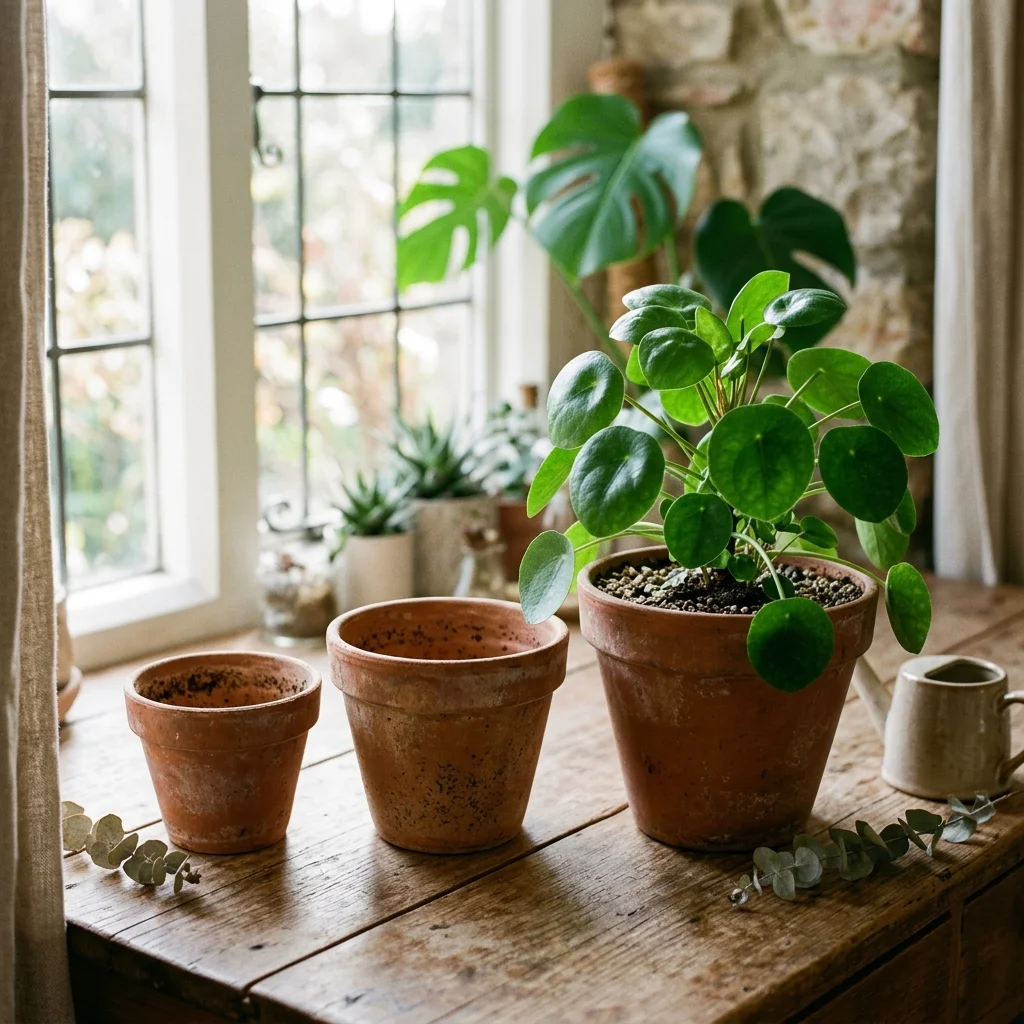
What is Pot Size for Bougainvillea?
One of the most counterintuitive lessons in growing bougainvillea is this: they bloom best when they're a little cramped. Most plants appreciate room to stretch their roots, but bougainvillea are different. They have a strong stress-to-bloom response: when roots fill the container and become slightly pot-bound, the plant shifts from vegetative growth to reproductive mode, producing far more bracts. An oversized pot, on the other hand, leads to lush green growth, delayed blooming, and a high risk of root rot from excess moisture.
Pot size refers to the volume of the container relative to the plant's root ball. A properly sized pot is one that is only 1-2 inches larger in diameter than the current root ball. For a young plant in a 4-inch nursery pot, the next step might be a 6-inch pot. Jumping from a 4-inch to a 12-inch pot is a recipe for trouble. The plant's roots can't fill the extra space quickly, so the soil stays wet for too long, roots suffocate, and the plant focuses on root growth instead of blooming.
Why does this matter specifically for bougainvillea? They are native to rocky, well-drained soils where roots spread but are often confined by rocks. They evolved to flower when resources are limited—a survival strategy. In a too-large pot, the plant perceives abundant resources (water, nutrients) and puts energy into leaves and roots, not bracts. In a snug pot, it senses stress and rushes to reproduce. This is why many seasoned growers keep their bougainvillea in the same pot for years, only repotting when absolutely necessary.
For beginners, the natural instinct is to give a plant "room to grow" by upsizing dramatically. That's a mistake. For advanced growers, pot size is a tool to control growth rate, bloom timing, and plant size. You can keep a bougainvillea in a small pot for decades as a bonsai or compact specimen, or gradually step up pot sizes over years to produce a large, standard tree.
Why Pot Size Matters for Bougainvillea
The size of the pot directly influences flowering, root health, vigor, and long-term survival.
Flowering impact: This is the most important reason to choose the right pot size. A bougainvillea in a pot that is just large enough for its roots will produce far more bracts than one in an oversized pot. The mild root restriction signals the plant to shift energy to reproduction. I've seen identical cuttings: one in a snug 6-inch pot blooming heavily, another in a 12-inch pot staying green and leafy for months. The snug pot wins every time. If you want maximum blooms, keep the pot size tight.
Root health impact: Pot size affects how quickly the soil dries. In a correctly sized pot, the roots fill most of the volume, so they take up water efficiently, and the soil dries within a few days. In an oversized pot, the root ball is a small island in a sea of wet soil. The outer soil stays wet for a week or more, leading to anaerobic conditions, root rot, and fungal gnats. The plant may wilt from root damage while the soil is wet—a classic overwatering symptom. Proper pot size is your best defense against root rot.
Plant vigor and growth rate: In a snug pot, the plant's top growth slows down. That's not necessarily bad—you get a compact, dense plant. In an oversized pot, the plant may put out long, soft, leggy growth as it tries to fill the space. You might get more vegetative growth, but it's lower quality and delays blooms. For those who want a large plant quickly, you can gradually step up pot sizes over several seasons, but don't rush.
Long-term health: A bougainvillea kept in an appropriately sized pot and repotted only every 2-3 years will live for decades. The roots become woody and efficient. In contrast, a plant that is chronically over-potted will struggle with repeated root rot, leading to decline and death. Also, a too-small pot (extremely root-bound to the point of girdling) can choke the plant. There's a balance: tight but not strangling.
Container vs. landscape cultivation: Pot size is irrelevant in the landscape because roots are not confined. In containers, it's critical. The same plant that would thrive in a 5-gallon pot in the landscape might need a 15-gallon container to reach the same size? No—landscape roots spread wide, container roots are confined. In containers, you can keep a surprisingly large bougainvillea in a relatively small pot with frequent watering and fertilizing. I've seen 6-foot-tall bougainvillea in 3-gallon pots, blooming heavily.
Quick Facts: Pot Size for Bougainvillea
| Factor | Details |
|---|---|
| General Rule | Choose a pot 1-2 inches larger in diameter than the current root ball. Avoid jumping more than 2 inches at a time. |
| When to Repot | Every 2-3 years, or when roots are circling the pot densely and water runs straight through. Spring is best. |
| Signs Pot is Too Small | Roots growing out of drainage holes, water runs through instantly, plant wilts daily despite watering, stunted growth. |
| Signs Pot is Too Large | Soil stays wet for over a week, yellow leaves, slow growth, no blooms, root rot, fungus gnats. |
| Blooming Preference | Slightly root-bound (pot tight but not strangling) produces most blooms. |
| Maximum Pot Size for Manageable Plant | 15-20 gallons for large specimens; larger becomes difficult to move. In ground is better for huge plants. |
| Dwarf Cultivars (e.g., 'Torch Glow') | Can thrive in 1-2 gallon pots for years; 3-5 gallon for mature plant. |
| Standard/Vining Cultivars | Start in 1 gallon, step up to 3-5-10 gallons over 3-5 years. |
Identifying Pot Size Problems
Your bougainvillea will tell you if the pot is too small or too large. Learn to read the signs.
Signs the pot is too small (root-bound): Roots circle the pot visibly on the soil surface or grow out of drainage holes. The plant may be top-heavy and tip over. Water runs through the pot almost instantly without soaking in. The plant wilts shortly after watering because roots have filled all available space and can't hold moisture. Growth is stunted, leaves may be small, and blooms may be few (or, paradoxically, you may get a burst of blooms from the stress). Over time, the plant becomes less vigorous. If you unpot, you'll see a dense mass of roots circling the container, often with little soil left.
Signs the pot is too large (over-potted): The soil stays wet for more than 7-10 days after watering. The plant's leaves turn yellow, especially lower leaves, and may drop. Growth is slow, and the plant produces few or no blooms. You may see fungus gnats or smell a sour odor from the soil. If you unpot, the root ball is small relative to the pot, and the outer soil is soggy while the inner root zone may be dry (uneven moisture). Roots may be brown and mushy from rot.
Signs of a correctly sized pot: The plant is stable, soil dries within 3-7 days (depending on climate), roots fill most but not all of the pot (some space for new growth), the plant blooms regularly, and leaves are healthy green. When you lift the pot, it feels light when dry and heavy when wet—good contrast.
Common misdiagnoses: A root-bound plant that wilts quickly is often mistaken for underwatering. Yes, it needs more frequent water, but the real solution is to repot into a slightly larger container. Similarly, an over-potted plant with yellow leaves is often misdiagnosed as a nutrient deficiency. Check the pot size and soil moisture before adding fertilizer.
Causes and Contributing Factors
Why do growers end up with the wrong pot size? Mostly from good intentions and lack of knowledge.
Buying a "starter" plant in a tiny pot and jumping to a large decorative pot: This is the most common mistake. A 4-inch nursery plant does not need a 12-inch pot. It needs a 6-inch pot. The large pot will stay wet and rot the roots. Always step up gradually.
Wanting to reduce watering frequency: Some growers use a larger pot so they don't have to water as often. But bougainvillea prefer to dry out between waterings. A large pot prevents that. Instead, use a well-draining mix and accept that you'll water more often. Or use a self-watering pot? Not recommended for bougainvillea.
Not repotting for years: A plant can become so root-bound that the roots form a solid mat, and water runs off without penetrating. This stresses the plant and reduces blooms. Repot every 2-3 years, even if it's just to trim roots and refresh soil.
Using a pot without drainage holes: This is always a mistake, but especially with oversized pots. Water has nowhere to go, so the bottom becomes a stagnant swamp. Always use pots with drainage holes.
Container shape: Tall, narrow pots (like many decorative planters) have a deeper perched water table than wide, shallow pots (azalea pots). For bougainvillea, azalea pots (shorter and wider) are better because they dry more evenly and discourage deep waterlogging.
How to Choose and Manage Pot Size for Bougainvillea
Follow this step-by-step guide to select the right pot and manage repotting.
- Start with the right size for your plant's current root ball. When you buy a bougainvillea, gently remove it from its nursery pot. Look at the root ball. Choose a new pot that is 1-2 inches larger in diameter than the root ball. For a 4-inch pot, go to 6-inch. For a 1-gallon pot (about 6-7 inches), go to 2-gallon (about 8-9 inches). Never jump more than 2 inches in diameter at a time.
- Consider the mature size of your cultivar. Dwarf cultivars like 'Torch Glow', 'Pixie', or 'Helen Johnson' can stay in 1-3 gallon pots for years. Standard vining types like 'Barbara Karst' will eventually need 5-15 gallons if you want a large plant, but you can keep them smaller by pruning roots and top growth. If you want a massive specimen, plan to step up gradually over 3-5 years to a 15-20 gallon pot, or plant in the ground.
- Use the right pot material for your climate. Terracotta pots breathe and dry faster, which is great for humid climates but can dry too quickly in arid zones. Plastic pots retain moisture longer, useful in dry climates but dangerous in humid ones. Fabric pots (Smart Pots) are excellent because they air-prune roots and prevent circling, and they dry evenly. For most situations, fabric pots or terracotta are safer than plastic.
- Always ensure drainage holes. This is non-negotiable. If you love a decorative pot without holes, plant your bougainvillea in a standard nursery pot that fits inside the decorative pot. Remove the inner pot to water, let it drain, then replace.
- Repot only when necessary, and not too often. Signs you need to repot: roots circling the pot densely, water runs straight through, plant dries out within a day, or it has been 2-3 years. Repot in early spring, just before active growth begins. Do not repot in winter or during blooming.
- When repotting, go up only one size. If your plant is in a 6-inch pot, move to an 8-inch pot, not a 12-inch. Gradual steps are key. If you want to keep the plant the same size, you can root-prune: remove the plant, cut off 1-2 inches of roots from the sides and bottom, and repot into the same pot with fresh soil. This rejuvenates without increasing pot size.
- Use a fast-draining potting mix. Regardless of pot size, the mix should have 30-50% perlite or pumice. In a slightly larger pot, the extra perlite helps compensate for the increased moisture retention.
- Water according to pot size and soil moisture, not a calendar. A smaller pot needs more frequent watering. A larger pot needs less frequent watering. Always check the top 2 inches of soil before watering.
Common Mistakes with Pot Size
- Jumping from a small pot to a very large pot in one step. This is the #1 cause of root rot in bougainvillea. Always step up gradually, 1-2 inches at a time.
- Using a pot without drainage holes. Death sentence. Drill holes or use a liner pot.
- Repotting too frequently. Bougainvillea bloom best when slightly root-bound. Repotting every year disrupts this. Every 2-3 years is enough.
- Choosing a pot based on the plant's top size rather than root size. A large, bushy bougainvillea may still have a modest root ball. Don't oversize the pot just because the plant looks big above ground.
- Using a tall, narrow pot. These retain more moisture at the bottom. Choose a wide, shallow azalea-style pot for better drainage.
- Not adjusting watering after repotting into a larger pot. More soil means slower drying. Water less frequently than you did in the smaller pot.
- Leaving a root-bound plant so long that roots girdle and choke the stem. This can kill the plant. If you see roots circling the trunk, cut them.
Expert Tips from Experienced Growers
Here's what seasoned bougainvillea collectors and nursery owners know about pot size that you won't find in basic care guides.
Use the "two-inch rule" religiously: Every time you repot, increase the pot diameter by only 2 inches (about 5 cm). This ensures the roots fill the new space in a reasonable time, preventing overwatering issues. For a plant in a 10-inch pot, the next size is 12 inches. This gradual progression has kept my plants healthy for decades.
Root-prune instead of upsizing to control size: If you want to keep a bougainvillea in a small pot for bonsai or space reasons, you can root-prune every 2-3 years. Remove the plant, cut off the outer 1-2 inches of roots with a sharp knife, and repot into the same pot with fresh soil. The plant will remain healthy and compact, and often blooms more heavily.
Tropical climate considerations (Florida, Hawaii, SE Asia): High humidity and frequent rain mean pots stay wet longer. Use smaller pots than you would in a dry climate to encourage faster drying. A 6-inch pot in Florida might be equivalent to an 8-inch pot in California. Also, use fabric pots or terracotta, not plastic. Elevate pots on bricks to improve drainage.
High desert (Arizona, New Mexico): The intense sun and dry air dry pots quickly. You can use slightly larger pots here to reduce watering frequency, but don't overdo it. A 10-inch pot in Arizona might be fine for a plant that would be in an 8-inch pot in California. Dark pots heat up too much; use light-colored or fabric pots.
Container growing observations: I've successfully kept a 'Barbara Karst' in a 3-gallon pot for over 5 years, with regular root-pruning. It blooms heavily every summer. The key is root-pruning every 2 years and using a very fast-draining mix (60% perlite). Don't be afraid to keep plants in smaller pots; they often bloom better.
Nursery production secrets: Commercial growers use a technique called "potting up" rather than "potting on." They keep plants in small pots until they are completely root-bound, then move them to a pot only one size larger. This forces early blooming and keeps inventory compact. For home growers, the same principle applies: resist the urge to give your plant a big pot.
Troubleshooting Guide
| Problem | Likely Cause | Solution |
|---|---|---|
| Soil stays wet for 10+ days, leaves yellow, plant wilts | Pot too large for root ball; overwatering | Repot into a smaller pot (1-2 inches larger than root ball). Improve drainage with more perlite. Reduce watering frequency. |
| Water runs straight through pot, plant wilts daily | Pot too small; roots have filled container, no soil left | Repot into a pot 2 inches larger in diameter. Water thoroughly after repotting. Increase watering frequency in the meantime. |
| Roots circling densely on soil surface and out of holes | Root-bound; pot too small | Repot into next size pot, or root-prune and reuse same pot. |
| Plant grows large but never blooms | Pot too large; plant focusing on root and leaf growth | Stop repotting. Allow plant to become root-bound. Reduce nitrogen fertilizer. Increase light. Wait. |
| Plant tips over easily, top-heavy | Pot too small and light; or plant too tall for pot | Repot into a slightly larger, heavier pot (clay or ceramic). Or place the pot inside a heavier decorative container. |
| White crust on soil surface, brown leaf tips | Salt buildup from fertilizer; small pot exacerbates | Leach soil with 3x pot volume of water. Repot if severe, using fresh mix. Use lower fertilizer concentration. |
| After repotting, plant droops and doesn't recover | Transplant shock, or pot too large causing overwatering | Ensure pot is only slightly larger. Water once, then let soil dry. Provide humidity dome if needed. Do not fertilize. |
| Plant has been in same pot for 5+ years, growth stunted | Severely root-bound; soil depleted | Root-prune or repot into next size pot with fresh soil. Trim top growth as well. |
Frequently Asked Questions
Do bougainvillea like to be root-bound?
Yes, they bloom best when slightly root-bound. A snug pot encourages flowering. However, extremely root-bound plants (roots circling densely with no soil left) can become stunted and stressed. The sweet spot is a pot where roots fill about 80-90% of the volume, with some room for fresh soil. Repot every 2-3 years or root-prune to maintain this balance.
What happens if you put a bougainvillea in a too-large pot?
The plant will focus on root growth instead of blooming. The excess soil stays wet for too long, leading to root rot, yellow leaves, and fungal gnats. Growth may be leggy, and blooms will be delayed or absent. It's one of the most common mistakes. Always choose a pot only 1-2 inches larger than the root ball.
How often should I repot my bougainvillea?
Every 2-3 years, or when you see roots circling the pot densely. Repot in early spring (February-April) before active growth. If you want to keep the plant the same size, you can root-prune and repot into the same container with fresh soil. Do not repot during winter or while the plant is blooming heavily.
Can I keep a bougainvillea in a small pot forever?
Yes, with regular root-pruning. Every 2-3 years, remove the plant from the pot, cut off the outer 1-2 inches of roots, and repot into the same container with fresh soil. Trim the top growth accordingly. This is how bonsai bougainvillea are maintained. The plant will stay compact and bloom profusely.
What is the best pot material for bougainvillea?
Fabric pots (Smart Pots) are excellent because they air-prune roots, prevent circling, and dry evenly. Terracotta (clay) pots are also good because they breathe. Plastic pots retain moisture and are riskier, especially for beginners. Glazed ceramic pots are attractive but often lack drainage; use them as outer containers only. Always prioritize drainage over aesthetics.
Should I put a small bougainvillea in a large pot to save watering?
No. That's a common mistake. A large pot will stay wet too long, causing root rot. Bougainvillea prefer to dry out between waterings. Water more frequently in a small pot—that's part of the care. If you want to reduce watering frequency, use a well-draining mix that still holds some moisture (e.g., more coco coir, less perlite), but don't oversize the pot.
How do I know when to move my bougainvillea to a bigger pot?
Signs: roots growing out of drainage holes, water runs straight through without absorbing, the plant wilts within a day of watering, or it has been 2-3 years. Gently remove the plant from its pot; if you see a dense circle of roots with little soil visible, it's time. Move up only one pot size (2 inches larger in diameter).
Can I plant a bougainvillea directly into a large decorative pot?
Only if you use a nursery pot as a liner. Plant the bougainvillea in a standard plastic pot with drainage holes, then place that pot inside the decorative pot. Remove the inner pot to water and drain. Never plant directly into a decorative pot without drainage holes—it will kill the plant. If the decorative pot has drainage holes, you can use it directly, but choose a size only 1-2 inches larger than the root ball.
Related Bougainvillea Topics
- Drainage: Pot Size and Root Health
- How to Repot Bougainvillea Step by Step
- Root Pruning to Control Pot Size and Rejuvenate Plants
- Overwatering in Large Pots: Prevention and Treatment
- Choosing the Right Container: Material, Shape, and Size
- Potting Mix Recipes for Different Pot Sizes
- Why Root-Bound Bougainvillea Bloom More
- Growing Bougainvillea as Bonsai: Pot Size and Root Control
Summary
Choosing the right pot size is critical for bougainvillea health and blooming. These plants bloom best when slightly root-bound, so resist the urge to give them too much room. Always select a pot that is only 1-2 inches larger in diameter than the current root ball. Gradually increase pot size over years, never jumping more than 2 inches at a time. Repot every 2-3 years, or root-prune to keep the plant in the same container.
A pot that is too large leads to soggy soil, root rot, and green, non-blooming plants. A pot that is too small leads to rapid drying and stunted growth, but can be corrected by repotting or more frequent watering. The sweet spot is a snug fit where the roots fill most of the container but still have room for fresh soil. Use well-draining potting mix (30-50% perlite) and pots with drainage holes.
My final advice: when in doubt, choose a smaller pot. You can always water more often, but you can't easily fix root rot from an oversized pot. A bougainvillea in a slightly cramped pot will reward you with a spectacular display of color. Give it room to breathe, but not so much that it forgets its purpose: to bloom.
Related Plants
Plant Guide
'Singapore Pink'
Singapore Pink is a dwarf, compact bougainvillea cultivar known for its delicate pink bracts and nearly thornless growth habit. Perfect for container gardening, balconies, hanging baskets, and indoor growing.
Plant Guide
'Barbara Karst'
Bougainvillea 'Barbara Karst' is a vigorous, popular cultivar prized for its brilliant magenta-red bracts and prolific, nearly year-round blooming habit. One of the hardiest bougainvilleas, it thrives in hot, full-sun gardens, on fences and trellises, and in large containers across tropical and subtropical climates.
Plant Guide
'Adarna' (Shikendari)
Bougainvillea 'Adarna' (Shikendari) is a rare collector's cultivar prized for its spectacular multicoloured bracts that shift between yellow, orange, and deep pink-magenta. A prolific bloomer for hot, full-sun gardens, fences, and large containers across tropical India.
Plant Guide
'California Gold'
Bougainvillea 'California Gold' is a vigorous and popular cultivar prized for its stunning, warm golden-yellow bracts that sometimes shift to a bronze-orange as they age. A prolific bloomer for hot, full-sun gardens, fences, trellises, and containers across tropical and subtropical climates.
Plant Guide
Chilli Red
The Chilli Red bougainvillea is a vibrant and eye-catching variety known for its intense red bracts. Here are some key details about this bougainville...
Plant Guide
'Elizabeth Angus' (Purple Bougainvillea)
Bougainvillea 'Elizabeth Angus' is a popular and vigorous cultivar prized for its spectacular deep purple bracts and glossy, dark green foliage. A prolific bloomer for hot, full-sun gardens, fences, and containers across tropical and subtropical climates.
Related Articles
Guide
How to Water Bougainvillea Without Killing the Bloom Cycle (Global Guide)
Master bougainvillea watering worldwide: use the dry-down method to prevent root rot, trigger heavy blooming, and adjust for pots, ground, and all climates.
Guide
Why Every Gardener Should Have the Arjuna Bougainvillea (Complete Variety Guide)
The Arjuna Bougainvillea is a near-year-round bloomer prized for its vivid multi-color flowers, disease resistance, and beginner-friendly nature. Here's why it earns a spot in every garden, plus a full care guide.
Guide
Bougainvillea Bonsai: Complete Beginner's Guide to Growing, Styling, and Caring
Bougainvillea makes a spectacular bonsai — fast-growing, drought-tolerant, and capable of producing vivid bracts even in a tiny pot. This guide covers species selection, soil, root pruning, wire training, and seasonal care for Indian conditions.
Guide
How I Saved My Overwatered Bougainvillea: A Step-by-Step Personal Account
A first-person account from Soumen Maitra: how a Barbara Karst in Kolkata nearly died from overwatering during the 2025 monsoon, the mistakes that made it worse, and the emergency repot procedure that saved it. Documented step by step.
Guide
Top 10 Bougainvillea Varieties for Indian Gardens — With Where to Buy Guide
The 10 best bougainvillea varieties for Indian gardens, ranked by performance in heat, humidity, and monsoon conditions. Includes care level, bloom frequency, pot suitability, and where to source each variety in India.
Guide
Bougainvillea Variety Showdown: 5 Cultivars Head-to-Head
We compare 5 top bougainvillea cultivars head-to-head — Maharani, Adarna, Barbara Karst, Balaka, and Torch Glow — scoring each for colour, size, cold hardiness, and maintenance so you can pick the perfect vine.
Related Calculators & Tools
Calculator
Bougainvillea Grow Bag Size Calculator
Calculate the ideal fabric grow bag volume for massive Bougainvillea growth.
Calculator
Bougainvillea Repotting Calculator
Calculate exact pot size upgrades while learning how to protect their fragile roots.
Calculator
Bougainvillea Potting Mix Calculator
Calculate the exact volumes of perlite, compost, and soil for a fast-draining Bougainvillea mix.
Calculator
Bougainvillea Soil pH Calculator
Calculate amendments to reach the ideal 5.5 - 6.5 pH for Bougainvillea nutrient uptake.
Calculator
Bougainvillea Neem Oil & Pest Calculator
Calculate precise neem oil dilutions to eradicate Bougainvillea Loopers and aphids.
Calculator
Bougainvillea Watering Schedule Calculator
Calculate exactly when to water your Bougainvillea using the proven Dry-to-Bloom method.